★
Loading archive…
Loading archive…

Sergeant Major, U.S. Marine Corps
Support & adopt this hero ↓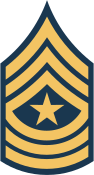
The Marine Who Stood Under Fire to Guide the Guns
Some acts of courage happen in a matter of seconds. John Henry Quick remained exposed long enough to calmly signal a warship while enemy bullets tore through the vegetation around him. That extraordinary moment in Cuba earned him the Medal of Honor, but it was only the beginning of a military career that would carry him from the Spanish American War and the Philippines to Veracruz and the battlefields of France.
Born on 20 June 1870 in Charleston, West Virginia, John Henry Quick enlisted in the United States Marine Corps on 10 August 1892. Over more than a quarter century of service, he became one of the most decorated enlisted Marines of his generation and ultimately rose to the rank of Sergeant Major. His career included service at sea, expeditionary duty, colonial campaigns, and some of the most ferocious fighting experienced by American Marines before and during the First World War. U.S.
Quick first entered Marine Corps legend during the Spanish American War. On 14 June 1898, during the Battle of Cuzco in Cuba, Marines needed to communicate with the gunboat USS Dolphin. Quick deliberately moved into an exposed position where the ship could see his signals. With enemy rifle fire directed toward him, he continued signaling until the Dolphin understood the message and adjusted its fire. The official Medal of Honor citation recognized Quick for distinguishing himself in action by signaling the USS Dolphin on three occasions while exposed to heavy enemy fire. Contemporary Marine Corps history describes him calmly completing the signal even as bullets passed around him, then picking up his rifle and returning to the firing line.
His Medal of Honor did not mark the end of Quick's combat service. During the Philippine American War, he served in the campaign on Samar from October 1901 to March 1902 and took part in the difficult Marine expedition across the island. In 1906, he returned to Cuba as part of the American forces involved in the pacification of the island. By then Quick had already advanced through the enlisted ranks, and on 12 November 1905 he had been appointed Sergeant Major, the rank he would hold for the remainder of his career. U.S.
Another test came at Veracruz, Mexico, in April 1914. During the American occupation, Quick again demonstrated the composure under fire that had defined his actions in Cuba. The Secretary of the Navy commended him for remaining exposed to enemy fire during the first two days of the operation and specifically praised his coolness, bravery, judgment, and prompt performance of duty. It was another example of a pattern that followed Quick throughout his career: when a dangerous job had to be done under fire, he did it without hesitation.
By the time the United States entered the First World War, Quick was already a veteran of decades of Marine service. Yet at nearly 48 years old, he went to France with the 6th Regiment, U.S. Marines, 2d Division, American Expeditionary Forces. He served through the Toulon sector near Verdun, Belleau Wood, the Aisne Marne offensive, the Marbache sector, St. Mihiel, Blanc Mont Ridge, and the Meuse Argonne fighting. U.S. Marine Corps University Then came 6 June 1918 at Bouresches, during the desperate fighting associated with Belleau Wood. Marines holding the village were running dangerously short of ammunition. Quick volunteered to assist in taking a truck loaded with ammunition and other supplies into Bouresches. The route was swept by German artillery and machine gun fire, but the vehicle got through and helped relieve the critical situation.
For this action, Quick received both the Navy Cross and the Distinguished Service Cross. The two official citations describe the same extraordinary act. His Distinguished Service Cross citation, published in War Department General Orders No. 119 of 1918, stated that Quick voluntarily helped take a truckload of ammunition and material into Bouresches over a road exposed to artillery and machine gun fire, thereby relieving a critical situation. His Navy Cross citation likewise recognized his extraordinary heroism in volunteering for the dangerous ammunition run under intense enemy fire.
Quick received another important recognition for his conduct in France. The 2d Division, American Expeditionary Forces, cited him for gallantry in action during the Château Thierry operations from 6 June to 10 July 1918. The citation specifically authorized a silver star to be placed on the ribbon of his Victory Medal, the contemporary form of recognition that later became associated with the Silver Star decoration.
His service with the 6th Marines also brought entitlement to the French Fourragère, reflecting the French recognition bestowed upon the regiment for its distinguished performance in combat. Quick's First World War service was therefore not limited to a single heroic episode. He remained with the Marines through a succession of major operations until 16 October 1918, building on a record of courage that had begun twenty years earlier in Cuba. U.S.
Quick was placed on the retired list on 20 November 1918, but even retirement did not completely end his Marine Corps service. At his own request he returned to active duty on 26 July 1920, serving in Marine Corps recruiting duty in St. Louis. Declining health forced his return to the retired list on 15 September 1920. He died in St. Louis, Missouri, on 9 September 1922, and was buried in Memorial Park Cemetery. Naval History and Heritage Command John Henry Quick's legacy reached far beyond the medals he wore. During the Second World War, the United States Navy named the destroyer USS Quick (DD-490) in his honor. The ship's official Navy history remembered the Marine who had earned the Medal of Honor in Cuba and the Navy Cross and Distinguished Service Cross at Belleau Wood.
Sergeant Major John Henry Quick was not defined by one famous act of heroism. He repeatedly proved himself under fire across more than two decades of American military operations. From signaling the USS Dolphin while exposed to enemy bullets in Cuba to carrying desperately needed ammunition into Bouresches under German fire, Quick built a career around calmness when circumstances were at their most dangerous. His Medal of Honor, Navy Cross, Distinguished Service Cross, 2d Division gallantry citation, and long record of expeditionary service place him among the most remarkable enlisted Marines of his era.
Become the named supporter for this profile and edit the tribute biography and portrait (Owner account required). Proceeds help keep the archive online.
$25 USD / year — annual sponsorship renewal. Keeps the page online and, where enabled, the family anniversary remembrance emails active.