★
Loading archive…
Loading archive…

Captain, British Army
Support & adopt this hero ↓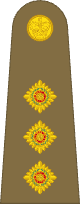
Military service formed the background of John James Crowe’s early life. Born on 28 December 1876 at the Female Garrison Hospital in Devonport, Devon, his birth occurred while his father served as a private soldier in the 36th Regiment of Foot. Raised primarily in Ireland on an estate at Baltinglass, County Wicklow, where his father worked after completing his army service, the younger Crowe spent part of his early youth in domestic service as a footman in Dublin. On 1 July 1897, he enlisted in the Worcestershire Regiment in Dublin, receiving service number 4959.
Seventeen years of peacetime soldiering established Crowe as an experienced non-commissioned officer and accomplished rifle shot. His service included home postings, Barbados with the 4th Battalion, and South Africa with the 3rd Battalion. By 1904, while serving as a sergeant in the 4th Battalion, he was competing successfully in military rifle shooting, including at Bisley. Promotions followed steadily through the ranks. He married Margaret Ellen Langron at the Catholic Chapel of St James in Dublin on 3 February 1902, and the couple raised four children while moving between military postings.
When Britain entered the First World War in August 1914, Crowe was serving with the 3rd Battalion, Worcestershire Regiment, rather than the 2nd Battalion. The 3rd Worcestershires left Tidworth for France on 13 August and reached Rouen on 16 August 1914. Crowe subsequently rose to Warrant Officer Class II on 15 January 1915, received the Army Long Service and Good Conduct Medal in April 1917, and was promoted Regimental Sergeant Major on 6 September 1917. On 1 April 1918, after more than twenty years in the ranks, he was commissioned as a Second Lieutenant. He did not join the 2nd Battalion or become its acting adjutant on that date. Instead, he transferred to the 2nd Battalion on 14 April 1918 as acting adjutant, the very day on which he performed the action that earned him the Victoria Cross.
The 2nd Battalion was then fighting at Neuve Église in Belgium during the Battle of the Lys. German forces had entered the village and threatened the battalion headquarters in the Mairie, which had become increasingly isolated as enemy troops occupied the surrounding ground and brought machine guns and snipers to bear on the British position. Crowe repeatedly led small parties forward against the attackers, helping to clear a route through which the endangered garrison could eventually withdraw.
His award was announced in the Sixth Supplement to the London Gazette of 25 June 1918, published on 28 June. The citation, with obvious scanning and OCR corruption removed, read:
"For most conspicuous bravery, determination, and skilful leading when the enemy, for the third time having attacked a post in a village, broke past on to the high ground and established a machine gun and snipers in the broken ground at the back of the village. 2nd Lt. Crowe twice went forward with two N.C.Os. and seven men to engage the enemy, both times in face of active machine-gun fire and sniping. His action was so daring that on each occasion the enemy withdrew from the high ground into the village, where 2nd Lt. Crowe followed them and himself opened fire upon the enemy as they collected in the doorways of the houses.
On the second occasion, taking with him only two men of his party, he attacked two enemy machine guns which were sweeping the post, killed both the gunners with his rifle, and prevented any others from reaching the guns and bringing them in action again. He then turned upon a party of the enemy who were lined up in front of him, killed several, and the remainder withdrew at once. He captured both the guns, one of which was the battalion Lewis gun which had been captured by the enemy on the previous day.
Throughout the seven days of operations 2nd Lt. Crowe showed an utter disregard of danger and was recklessly brave. His personal example and cheerfulness contributed largely to the determination of the garrison of the post to hold out. It may safely be said that but for his coolness and skill at the last moment, when he personally placed the covering party in close proximity to the enemy, who were again closing round, and were also forming up in fours near by, the garrison of the post could never have effected its escape. The valour and zeal displayed by 2nd Lt. Crowe were of the highest order."
Crowe was appointed Acting Captain on 26 May 1918. On 6 August, King George V personally presented him with the Victoria Cross at Second Army Headquarters at Blendecques, France. He was also Mentioned in Despatches, an honour represented by the bronze oak-leaf emblem worn on his Victory Medal ribbon. France awarded him the Croix de Guerre 1914–1918 with Bronze Palm. The Mercian Regiment Museum likewise records his VC presentation at Blendecques and his subsequent French decoration.
Crowe’s final medal group comprised the Victoria Cross; 1914 Star with clasp; British War Medal 1914–1920; Victory Medal 1914–1919 with Mentioned in Despatches oak leaf; King George VI Coronation Medal 1937; Queen Elizabeth II Coronation Medal 1953; Army Long Service and Good Conduct Medal; and French Croix de Guerre 1914–1918 with Bronze Palm. This is the eight-medal group preserved in the Worcestershire Regiment collection.
Crowe retired to the Reserve as a captain on 23 November 1920 after twenty-three years of military service. His final Army appointments included service as adjutant at the Folkestone disembarkation camp followed by duty in Ireland. Settling in Brighton, he worked for Brighton Corporation as a school attendance officer for 22 years, eventually retiring in 1946 as Children’s Care Enquiry Officer for the Brighton Education Committee.
Captain John James Crowe VC died at Brighton General Hospital on 27 February 1965, aged eighty-eight. His medal group was later presented to the Worcestershire Regiment, preserving the decorations of a soldier whose career had begun in the Victorian Army and culminated in one of the most remarkable acts of gallantry performed by the regiment during the First World War.
Become the named supporter for this profile and edit the tribute biography and portrait (Owner account required). Proceeds help keep the archive online.
$25 USD / year — annual sponsorship renewal. Keeps the page online and, where enabled, the family anniversary remembrance emails active.