★
Loading archive…
Loading archive…
He shielded wounded comrades while rescuing them under fire.
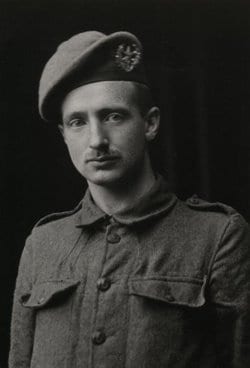
John MacLaren Erskine was born at Dunfermline, Fife, on 13 January 1894. His father was a draper, and Erskine learned the same trade, working in Edinburgh and Glasgow. He enlisted in the 5th Battalion, Cameronians, in August 1914 and reached France in November.
He rose through lance-corporal and corporal to acting sergeant and served during the Battle of Loos. On 22 June 1916 near Givenchy, his battalion was consolidating the edge of a crater left by an enemy mine. Wounded men lay in exposed ground under continuous fire.
Erskine went out and rescued a sergeant and a private. He then saw signs of movement from an officer thought to be dead. Returning to the exposed area, he bandaged the officer's head and remained beside him for about an hour while a shallow trench was dug towards them. When the officer could be moved, Erskine helped bring him in, shielding him with his own body.
His conduct earned the Victoria Cross. Promoted sergeant in July, he was subsequently wounded during the Somme fighting. After a period at an army school of instruction he returned to active service. His brother William was also killed during the war.
Major-General R. J. Pinney presented Erskine with the Victoria Cross ribbon in France on 1 January 1917. He did not survive to receive the medal itself. He was killed near Fontaine-les-Croisilles during the Arras offensive on 14 April 1917, aged twenty-three. King George V presented the cross to his mother at Hyde Park in June.
Erskine has no known grave and is commemorated on the Arras Memorial. His family later presented his Victoria Cross to the Cameronians, preserving the record of his repeated journeys to wounded men at Givenchy.
Official citation
"For most conspicuous bravery. Whilst the near lip of a crater, caused by the explosion of a large enemy mine, was being consolidated, Actg. Sergt. Erskine rushed out under continuous fire with utter disregard of danger and rescued a wounded serjeant and a private. Later, seeing his officer, who was believed to be dead, show signs of movement, he ran out to him, bandaged his head, and remained with him for fully an hour, though repeatedly fired at, whilst a shallow trench was being dug to them. He then assisted in bringing in his officer, shielding him with his own body in order to lessen the chance of his being hit again."
Become the named supporter for this profile and edit the tribute biography and portrait (Owner account required). Proceeds help keep the archive online.
$25 USD / year — annual sponsorship renewal. Keeps the page online and, where enabled, the family anniversary remembrance emails active.