★
Loading archive…
Loading archive…
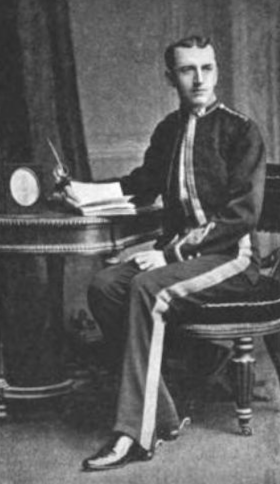
Lieutenant-Colonel, British Indian Army
Support & adopt this hero ↓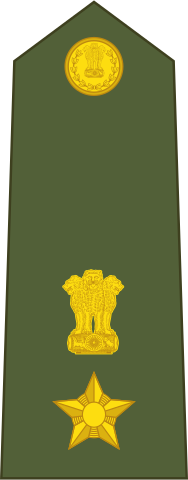
A sheer cliff, a heavily defended enemy position, and a small force facing seemingly impossible odds. On 20 December 1891, Lieutenant John Manners Smith led his Gurkhas into one of the most remarkable assaults in the history of the British Indian Army. Reaching the summit ahead of his men, he launched the attack that helped break the resistance at Nilt during the Hunza-Nagar Campaign. For his extraordinary courage and leadership, he received the Victoria Cross, Britain's highest award for gallantry. Yet the story of John Manners Smith VC extends far beyond that extraordinary day. His remarkable career combined frontier warfare, military leadership and diplomatic service across some of the most strategically important regions of British India.
John Manners Smith was born in Lahore on 30 August 1864. Educated in England, he attended the Royal Military College, Sandhurst, before receiving his commission in the Norfolk Regiment in 1883. He subsequently transferred to the Indian Staff Corps, beginning a career that would take him across the mountainous frontiers of the Indian subcontinent. Serving with Indian troops, including the Sikhs and the 5th Gurkha Rifles, Smith developed extensive experience in frontier operations, military organisation and the complex political environment of British India. In 1887, he entered political employment, opening a second chapter of his career that would prove just as significant as his military service.
His defining moment came during the Hunza-Nagar Expedition of 1891. The British advance encountered determined resistance at Nilt, where a formidable enemy position commanded the surrounding heights. The natural defences made a direct assault exceptionally dangerous. On 20 December, Smith led approximately fifty Gurkhas in an attempt to climb a steep and exposed cliff beneath the defenders' fire and falling stones. For hours, his small force advanced from one position of cover to another. Smith reached the summit first and immediately attacked a nearby fortified position, inspiring his men to follow. Their assault helped overcome a stronghold that had obstructed the expedition's progress for seventeen days. His extraordinary determination and personal bravery earned him the Victoria Cross, gazetted on 12 July 1892. The action established John Manners Smith as one of the most distinguished British Indian Army officers of the frontier campaigns.
Smith's military career continued through the frontier operations of the 1890s. He participated in the Isazai operations of 1892 and subsequently accompanied Sir Mortimer Durand on the mission to Kabul in 1893. During the Punjab Frontier operations of 1897 and the subsequent Tirah Expedition of 1897–98, he again served in the challenging environment of the North-West Frontier. His campaign service was recognised through the India General Service Medal and the India Medal, reflecting his involvement in several significant military operations of the period. In 1894, he was appointed a Companion of the Order of the Indian Empire, adding another important distinction to his growing record of service.
As his career progressed, Smith became increasingly involved in British India's political administration and diplomatic relationships with neighbouring states. In 1909, he was appointed British Resident in Nepal, a position of considerable responsibility that required diplomatic judgement, political awareness and an understanding of regional affairs. His service in Nepal was recognised in 1911 when he was appointed a Commander of the Royal Victorian Order. In 1917, he moved to Rajputana to serve as Agent to the Governor-General, continuing his work at the highest levels of British India's political administration.
Lieutenant-Colonel John Manners Smith retired in 1919 after more than three decades of military and political service. He died in London on 6 January 1920, aged 55. His legacy is defined not only by the Victoria Cross won during the daring assault at Nilt, but also by a distinguished career that connected frontier warfare with diplomacy and imperial administration. From the heights of Hunza to the diplomatic responsibilities of Nepal and Rajputana, John Manners Smith demonstrated courage, leadership and dedication in an extraordinary range of service. His Victoria Cross remains a lasting testament to the bravery of the Gurkhas and the officer who led them up the cliffs of Nilt in one of the most remarkable actions of the Hunza-Nagar Expedition.
Become the named supporter for this profile and edit the tribute biography and portrait (Owner account required). Proceeds help keep the archive online.
$25 USD / year — annual sponsorship renewal. Keeps the page online and, where enabled, the family anniversary remembrance emails active.