★
Loading archive…
Loading archive…
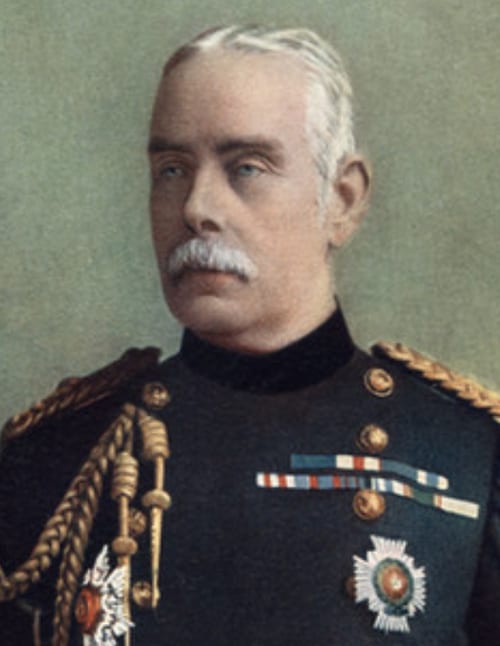
Major-General, British Army
Support & adopt this hero ↓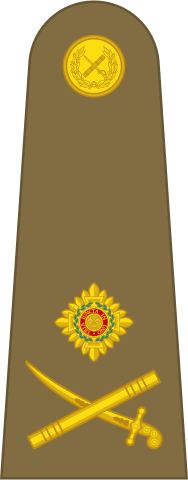
What makes a soldier turn back into a storm of enemy fire when escape is within reach? For Lieutenant-Colonel Sir John Carstairs McNeill, the answer was simple: he would not leave a fellow soldier to die. That decision, made during the New Zealand Wars on 30 March 1864, earned him the Victoria Cross and secured his place among Britain's most distinguished military heroes.
Major-General Sir John Carstairs McNeill VC, GCVO, KCB, KCMG, was born on 29 March 1831 at Colonsay House, on the Scottish island of Colonsay, Argyllshire. The eldest son of Captain Alexander McNeill and Anne Elizabeth Carstairs, he received his education at the University of St Andrews and Addiscombe Military College. On 9 December 1850, he entered the Bengal Army as an ensign in the 12th Bengal Native Infantry, beginning a military career that would take him across India, New Zealand, Canada, West Africa and Egypt.
McNeill first distinguished himself during the Indian Mutiny of 1857–1858. Serving as aide-de-camp to Sir Edward Lugard, he participated in the operations surrounding the siege and capture of Lucknow. His service during the campaign brought him recognition and advancement, including a brevet promotion for his military service. He subsequently transferred to the 107th Regiment of Foot, later associated with the Royal Sussex Regiment, and continued his career in the British Army.
His defining moment came during the New Zealand Wars. Serving as aide-de-camp to Lieutenant-General Sir Duncan Cameron, McNeill was carrying out military duties near Ōhaupō on 30 March 1864. Accompanied by Private Vosper and Private Gibson of the Colonial Defence Force, he was returning from Te Awamutu when they encountered a concealed Māori force of approximately fifty fighters. McNeill sent Gibson back to obtain infantry support while he and Vosper moved forward to observe the enemy. Suddenly, the concealed force opened fire. As the two men attempted to escape, Vosper's horse stumbled and threw him to the ground. With the attackers closing in and firing at close range, McNeill could have continued his escape. Instead, he turned back. He caught Vosper's horse, helped the stranded soldier remount, and rode with him through the enemy fire to safety. Vosper later declared that he owed his life entirely to McNeill's intervention. For this extraordinary act of courage and presence of mind, McNeill was awarded the Victoria Cross. His name appeared in the London Gazette on 16 August 1864, and he received the decoration from Sir George Grey, Governor of New Zealand, in Auckland on 6 December 1864.
McNeill's career continued to expand beyond the battlefield. During the Fenian disturbances in Ireland, he commanded the Tipperary Flying Column, demonstrating his experience in military organisation and operational leadership. From 1869 to 1872, he served as Military Secretary to Lord Lisgar, Governor-General of Canada, and helped organise Sir Garnet Wolseley's Red River Expedition of 1870. This operation was undertaken to establish Canadian authority in the Red River region of Manitoba and became another significant chapter in his military career.
In 1873, McNeill joined the Ashanti campaign in West Africa as Chief of Staff to Sir Garnet Wolseley. The campaign proved costly. On 14 October 1873, during an engagement at Essaman on the Gold Coast, McNeill was severely wounded in the wrist and had to return to Britain to recover. His service nevertheless earned further distinction, adding to the reputation he had established in earlier campaigns.
His relationship with the Royal Household also developed during this period. In 1874, McNeill was appointed Equerry to Queen Victoria, a position reflecting the confidence placed in his character and service. He continued to combine military responsibilities with royal duties, later accompanying Prince Leopold to Canada and serving as an aide-de-camp to the Duke of Cambridge.
In 1882, McNeill served in Egypt as a staff officer to the Duke of Connaught during the campaign against the revolt led by Ahmed Urabi. He subsequently attained the rank of Major-General. His military career continued in 1885 when he commanded the 2nd Brigade during the Suakin Expedition in eastern Sudan. He was present at the Battle of Tofrek, one of the difficult engagements of the Sudan campaign. These operations marked another demanding chapter in a career already shaped by service in several different theatres of the British Empire.
McNeill retired from active military service on 7 June 1890, having attained the rank of Major-General. Retirement, however, did not bring an end to his public responsibilities. In 1898, he was appointed Bath King of Arms, an important ceremonial office connected with the Most Honourable Order of the Bath. Following the accession of King Edward VII, he was appointed an Extra Equerry to the Sovereign in 1901, continuing the royal service he had begun under Queen Victoria.
His honours reflected a lifetime of military distinction and royal service. Alongside the Victoria Cross, he received appointments as Knight Commander of the Order of the Bath, Knight Commander of the Order of St Michael and St George, and Knight Grand Cross of the Royal Victorian Order. His decorations also included the Ottoman Order of the Medjidie and the Prussian Orders of the Red Eagle and the Crown. His campaign medals recorded service in the Indian Mutiny, New Zealand, Canada, Ashanti, Egypt and Sudan.
Major-General Sir John Carstairs McNeill died at St James's Palace, London, on 25 May 1904, aged 73. He was buried in the McNeill family chapel at Oronsay Priory, on the Isle of Oronsay in Scotland.
From the battlefields of the Indian Mutiny and New Zealand to the campaigns of West Africa and Sudan, McNeill's career spanned nearly four decades of British military service. Yet his Victoria Cross was earned through one decisive act of personal courage. When Private Vosper fell under enemy fire, McNeill chose loyalty over his own safety. That moment remains the defining chapter of the life of a soldier whose service extended far beyond the battlefield into the highest circles of the British Royal Household.
Become the named supporter for this profile and edit the tribute biography and portrait (Owner account required). Proceeds help keep the archive online.
$25 USD / year — annual sponsorship renewal. Keeps the page online and, where enabled, the family anniversary remembrance emails active.