★
Loading archive…
Loading archive…
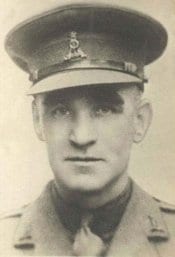
What does it take for a former coal miner to become one of Britain's most extraordinary battlefield heroes? For John O'Neill, it took just six days in October 1918 to demonstrate a level of courage that would earn him the Victoria Cross. Armed with determination and an extraordinary willingness to confront overwhelming odds, he led attacks against German machine guns and artillery that helped break the resistance facing his fellow soldiers.
Born in Airdrie, Lanarkshire, Scotland, in 1897, John O'Neill grew up in a large working-class family and followed his father into the coal mines. In August 1914, shortly after the outbreak of the First World War, he enlisted in the Prince of Wales's Leinster Regiment. He arrived in France in April 1915 and gradually established himself as a courageous and dependable soldier. By September 1918, he had earned the Military Medal for gallantry during the attack on Hill 63, northwest of Ploegsteert Wood in Belgium, on 4 September. Yet his greatest test of courage was still ahead.
On 14 October 1918, near Moorsele, Belgium, Sergeant O'Neill of the 2nd Battalion, Leinster Regiment, encountered a seemingly impossible situation. His company's advance had been halted by two German machine guns and an enemy field battery firing directly at the advancing troops. Rather than remain pinned down, O'Neill led just eleven men in a determined assault against the position. Their attack captured four field guns, two machine guns and sixteen German prisoners, breaking the resistance that had stopped the British advance.
Six days later, on 20 October, O'Neill again displayed astonishing bravery. Accompanied by only one soldier, he rushed another German machine-gun position, routing approximately one hundred enemy troops and inflicting numerous casualties. These two remarkable actions earned him the Victoria Cross, Britain's highest decoration for gallantry in the presence of the enemy. His citation, published in the London Gazette in December 1918, recognised his exceptional bravery, devotion to duty and leadership. King George V personally presented him with the Victoria Cross at Buckingham Palace on 2 August 1919.
O'Neill's wartime courage also brought international recognition. He received the French Médaille militaire and was appointed a Knight of Belgium's Order of Leopold II. His First World War service was further recognised by the 1914–15 Star, British War Medal and Victory Medal. In 1937, he also received the King George VI Coronation Medal. These honours reflected a military career that extended far beyond the two extraordinary days for which he became famous.
After the Armistice, O'Neill remained connected to military service and remembrance. He participated in the ceremonial guard associated with the burial of Britain's Unknown Warrior at Westminster Abbey in November 1920. Following further Army service and a return to mining, he joined the Royal Air Force in 1923, serving in armament-related duties. His transition from frontline infantryman to RAF serviceman demonstrated his continuing commitment to military life.
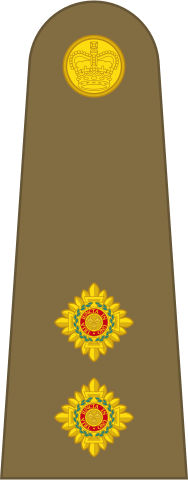
When the Second World War began, O'Neill once again answered the call to serve. Commissioned as a lieutenant in the Pioneer Corps in 1940, he served aboard HMT Dunera during the controversial transport of civilian internees to Australia, a voyage subsequently associated with serious mistreatment of passengers by members of the military escort. He later performed duties in Britain and Northern Ireland, including dock protection and wartime support work. His military service during this conflict also qualified him for the War Medal 1939–45.
Lieutenant John O'Neill VC, MM died of heart disease at Hoylake, Cheshire, on 16 October 1942, aged just 45. He was buried with military honours at Holy Trinity Churchyard, where a memorial plaque was later installed to recognise his service with the Leinster Regiment. In 1962, his original Victoria Cross medal group was stolen during a burglary in London and has never been recovered.
Although his medals disappeared, the courage they represented remains firmly recorded in military history. From the coalfields of Lanarkshire to the battlefields of Belgium, John O'Neill's remarkable journey stands as a lasting testament to determination, battlefield leadership and exceptional gallantry. His legacy is not merely that of a Victoria Cross recipient, but of a soldier whose extraordinary actions continue to inspire remembrance more than a century later.
Become the named supporter for this profile and edit the tribute biography and portrait (Owner account required). Proceeds help keep the archive online.
$25 USD / year — annual sponsorship renewal. Keeps the page online and, where enabled, the family anniversary remembrance emails active.