★
Loading archive…
Loading archive…
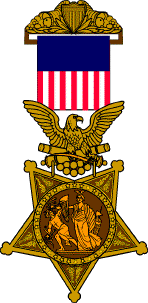
private, U.S. Army
Support & adopt this hero ↓
He Reached the Enemy Works Under Deadly Fire
John Schiller was born in Hessen, Germany, in 1847. By the time of the American Civil War, he had entered the United States Army and was serving as a Private in Company E of the 158th New York Infantry. Historical records also associate him with the name John Schilling, but his Medal of Honor service is preserved under the name John Schiller.
The 158th New York Infantry spent much of the war operating in the eastern and coastal theaters. The regiment served in North Carolina and Virginia before joining the Army of the James in 1864, where it became involved in the major Union operations directed against Richmond and Petersburg.
By September 1864, Union forces were attempting to break through the defenses protecting Richmond, the Confederate capital. Lieutenant General Ulysses S. Grant approved an operation in which Major General Benjamin Butler’s Army of the James would cross the James River and strike Confederate positions north of the river.
The resulting fighting on September 29 and 30 became known collectively as the Battle of Chaffin’s Farm. Union forces attacked several heavily fortified Confederate positions, including Fort Harrison, Fort Gilmer, and the defenses around New Market Heights.
The 158th New York Infantry was heavily engaged during the assault on September 29.
John Schiller was among the soldiers advancing toward the Confederate defensive works.
Attacking a fortified position required infantrymen to cross open ground while exposed to rifle and artillery fire. The defenders had the advantage of prepared earthworks, trenches, and obstacles, while the attackers were forced to move forward with little protection.
Schiller continued advancing.
He pushed forward until he reached the ditch immediately in front of the Confederate works.
That act became the basis of his Medal of Honor.
His official citation was exceptionally brief, recording that he advanced to the ditch of the enemy’s works. The few words do not fully convey the danger of the movement. Reaching the ditch meant penetrating to the very edge of a defended Confederate position while the assault was still under way.
The Battle of Chaffin’s Farm was one of the most significant Union attacks on the Richmond defenses during the final year of the war. Union forces captured Fort Harrison, forcing the Confederates to reorganize parts of their defensive line. The fighting also demonstrated how close Federal troops were coming to the Confederate capital.
The 158th New York suffered heavily during the operation. Its losses reflected the intensity of the assault and the difficulty of attacking prepared defenses.
Schiller survived the battle.
Several months later, his conduct received formal national recognition.
On April 6, 1865, John Schiller was presented with the Medal of Honor for his gallantry at Chapin’s Farm on September 29, 1864.
The timing of the award placed it at one of the most dramatic moments in American military history. Only three days after Schiller received the Medal of Honor, General Robert E. Lee surrendered the Army of Northern Virginia at Appomattox Court House.
The Army Medal of Honor had been authorized by Congress in 1862 during the Civil War. It became the nation’s highest military decoration and was awarded to soldiers whose conduct distinguished them under extraordinary battlefield conditions.
Schiller’s award recognized one specific act of courage. He had advanced with his regiment against a fortified Confederate position and continued forward until he reached the ditch immediately before the enemy works.
No additional device, clasp, or star accompanied his Medal of Honor.
His broader Union Army service was later represented by the Civil War Campaign Medal. Established decades after the conflict, the medal recognized qualifying military service during the Civil War and commemorated the campaigns fought by soldiers of the United States Army between 1861 and 1865.
For Schiller, the campaign medal represented the wider wartime service surrounding the single action at Chapin’s Farm for which he received the Medal of Honor. No campaign star or additional device is associated with his medal.
After the war, Schiller lived for more than sixty years beyond the battlefield where he had earned the nation’s highest military decoration. He became part of a generation of Civil War veterans who witnessed the United States change dramatically in the decades following the conflict.
As the veterans aged, their experiences were increasingly preserved through military records, monuments, veterans’ organizations, battlefield commemorations, and national cemeteries. The actions of men such as Schiller became part of the historical memory of the campaigns that eventually brought the Civil War to an end.
John Schiller died on June 3, 1926.
He was buried at Cypress Hills National Cemetery in Brooklyn, New York, where his grave became part of one of the country’s historic national cemeteries containing the remains of thousands of American service members.
Schiller’s Medal of Honor legacy rests on a simple but extraordinary act of battlefield determination.
The Confederate position was fortified.
The approach was exposed.
Enemy fire defended the works.
Yet Schiller kept moving forward.
He advanced until he reached the ditch directly in front of the enemy defenses.
For that act at Chapin’s Farm on September 29, 1864, Private John Schiller earned the Medal of Honor and a permanent place among the soldiers recognized for exceptional courage during the American Civil War.
Become the named supporter for this profile and edit the tribute biography and portrait (Owner account required). Proceeds help keep the archive online.
$25 USD / year — annual sponsorship renewal. Keeps the page online and, where enabled, the family anniversary remembrance emails active.