★
Loading archive…
Loading archive…

Lance Corporal WW1, Canadian Army
Support & adopt this hero ↓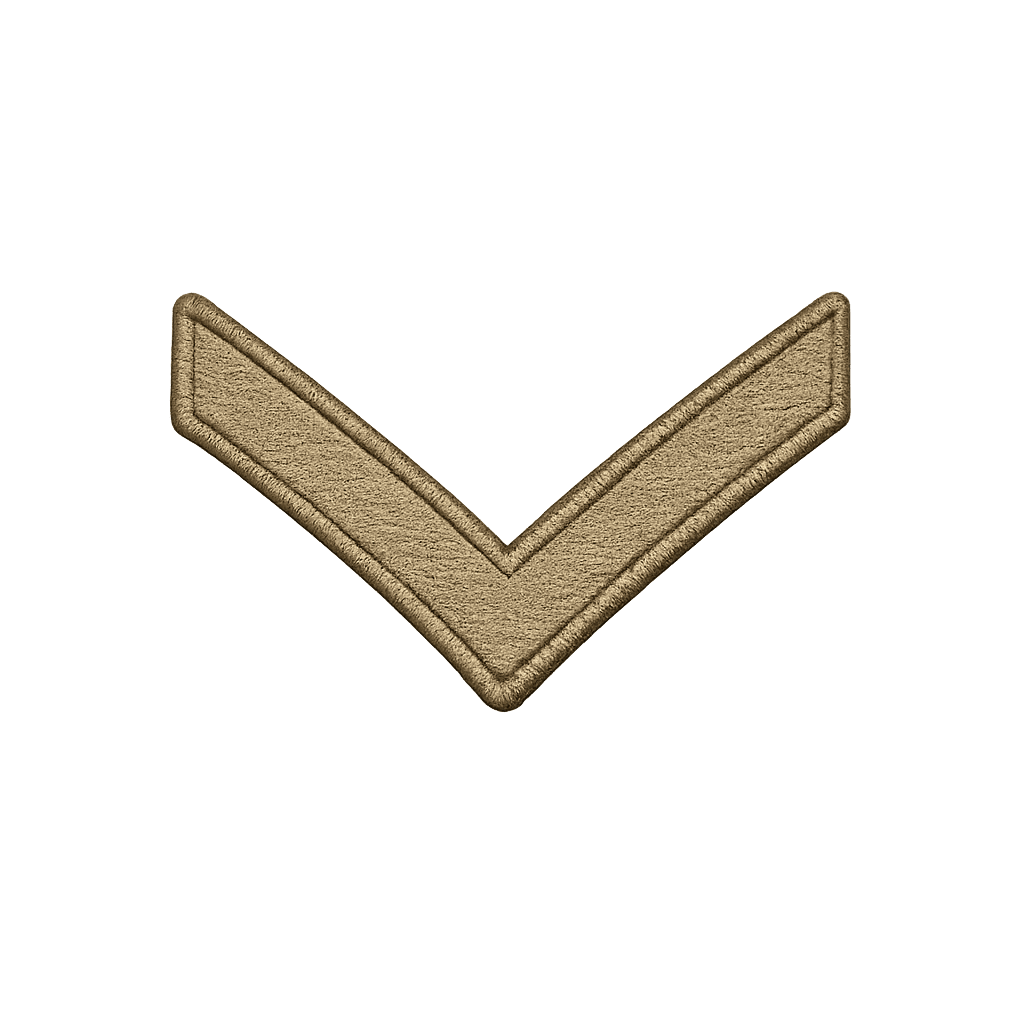
Inuk Sniper of the Newfoundland Regiment and Hero of Cambrai
He learned to shoot on the Labrador coast, where ammunition was scarce and a hunter could not afford to miss. Years later, those same skills made John Shiwak one of the most respected snipers and scouts in the Newfoundland Regiment.
Yet his story is not simply about marksmanship. It is the story of an Inuk hunter who left a remote Labrador community, crossed the Atlantic to fight on the Western Front, and died during one of Newfoundland’s most celebrated battles.
John Shiwak was born in 1889 at Cul-de-Sac, a small settlement near Rigolet, Labrador. He was the eldest son of John and Sarah Oliver Shiwak and grew up within the ancestral traditions of Labrador Inuit life. His family name was originally recorded as Sikoak, an Inuktitut word meaning “relating to thin ice,” before its spelling was changed by a local doctor.
Hunting and trapping taught Shiwak patience, observation and precise marksmanship. Ammunition was difficult to obtain in remote Labrador, so every shot mattered. He learned to study weather, terrain and animal movement, skills that would later prove invaluable in the trenches of the First World War.
Before enlisting, Shiwak took part in exercises organized by the Legion of Frontiersmen, an organization created to encourage military preparedness throughout the British Empire. Curious about the wider world, he travelled with several friends to St. John’s and enlisted in the Newfoundland Regiment on 24 July 1915. He was twenty-six years old, worked as a trapper and received service number 1735.
At that time, Newfoundland was a separate Dominion within the British Empire. It would not become part of Canada until 1949. Shiwak therefore served with Newfoundland’s own regiment rather than the Canadian Expeditionary Force.
He left St. John’s on 27 October 1915 and travelled through Quebec before sailing for Britain. His convoy reached the United Kingdom on 9 November. After several months of training at Ayr in Scotland, he joined the Newfoundland Regiment on the Western Front in July 1916.
The battlefield soon revealed the value of his Labrador experience.
Shiwak became a scout, observer and sniper. His work demanded patience and exceptional control. Scouts had to study enemy positions, move across exposed ground and return with accurate intelligence. Snipers waited in concealment, often under artillery and rifle fire, for a single opportunity to strike.
Veterans Affairs Canada describes Shiwak as the finest sniper in his regiment and possibly one of the best in the British 29th Division. Another historical account records an unidentified officer calling him “the best sniper in the British Army.” Such praise reflected more than his accuracy. He was also remembered as an excellent scout, observer and dependable soldier.
His reputation did not make war easier to endure. In letters to his friend Lacey Amy, Shiwak wrote of his longing for Labrador and his desire to return to his family, friends and former life. The Western Front was far removed from the coast, ice and hunting grounds that had shaped him.
On 16 April 1917, Shiwak was promoted to lance corporal. The promotion reflected the confidence placed in his skill and reliability, but he received no confirmed individual gallantry decoration. There is no verified award of the Military Medal, Distinguished Conduct Medal or Mention in Despatches.
His final battle began in November 1917.
The British planned a major attack near Cambrai using tanks and infantry to break through the German Hindenburg Line. The Newfoundland Regiment, serving with the 29th Division, was ordered to advance towards the St. Quentin Canal and the village of Masnières.
On 20 November, the Newfoundlanders moved forward behind the initial assault. They captured positions along the canal and fought their way into Masnières. By nightfall, they had reached the edge of the village, and small parties continued clearing German defenders from buildings and strongpoints after dark.
The next morning, the regiment was ordered towards an abandoned sugar factory intended for use as battalion headquarters. As the men marched along the canal bank, a German artillery shell exploded among them.
John Shiwak was killed with several of his comrades on 21 November 1917. He was twenty-eight years old.
His comrades buried him near the place where he fell, but the fighting continued and artillery fire repeatedly reshaped the ground. Every trace of the temporary grave disappeared. Postwar searches failed to locate his remains. Modern research suggests that Shiwak and the men killed beside him may lie beneath the grounds of a present-day school in Masnières.
Shiwak’s official Veterans Affairs Canada record lists two campaign medals: the British War Medal and the Victory Medal. The British War Medal recognized his overseas and operational service, while the Victory Medal recognized service in a theatre of war. These were campaign awards and did not carry individual narrative citations. No oak leaf or other ribbon device is verified for either medal.
Less than a month after Shiwak’s death, King George V granted the regiment the prefix “Royal” in recognition of its service at Cambrai and during the Third Battle of Ypres. Shiwak had fought and died in the Newfoundland Regiment, although it is now remembered as the Royal Newfoundland Regiment.
Because he has no known grave, John Shiwak is commemorated on the bronze tablets of the Beaumont-Hamel Newfoundland Memorial. His name stands among more than 800 Newfoundlanders who died during the First World War and whose graves are unknown. He is also remembered on page 113 of the Newfoundland Book of Remembrance.
In June 2023, a commemorative plaque was unveiled at Masnières near the area where he was killed. Its inscription honours him in English, French and Inuktitut, connecting the French battlefield where he died with the Labrador culture and community from which he came.
John Shiwak received no famous gallantry medal. He left no account of heroic speeches or dramatic charges. What survives is the testimony of those who knew his value: an exceptional sniper, an excellent scout, a reliable comrade and a soldier trusted by every rank.
He carried the skills of an Inuk hunter from the Labrador coast to the battlefields of Europe. He served Newfoundland with distinction and died at Cambrai before he could return home.
Become the named supporter for this profile and edit the tribute biography and portrait (Owner account required). Proceeds help keep the archive online.
$25 USD / year — annual sponsorship renewal. Keeps the page online and, where enabled, the family anniversary remembrance emails active.