★
Loading archive…
Loading archive…

A Pioneer in Black Canadian Military History
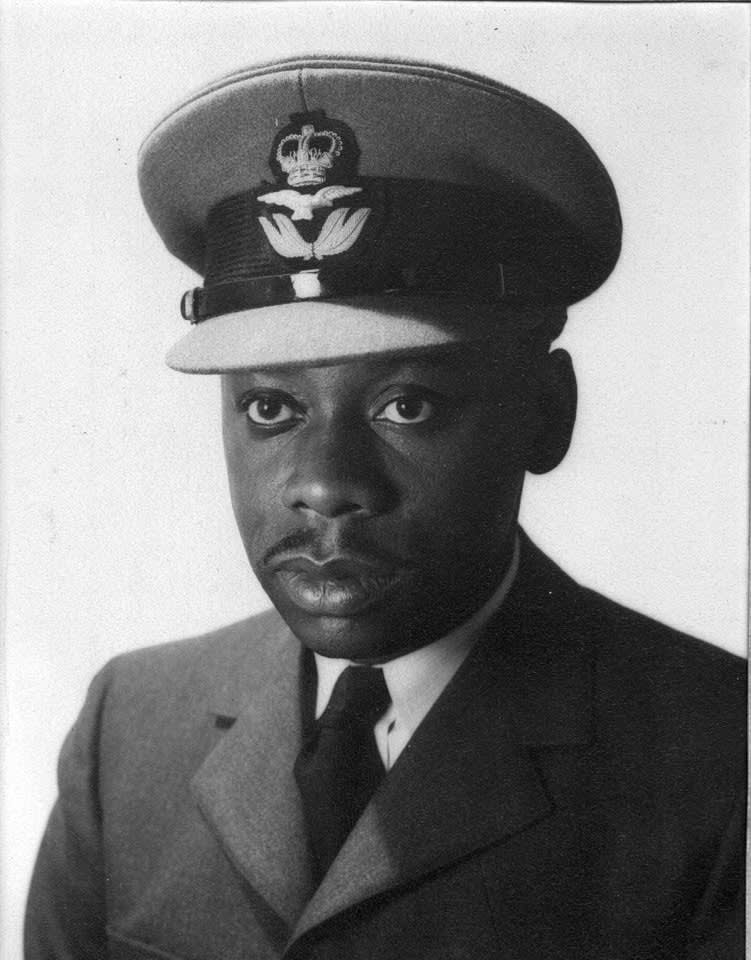
He entered the Second World War as a Black private in a Canadian military still shaped by racial barriers. Three decades later, Kenneth Barnell Jacobs became the first Canadian of African descent promoted to lieutenant-colonel in the Canadian Armed Forces. His journey from an Army medical orderly to a senior officer in the Canadian military was not built around a single dramatic battlefield action. It was built through persistence, professional achievement, leadership, and a refusal to allow discrimination to determine how far he could rise.
Kenneth Barnell Jacobs was born in Windsor, Ontario, on September 16, 1923, to Anna Walker and James Jacobs. His family's connection to Canadian military history reached back generations. Jacobs described himself as a descendant of freedom seekers who escaped slavery in the United States and reached Canada through the Underground Railroad. His father served in France with the 18th Battalion during the First World War and was wounded in action in 1918. Jacobs himself began his military connection as a cadet at Kennedy Collegiate Institute and later participated in the Canadian Officers' Training Corps.
The Second World War brought Jacobs into uniform at a time when Black Canadians continued to face open discrimination within Canadian society and the armed forces. Veterans Affairs Canada records that he served in the Canadian Army, beginning with the Royal Canadian Artillery before transferring to the medical corps and receiving further training at Camp Borden. He was eventually sent to the Vancouver Military Hospital. A simple question helped determine the direction of his wartime service: could anyone type? Jacobs could, and he was initially put to work in admissions and the orderly room. He later trained as an operating-room assistant and spent much of the war supporting military surgical services. He entered the Army as a private and finished his wartime service as a private.
His wartime contribution never took him to an overseas battlefield, but it was nevertheless part of Canada's enormous military medical effort. Jacobs later recalled the racial barriers that surrounded Black servicemen during this period, including restrictions that had once limited Black applicants to the Royal Canadian Air Force. Those experiences stayed with him. Years later, even as a commissioned officer and major, he spoke candidly about encountering anti-Black treatment within the military environment. His advancement therefore carries a significance that cannot be understood simply by reading his final rank.
When the war ended, Jacobs chose education and public service. He completed a Bachelor of Arts and pursued professional studies in social work at the University of Toronto. He then became the first Black frontline social worker at the Children's Aid Society of Toronto. That civilian achievement would unexpectedly open the door to the second chapter of his military career.
In 1954, Jacobs learned that the Royal Canadian Air Force was establishing a professional social-work capability. He joined the Regular RCAF and became one of eleven original social workers who helped develop the RCAF Welfare Services Branch. Commissioned into the Air Force, he was posted to 5 Air Division Headquarters in Vancouver and became responsible for providing military social-work services to personnel and families across British Columbia. His work required extensive travel to isolated RCAF stations where military families often lived far from established civilian support networks.
The significance of that assignment went far beyond paperwork. Jacobs was helping establish a specialized military service that dealt directly with the pressures of postings, family separation, isolation and military life. In 1960 he transferred to Air Defence Command Headquarters at St-Hubert, Quebec, where his responsibilities expanded to RCAF units throughout the province. He also developed fluency in French. When the Canadian Armed Forces unified, Jacobs's work grew again. As Regional Social Work Officer at Mobile Command Headquarters, he provided or coordinated services for personnel from the Army, Navy and Air Force and advised senior commanders on social-work matters affecting service members and their families.
His rise through the ranks reflected the increasing responsibility placed upon him. Jacobs became a flight lieutenant in 1961 and a squadron leader, later major under the unified rank system, in 1968. In 1972 he was posted to National Defence Headquarters in Ottawa as second-in-command of the Directorate of Social Development Services. Then came the milestone that secured his place in Canadian military history. On April 1, 1975, Kenneth Jacobs became the first Canadian of African descent promoted to lieutenant-colonel in the Canadian Armed Forces.
That promotion represented a remarkable transformation. The young private who had spent the Second World War assisting surgeons in a military hospital had become a senior Canadian Armed Forces officer helping shape social services at the national level. Jacobs was not an aviator despite serving in the Royal Canadian Air Force. His profession was military social work, and his influence came through supporting personnel, advising commanders and helping build an institutional system of care for military members and their families.
His military service is also reflected in the honours displayed on his reconstructed ribbon rack. His Second World War service clearly met the requirements for the War Medal 1939-1945, which recognized qualifying full-time military service during the war. The rack also records the Canadian Volunteer Service Medal, established for qualifying voluntary Active Service during the Second World War, and the Canadian Forces Decoration, representing long and honourable service in Canada's armed forces. A clasp to the Canadian Forces Decoration is represented on the undress ribbon by a silver rosette. These are service and long-service awards rather than gallantry decorations, so they do not carry individual battlefield citations of the type associated with decorations for bravery.
Beechwood records that Jacobs retired from the Canadian Armed Forces in September 1978. Retirement did not end his commitment to service. He remained involved in church and community life as a pianist, Sunday school teacher, Scout leader, YMCA youth leader, baseball coach and community council president. In 1997, the North American Black Historical Museum honoured him for his accomplishments and community leadership.
Lieutenant-Colonel Kenneth Barnell Jacobs died on August 19, 2016, and was laid to rest in the National Military Cemetery at Beechwood in Ottawa. His legacy reaches beyond the distinction of being a military "first." He demonstrated what could happen when professional ability was given room to overcome barriers that should never have existed. From a Black private serving in a wartime hospital to a lieutenant-colonel helping shape social services for Canada's armed forces, Kenneth Jacobs built a career that connected two generations of Canadian military service and helped open doors for those who followed him.
Become the named supporter for this profile and edit the tribute biography and portrait (Owner account required). Proceeds help keep the archive online.
$25 USD / year — annual sponsorship renewal. Keeps the page online and, where enabled, the family anniversary remembrance emails active.