★
Loading archive…
Loading archive…

Colonel, U.S. Marine Corps
Support & adopt this hero ↓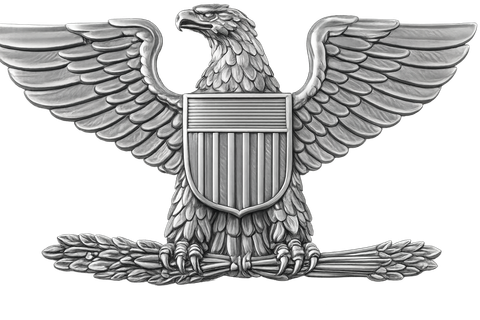
What does it take to turn an inexperienced fighter squadron into one of the most effective aerial combat units of the Pacific War? For Major John Lucian Smith, the answer was courage, relentless training and fearless leadership. A United States Marine Corps fighter ace, Smith became one of America's most celebrated aviators of World War II, earning the Medal of Honor for his extraordinary leadership during the Battle of Guadalcanal.
Born on 26 December 1914 in Lexington, Oklahoma, John Lucian Smith graduated from the University of Oklahoma in May 1936. After initially receiving an Army Field Artillery commission, he resigned to join the United States Marine Corps. He completed flight training at Naval Air Station Pensacola and qualified as a Naval Aviator in 1939.
In August 1942, Smith led Marine Fighting Squadron 223 (VMF-223) during the desperate struggle for Guadalcanal in the Solomon Islands. Facing repeated attacks by numerically superior Japanese air forces, he personally shot down 16 enemy aircraft between 21 August and 15 September 1942. Under his command and training, the squadron destroyed 83 Japanese aircraft during this period. By the end of his Guadalcanal service, Smith had achieved 19 confirmed aerial victories, establishing his reputation as a Marine Corps triple ace.
His extraordinary actions earned him the Medal of Honor, presented by President Franklin D. Roosevelt at the White House on 24 February 1943. The official citation recognized his conspicuous gallantry, repeated exposure to overwhelming enemy forces, personal aerial victories and inspiring leadership, which helped protect the Allied advance base in the Solomons.
Smith's service extended beyond Guadalcanal. After returning to the Pacific, he served as Executive Officer of Marine Aircraft Group 32, supporting operations across the Bismarck Archipelago, Luzon, Mindoro, Mindanao and the Sulu Archipelago. His Legion of Merit citation recognized his exceedingly meritorious service and extensive support of ground and surface forces during the liberation of the Philippines from November 1944 to June 1945. Britain also awarded him the Distinguished Service Order for conspicuous gallantry and distinguished service in the Solomons. His other personal decorations included the Distinguished Flying Cross, Bronze Star Medal with Combat V and four Air Medals.
Promoted to colonel on 1 January 1951, Smith subsequently served on the staff of NATO's Standing Group. In July 1953, he deployed to Korea, commanding Marine Aircraft Group 33 until February 1954 before serving as Assistant Chief of Staff, G-4, of the 1st Marine Aircraft Wing. His later assignments included the National War College, Marine Corps Schools at Quantico and liaison duties with the Chief of Naval Air Training at Pensacola. His wider service honours included the Presidential Unit Citation, Navy Unit Commendation, Philippine Presidential Unit Citation, Korean Presidential Unit Citation and campaign and service medals for World War II and Korea.
Colonel John Lucian Smith retired from active Marine Corps service in September 1960. He died in Encino, California, in June 1972 and was laid to rest at Arlington National Cemetery.
From the skies over Guadalcanal to the liberation campaigns in the Philippines and the Korean War, John Lucian Smith's legacy rests not only on his 19 aerial victories, but also on the leadership that inspired an entire generation of Marine aviators.
Become the named supporter for this profile and edit the tribute biography and portrait (Owner account required). Proceeds help keep the archive online.
$25 USD / year — annual sponsorship renewal. Keeps the page online and, where enabled, the family anniversary remembrance emails active.