★
Loading archive…
Loading archive…
Volunteered for the forlorn hope against Vicksburg’s walls!
Louis Renninger was a Union Army soldier and Medal of Honor recipient who distinguished himself during the American Civil War. Serving as a Corporal in Company H of the 37th Ohio Volunteer Infantry, he volunteered for a dangerous assault against Confederate defenses at Vicksburg, Mississippi, on May 22, 1863. The attack became known as the volunteer storming party, or “Forlorn Hope,” and Renninger's participation earned him the Medal of Honor more than thirty years later.
Renninger was born on August 25, 1841, in Ohio. His official Medal of Honor records identify his birthplace as Liverpool, Ohio, although historical sources differ about the county in which he was born. Surviving records provide little verified information about his childhood, education, or employment before entering military service.
Following the outbreak of the American Civil War in 1861, Renninger enlisted in the Union Army and became a member of the 37th Ohio Volunteer Infantry. The regiment included a substantial number of German-speaking soldiers and served in the Western Theater of the war.
By the spring of 1863, Renninger held the rank of Corporal in Company H. His regiment was serving with Union forces under Major General Ulysses S. Grant during the campaign against Vicksburg, Mississippi.
Vicksburg occupied an important position overlooking the Mississippi River. Its Confederate defenders had constructed a series of fortifications intended to prevent Union forces from capturing the city.
After an unsuccessful Union assault on May 19, 1863, Grant ordered another attack against the Confederate defenses on May 22. The renewed assault included a specially organized group of volunteers who were assigned to advance ahead of the main attacking force.
The volunteers were expected to cross exposed ground under enemy fire, reach the Confederate defensive ditch, and assist in preparing a crossing for the infantry following behind them. Their equipment included materials intended to bridge the ditch and ladders that could be used to climb the enemy's fortifications.
The assignment was widely regarded as exceptionally dangerous. Approximately 150 soldiers volunteered to take part in the advance, which became known as the Forlorn Hope.
Corporal Louis Renninger was among them.
On the morning of May 22, the volunteer storming party advanced toward the Confederate works. The men encountered intense rifle and artillery fire as they approached the defensive positions.
The assault quickly became a desperate struggle for survival. Confederate defenders concentrated their fire on the exposed volunteers, preventing the attacking force from accomplishing its intended objective.
Many members of the storming party were killed or wounded. Others became trapped in or near the defensive ditch, unable to move forward or retreat safely while the fighting continued.
Renninger survived the assault but suffered injuries during the engagement. Later historical research identifies wounds affecting his shoulder and eye.
Despite repeated attempts by Union forces to break the Confederate defenses, the assault failed to capture the targeted positions. The surviving volunteers were eventually able to withdraw after the fighting subsided.
Renninger's individual Medal of Honor citation did not describe a separate act involving the capture of a flag, an enemy weapon, or a Confederate prisoner. Instead, it recognized his gallantry in volunteering for and participating in the storming party's dangerous charge.
His conduct at Vicksburg became the defining achievement of his military career.
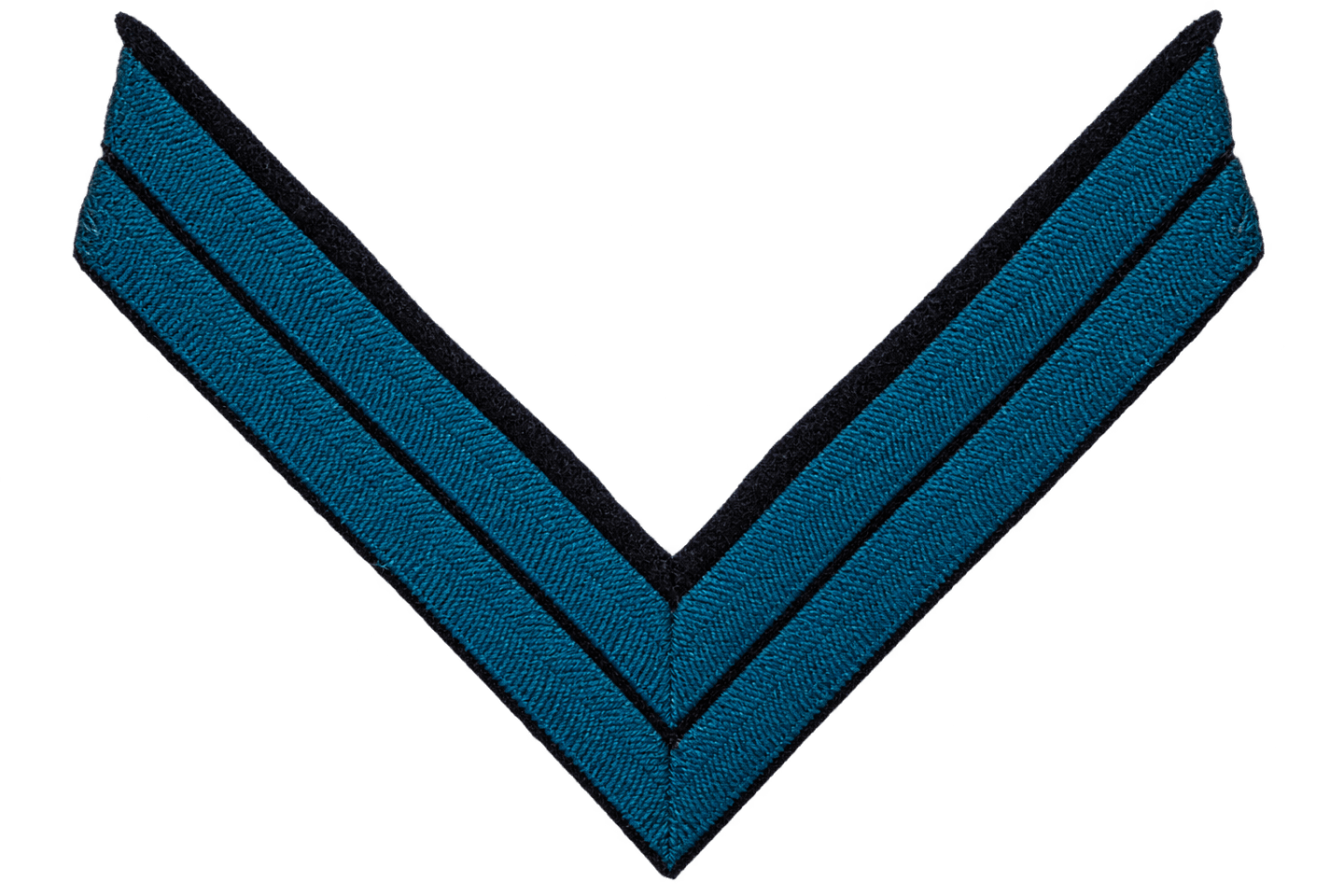
The injuries Renninger sustained affected his subsequent military service. Historical accounts record that he was transferred to the Veteran Reserve Corps, an organization in which soldiers who were no longer fit for ordinary field duty could perform other military responsibilities.
Eugene Pioneer Cemetery's records identify his later association with the 2nd Battalion of the Veteran Reserve Corps. This assignment allowed his military service to continue after his injuries prevented him from returning to regular combat duty.
According to subsequent historical research, Renninger received his discharge in October 1864. His military career therefore ended before the conclusion of the Civil War.
After leaving the Army, Renninger established a civilian life in Michigan.
In October 1865, he married Elizabeth Mann. Historical newspaper accounts record that their first child, John, was born that same month in Ionia, Michigan.
Renninger and his family lived in the Ionia area for approximately twenty-five years, where he worked in farming. The family eventually grew to include nine children.
During the early 1890s, the Renningers moved west to Oregon. Historical accounts place their arrival in 1891 or 1892, after which they settled in the Mohawk Valley area of Lane County, near Marcola.
There, Renninger continued his agricultural work and established a family home in the rural community.
On August 15, 1894, the United States government awarded Renninger the Medal of Honor for his actions at Vicksburg on May 22, 1863.
The official citation recognized his gallantry during the charge of the volunteer storming party. The award acknowledged an act of courage performed more than thirty years earlier.
Although the award date is documented, the surviving historical evidence does not establish whether Renninger received the physical medal in person or through the mail.
Renninger maintained connections with fellow Union veterans during his later years. He was a member of J. W. Geary Post No. 7 of the Grand Army of the Republic in Eugene, Oregon.
The organization provided opportunities for Civil War veterans to maintain their associations and commemorate their military service.
On November 17, 1908, Renninger died suddenly near Marcola, Oregon, at the age of sixty-seven. Contemporary newspaper accounts reported that he was found dead at his son's barn after suffering heart failure.
His death was reported in the Eugene newspapers on November 19, 1908, with accounts recalling his Civil War service and recognition as a Medal of Honor recipient.
Renninger was buried in Eugene Pioneer Cemetery in Eugene, Oregon. Members of the J. W. Geary Post of the Grand Army of the Republic participated in his funeral, together with representatives of veterans' auxiliary organizations, family members, and friends.
His wife, Elizabeth Mann Renninger, died in 1935 and was buried beside him. Their shared gravestone bears an image of the Medal of Honor and an inscription commemorating his gallantry at Vicksburg.
Louis Renninger's military record preserves his participation in one of the most dangerous volunteer assaults of the Civil War. Although wounded during the unsuccessful attack, he survived and continued military service in the Veteran Reserve Corps before returning to civilian life.
His Medal of Honor recognizes the courage he demonstrated at Vicksburg on May 22, 1863, when he joined the volunteer storming party in its advance against the Confederate defenses.
Become the named supporter for this profile and edit the tribute biography and portrait (Owner account required). Proceeds help keep the archive online.
$25 USD / year — annual sponsorship renewal. Keeps the page online and, where enabled, the family anniversary remembrance emails active.
