★
Loading archive…
Loading archive…
Master's Mate, U.S. Navy
Support & adopt this hero ↓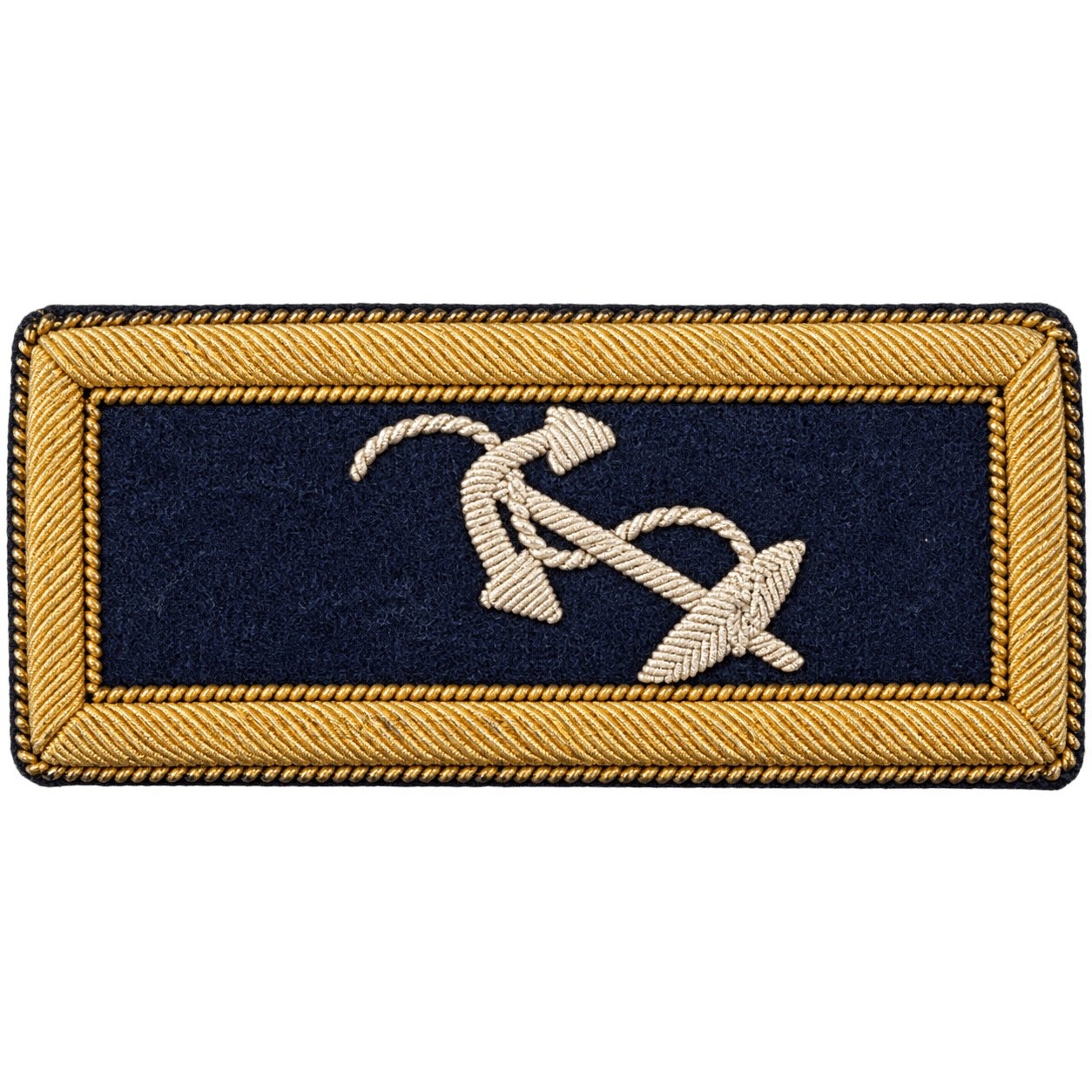
Steered through the barrier and fire below New Orleans!
As Confederate artillery opened fire along the Mississippi River on April 24, 1862, Louis Richards remained at the helm of USS Pensacola, steering the Union warship through a narrow opening in a Confederate river barricade. His careful handling of the vessel during the attacks on Forts Jackson and St. Philip helped it pass the defenses without striking the riverbank or the obstacles blocking its course. His actions during the operation against New Orleans earned him the Medal of Honor.
Louis Richards was born in 1835 in New York City, New York. His name also appears as Lewis Richards in some historical accounts. The surviving records establish his birthplace and approximate birth year but provide little verified information about his childhood, education, or family circumstances.
Richards entered the United States Navy and served during the American Civil War. By April 1862, he held the rating of Quartermaster aboard USS Pensacola, a steam-powered sloop-of-war assigned to Flag Officer David Glasgow Farragut's West Gulf Blockading Squadron.
As a naval quartermaster, Richards performed duties associated with the navigation and steering of his ship. These responsibilities required close attention to orders from the vessel's officers, particularly when maneuvering through confined waters or navigating under enemy fire.
In early 1862, Farragut prepared a naval expedition to capture New Orleans, Louisiana, one of the Confederacy's most important ports. The city stood on the Mississippi River, and its southern approaches were protected by Fort Jackson and Fort St. Philip.
The Confederate defenses included heavy artillery, supporting warships, and a barrier stretched across the river to prevent Union vessels from passing upstream.
USS Pensacola departed Alexandria, Virginia, on January 11, 1862, to join Farragut's newly organized squadron in the Gulf of Mexico. By April, the vessel was preparing to participate in the attack against the Confederate defenses below New Orleans.
Union gunboats succeeded in opening a passage through the river obstruction before the main assault. However, the opening was narrow, and the approaching vessels still had to navigate between the barrier, the riverbanks, and the Confederate forts.
In the early hours of April 24, 1862, Farragut ordered his fleet to advance upriver. The attacking warships were organized into three divisions, with Pensacola assigned to the first division under Captain Theodorus Bailey.
As the Union ships approached the Confederate defenses, the forts opened fire. Cannon blasts illuminated the river while smoke and darkness made navigation increasingly difficult.
Richards was serving as Quartermaster aboard Pensacola during this critical stage of the operation.
The vessel approached the opening in the Confederate barricade under heavy artillery fire. Any serious error in steering could have caused the ship to collide with the riverbank or become entangled in the remaining obstructions, leaving it exposed to the enemy's guns.
Despite the noise, smoke, and confusion of battle, Richards remained attentive to the orders being given and carefully steered the ship toward the narrow passage.
He successfully guided Pensacola through the barricade without striking the shore or the obstacles.
The maneuver allowed the warship to continue its advance with the Union fleet. His conduct was later praised in the Navy's official Medal of Honor record for the steadiness and attention he demonstrated while carrying out his duties.
After passing the river obstruction, Pensacola continued through the Confederate defenses. The ship participated in the fighting against the forts and moved upstream as Farragut's squadron pressed toward New Orleans.
On April 25, Pensacola engaged Confederate batteries below the city. The Union fleet's successful passage placed New Orleans in an increasingly vulnerable position, and the city formally surrendered on April 28.
Richards's contribution to the operation was not the command of the vessel or the destruction of the Confederate barricade. His documented achievement was the successful steering of Pensacola through the dangerous opening under fire, ensuring that the ship could continue with the squadron.
Following the action, Richards received advancement in the naval service. The Navy's historical Medal of Honor register records his promotion to Acting Master's Mate, a position carrying greater responsibility than his earlier Quartermaster rating.
A separate official register of Navy officers records a Louis Richards appointed as Mate on July 30, 1862, and lists his resignation from the service on June 15, 1863. These dates are consistent with the promotion recorded after the New Orleans operation.
On April 3, 1863, the United States Navy formally recognized Richards with the Medal of Honor under General Orders No. 11.
The decoration acknowledged his conduct aboard USS Pensacola during the attacks on Forts Jackson and St. Philip and the operation against New Orleans on April 24 and 25, 1862.
The official award record specifically praised his attentive performance at the helm and his successful navigation through the Confederate barricade. It also noted the exceptional composure he demonstrated under the pressures of combat.
Richards survived the Civil War and lived for several decades after receiving the decoration. The available historical records provide comparatively little reliable information about his later civilian employment, family relationships, or personal activities.
Louis Richards died on January 7, 1894, in Brooklyn, New York, at approximately fifty-eight years of age.
He was buried in The Evergreens Cemetery in Brooklyn, where his grave is recorded in the Mount Hermon section, Grave 3564.
Louis Richards's Medal of Honor preserves the recognition of a sailor whose courage was demonstrated through the precise performance of his duty during a dangerous naval assault. His successful steering of USS Pensacola through the Confederate river barricade helped the vessel reach New Orleans during one of the Union Navy's major operations of the American Civil War.
Become the named supporter for this profile and edit the tribute biography and portrait (Owner account required). Proceeds help keep the archive online.
$25 USD / year — annual sponsorship renewal. Keeps the page online and, where enabled, the family anniversary remembrance emails active.