★
Loading archive…
Loading archive…

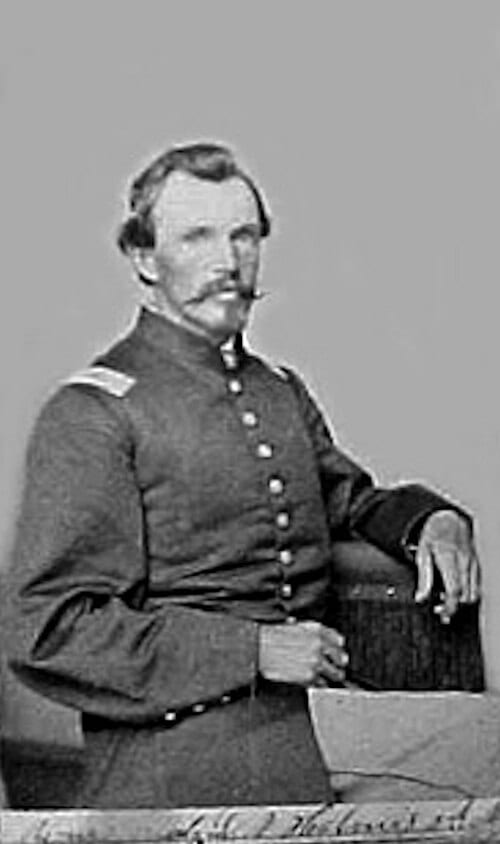
He held the wagon train against a much larger cavalry force.
Lovilo N. Holmes was born at Farmersville, New York, on 10 October 1830. He learned the sawyer’s trade before moving to Minnesota. By 1858 he was living in Mankato, where he worked as head sawyer in a combined gristmill and sawmill. He married Amanda Gail, and his working and family life became rooted in the growing Minnesota community.
He enlisted in Company H of the 2nd Minnesota Infantry in June 1861. By the beginning of 1863 he was a first sergeant, an experienced enlisted leader responsible for helping organize and direct the company. His service took him to Tennessee, where soldiers depended on wagon parties to obtain food and supplies beyond their camps.
On 15 February 1863, near Nolensville, Holmes was with a small party protecting a wagon train when Confederate cavalry attacked. The Union men took shelter around farm buildings and prepared to resist a force much larger than their own. The Medal of Honor citation describes a detachment of sixteen men facing 125 cavalry and credits them with having “repulsed the attack, and saved the train”. Their defence prevented the wagons and supplies from being captured.
Holmes was wounded during the encounter but continued serving. His leadership brought a commission, and he eventually became a captain, taking command of Company H. Members of the company presented him with an inscribed sword and an officer’s sash, tokens of their regard as he moved from enlisted leadership into commissioned command.
After the war he returned to Mankato. He worked as a carpenter and contractor, including a business association with fellow veteran Clark Keysor. He and Amanda raised a family there, and his life after the Army extended for almost half a century. The work of building and contracting succeeded the mill employment with which he had begun his Minnesota years.
His Medal of Honor was awarded on 11 September 1897, more than thirty-four years after the wagon-train defence. He remained modest when discussing the action, emphasizing the men who had fought alongside him rather than claiming the achievement for himself alone.
Holmes died in Mankato on 7 May 1914, aged eighty-three, and was buried in Glenwood Cemetery. His career encompassed skilled civilian work, service from first sergeant to captain, and a long return to the community from which he had enlisted.
Become the named supporter for this profile and edit the tribute biography and portrait (Owner account required). Proceeds help keep the archive online.
$25 USD / year — annual sponsorship renewal. Keeps the page online and, where enabled, the family anniversary remembrance emails active.