★
Loading archive…
Loading archive…

He set aside his dispatches and took a rifle into the ranks.
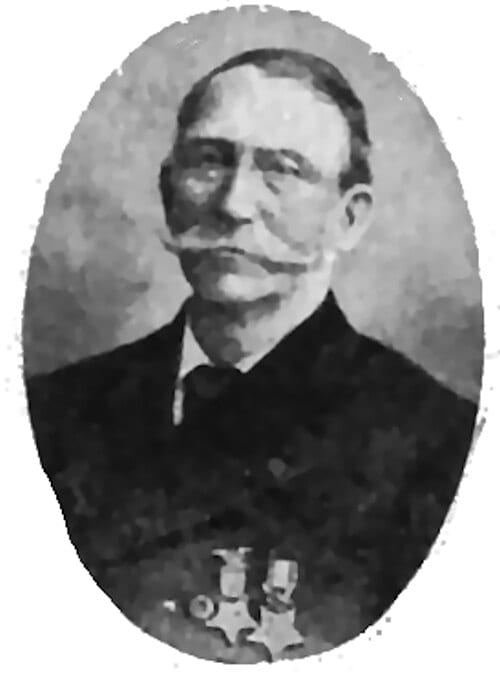
M. R. William Grebe was born at Hildesheim, in the Kingdom of Hanover, on 4 August 1838. Later accounts give his longer name as Maximilian Maria Rudolf Wilhelm von Grebe. He received a European education and served as a cavalry officer before coming to the United States during the Civil War. His military experience made him one of the foreign-born officers who entered Union service.
In Missouri he joined the 4th Missouri Cavalry and advanced to captain, commanding Company F. He also served on staff duty as an aide, carrying orders between commanders and units during active operations. A surviving 1863 letter from Ulysses S. Grant acknowledges his service and places him within the wider contribution of foreign-born soldiers to the Union cause.
On 31 August 1864, at Jonesboro, Georgia, Grebe was carrying orders across a dangerous part of the battlefield when a Confederate advance interrupted his progress. His Medal of Honor citation records that he “seized a rifle, took a place in the ranks” and helped repulse the attack. The award concerned his decision to join the immediate fighting while performing his staff duties, rather than simply completing a hazardous ride with dispatches.
His wartime career included wounds and commendations, but also disciplinary trouble following a duel with another Union officer. He was dismissed from the service. Later review of his record led to an honourable discharge and recognition at major’s rank. These developments complicate a career otherwise easily reduced to a succession of battlefield commendations.
Grebe remained in the United States. He married Felicite Heloise Shannon in Kansas City in 1867, raised a family and later farmed in Kansas. His civilian years were therefore spent in the region where he had first entered Union service, rather than in a return to his former European military career.
The Medal of Honor was awarded on 24 February 1899, more than thirty-four years after Jonesboro. In 1902 President Theodore Roosevelt wrote to thank him for a book sent to the President’s son and endorsed earlier praise of his Civil War service. The surviving letter shows that his wartime record remained a point of public recognition decades after the conflict.
Grebe died in Kansas on 24 December 1916 and was buried in Mount St Mary’s Cemetery, Kansas City, Missouri. His life joined European soldiering, Union cavalry and staff service, a disputed dismissal and a long American civilian career.
Become the named supporter for this profile and edit the tribute biography and portrait (Owner account required). Proceeds help keep the archive online.
$25 USD / year — annual sponsorship renewal. Keeps the page online and, where enabled, the family anniversary remembrance emails active.