★
Loading archive…
Loading archive…
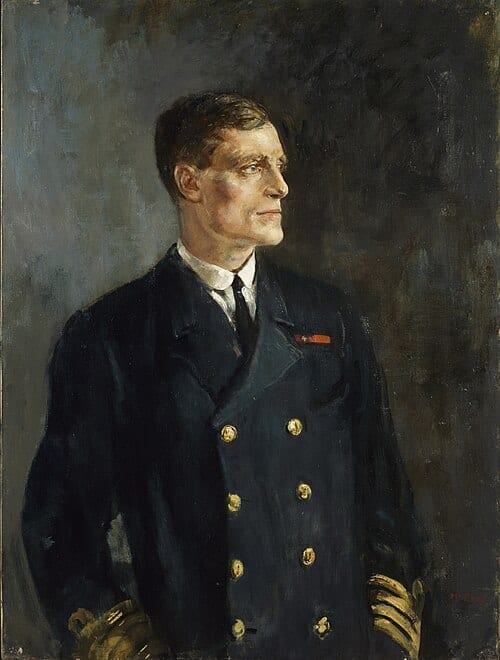
Admiral, Royal Navy
Support & adopt this hero ↓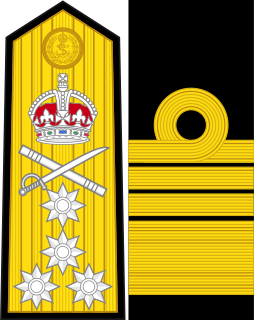
What kind of commander turns back towards danger after successfully escaping it? In May 1915, Lieutenant Commander Martin Eric Nasmith did exactly that. Deep inside enemy-controlled waters, commanding the British submarine HMS E11, he had already completed an extraordinarily dangerous passage through the Dardanelles. Yet when another opportunity to strike Ottoman shipping emerged, he turned back into the danger. His extraordinary courage and determination would earn him the Victoria Cross and establish his name among the Royal Navy's most remarkable submarine commanders.
Admiral Sir Martin Eric Dunbar-Nasmith, VC, KCB, KCMG, was born Martin Eric Nasmith on 1 April 1883 at Barnes, Surrey, England. From an early age, he pursued a career at sea, entering the Royal Navy's training ship Britannia in 1898. He developed a particular interest in the emerging submarine service, an increasingly dangerous and technically demanding branch of naval warfare. At a time when submarine operations were still pioneering, Nasmith became one of the officers helping to establish the tactics, discipline and fighting capabilities of Britain's underwater fleet.
His early appointments included command of several developing submarine classes, including A4, C7, C11 and D4. These assignments gave him valuable experience in the demanding conditions of underwater navigation, mechanical reliability and submarine warfare. By the outbreak of the First World War, he had established himself as an experienced submarine officer and was appointed to command HMS E11.
It was during the Gallipoli Campaign that Nasmith performed the actions that would make him famous. In May 1915, HMS E11 was ordered through the heavily defended Dardanelles into the Sea of Marmara, where Ottoman naval and merchant shipping supported the forces defending the Gallipoli Peninsula. The passage was extraordinarily hazardous. British submarines faced minefields, hostile gun batteries, anti-submarine nets, patrol vessels and the constant danger of being trapped beneath the water.
On 20 May 1915, Nasmith began the patrol that would bring him the Victoria Cross. Operating deep inside enemy waters, he attacked Ottoman shipping with remarkable aggression and determination. Between 20 May and 8 June, HMS E11 destroyed a large Turkish gunboat, two transport ships, an ammunition ship and three store ships. Another store ship was driven ashore, while additional enemy vessels were attacked. These operations disrupted important Ottoman maritime communications and demonstrated the extraordinary effectiveness of British submarines in the Sea of Marmara.
Yet the defining moment of his Victoria Cross action came during the return journey. Having successfully passed the most dangerous part of the passage home, Nasmith learned of another opportunity to attack an Ottoman transport. Rather than accept the relative safety of withdrawal, he turned his submarine back towards the enemy and torpedoed the vessel. It was an exceptional demonstration of courage, determination and offensive spirit in circumstances where a single mistake could have cost the entire crew their lives.
For this conspicuous bravery, Lieutenant Commander Martin Nasmith was awarded the Victoria Cross, Britain's highest award for gallantry in the presence of the enemy. His decoration was gazetted on 25 June 1915, and King George V personally presented the medal at Buckingham Palace in January 1916. His achievements were not limited to the first patrol. HMS E11 continued its operations in the Sea of Marmara, undertaking further dangerous patrols and inflicting additional losses on Ottoman shipping. Nasmith's submarine career became closely associated with the daring operations that made British submarines a formidable threat during the Dardanelles campaign.
His wartime career continued with further submarine commands and senior appointments. He commanded J4 and subsequently held important responsibilities within the submarine service, including command and instructional duties. He was promoted to captain in 1916 and later served in the Baltic during the Allied intervention against Bolshevik forces in the Russian Civil War. His experience in submarine operations, combined with his leadership and technical knowledge, made him an increasingly influential figure in the Royal Navy.
In 1920, he married Beatrix Dunbar-Rivers and subsequently adopted the surname Dunbar-Nasmith in 1923. His professional responsibilities continued to expand. He commanded major naval establishments and warships, including the battleship HMS Iron Duke, and held senior appointments within the Royal Navy's submarine organisation. His career eventually took him beyond operational command into the highest levels of naval administration.
During the 1930s, Dunbar-Nasmith became one of the Royal Navy's senior leaders. He commanded the East Indies Station and subsequently served as Second Sea Lord, contributing to the administration, organisation and development of the Royal Navy during a period of growing international tension. Promoted to admiral in 1936, he had risen from a young submarine commander to one of Britain's most senior naval officers.
The outbreak of the Second World War once again brought him into a position of considerable responsibility. As Commander-in-Chief at Plymouth, he oversaw important naval operations and responsibilities connected with Britain's vulnerable southwestern approaches and Atlantic communications. At a time when German U-boats threatened the merchant shipping routes upon which Britain's survival depended, naval leadership, coastal defence and effective coordination were essential. His earlier submarine experience gave him a valuable understanding of the dangers posed by underwater warfare.
In 1942, he became Flag Officer-in-Charge, London, a position he held until 1946. His responsibilities during these demanding wartime years formed the final major chapter of an extraordinary naval career that had spanned both World Wars. He retired from active service in 1946, having served the Royal Navy through one of the most transformative periods in naval history.
His achievements were recognised through numerous British and foreign honours. In addition to the Victoria Cross, he became a Knight Commander of the Order of the Bath and a Knight Commander of the Order of St Michael and St George. He also received important decorations from allied nations, reflecting the international recognition of his naval service and leadership.
Retirement did not mark the end of his public contribution. Dunbar-Nasmith continued to serve the nation through his involvement with the Imperial War Graves Commission, becoming its vice-chairman and helping to support the organisation's important work in commemorating those who had died in the two World Wars. He also held the distinguished honorary appointment of Vice-Admiral of the United Kingdom.
Admiral Sir Martin Eric Dunbar-Nasmith died on 29 June 1965 at Elgin, Scotland, aged 82. He was buried in Elgin, where his grave remains a place of remembrance. His adopted home in Moray later honoured his extraordinary contribution with a commemorative paving stone unveiled on the centenary of his Victoria Cross award in June 2015.
The story of Martin Dunbar-Nasmith is more than the story of a Victoria Cross recipient. It is the story of a pioneering Royal Navy submariner who helped shape Britain's underwater warfare capabilities, a commander who repeatedly faced extraordinary danger, and an admiral who continued serving his country through two world wars. His decision to turn HMS E11 back towards the enemy after reaching the relative safety of the homeward passage remains a powerful illustration of the courage that defined his life. From the dangerous depths of the Sea of Marmara to the highest levels of British naval command, Admiral Sir Martin Dunbar-Nasmith left an enduring legacy of courage, leadership and service.
Become the named supporter for this profile and edit the tribute biography and portrait (Owner account required). Proceeds help keep the archive online.
$25 USD / year — annual sponsorship renewal. Keeps the page online and, where enabled, the family anniversary remembrance emails active.