★
Loading archive…
Loading archive…
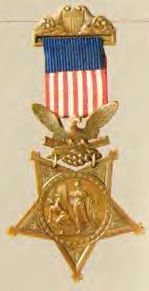
Quartermaster Sergeant, U.S. Army
Support & adopt this hero ↓
He Returned Under Fire for His Fallen Captain
Nelson W. Ward (November 20, 1837 – February 5, 1929) was an American Civil War soldier and Medal of Honor recipient who distinguished himself during the Battle of Staunton River Bridge in Virginia. Serving as a private in Company M of the 11th Pennsylvania Volunteer Cavalry, he voluntarily joined a dangerous assault on Confederate defenses on June 25, 1864. After his captain was killed, Ward advanced under heavy fire and later attempted to recover the officer's body from the battlefield. His actions earned him the Medal of Honor on September 10, 1897.
Ward was born on November 20, 1837, in Madison Township, Columbiana County, Ohio. Little reliable information survives concerning his childhood, education, or early employment. His military records establish his association with Rutland, Meigs County, Ohio, the community to which his Medal of Honor was officially accredited.
On August 5, 1861, shortly after the outbreak of the American Civil War, Ward enlisted in the Union Army. He joined the 11th Pennsylvania Volunteer Cavalry, a mounted regiment organized for service against Confederate forces. He was assigned to Company M and served during the conflict in the Eastern Theater.
The 11th Pennsylvania Cavalry became involved in military operations across southeastern Virginia and neighboring areas. Its duties included reconnaissance, raids, and engagements associated with Union efforts to disrupt Confederate transportation and communications.
By June 1864, Ward was serving as a private when his regiment participated in a major Union cavalry expedition against Confederate railroad lines in Virginia.
The operation formed part of the wider campaign surrounding Petersburg, where Union forces under Lieutenant General Ulysses S. Grant were attempting to weaken Confederate General Robert E. Lee's army. The Confederate forces depended heavily on railroad connections for the transportation of food, ammunition, and other military supplies.
Union cavalry commanders James H. Wilson and August V. Kautz were assigned to raid important railroads south and west of Petersburg. Their expedition targeted the Richmond and Danville Railroad and the Southside Railroad, both of which contributed to the Confederate supply system.
One of the principal objectives was the Staunton River Bridge, an important railroad crossing in southern Virginia. Destroying the bridge would interrupt traffic along the Richmond and Danville Railroad and complicate the movement of supplies toward Confederate forces defending Petersburg.
The bridge was protected by Confederate troops occupying defensive positions near the river. Local residents, including older men and teenage boys, had also been recruited to strengthen the defenses. Artillery covered the approaches, making a direct Union attack hazardous.
On June 25, 1864, Union cavalry reached the vicinity of the bridge and prepared to attack. The 11th Pennsylvania Cavalry, commanded during the engagement by Lieutenant Colonel George Stetzel, faced an open approach with little protection from Confederate fire.
A small advance detachment was organized using soldiers selected from different companies. When one of Company M's designated men became unable to participate because of illness, Ward volunteered to take his place.
Ward himself had recently returned from sick leave. Nevertheless, he joined the detachment as it moved toward the Confederate position.
The advancing soldiers crossed exposed ground and reached a dry streambed near the enemy defenses. Confederate troops opened fire, inflicting casualties and preventing the Union men from advancing easily toward the bridge.
Among the officers accompanying Ward was Captain Gerard Reynolds. As the detachment waited for orders to continue its advance, Reynolds attempted to move his men forward. He was shot and killed during the action.
The loss of their captain disrupted the detachment. Ward responded by taking the initiative and leading the remaining soldiers in a charge across the open ground toward the Confederate defenses.
The advancing Union troops encountered concentrated fire. Men fell as the attack continued, and the detachment was unable to overcome the defenders. With most of the soldiers killed, wounded, or otherwise unable to continue, Ward and another surviving participant began withdrawing toward their original position.
During the withdrawal, Ward came upon Captain Reynolds's body. Rather than immediately continuing to safety, he stopped beside the fallen officer.
Ward recovered several of Reynolds's personal belongings, including his money, watch, revolver, and spurs. He then attempted to find assistance so that he could carry his captain's body away from the battlefield.
The Confederate firing continued while Ward remained exposed. Soldiers farther back urged him to abandon the attempt and return to the Union lines, but he stayed long enough to search for someone who could help move the body.
When no assistance became available, Ward was forced to withdraw without Reynolds's remains. He returned alone, carrying the captain's recovered possessions.
During his retreat, one Confederate bullet struck the heel of his boot, while another passed through his jacket. Despite these narrow escapes, Ward reached the Union position without sustaining a serious injury.
He subsequently handed Reynolds's personal effects to senior officers, preserving the belongings of the captain whose body he had been unable to recover.
The Union assault on Staunton River Bridge ultimately failed. Confederate defenders held their positions, and the attacking cavalry withdrew without destroying the railroad crossing. The engagement caused significant Union casualties, but Ward survived.
His attempt to recover Captain Reynolds's body became the defining act of his military service. Although the rescue was unsuccessful, he had voluntarily exposed himself to enemy fire in an effort to bring the fallen officer from the battlefield.
Ward continued his Union Army service and eventually attained the rank of quartermaster sergeant, a position involving responsibility for military supplies and logistical arrangements. His highest recorded military rank was therefore quartermaster sergeant, although he had been a private during the action for which he was decorated.
Following the end of the Civil War in 1865, Ward returned to civilian life. On September 14, 1865, he married Emily Jane Hall, also known as Emma.
The couple settled in Missouri, where they established a family. They had two children, a son named Joseph and a daughter named Virginia. Their residence became associated with Greene County and the city of Springfield.
More than thirty-three years after the fighting at Staunton River Bridge, Ward received formal recognition for his wartime gallantry.
On September 10, 1897, he was awarded the Medal of Honor for voluntarily participating in the charge and advancing alone under heavy fire in an attempt to secure the body of his captain.
The decoration recognized a specific act of courage performed during an unsuccessful military operation. Ward had not captured the bridge or recovered Reynolds's body, but his decision to remain exposed while attempting the retrieval was formally acknowledged.
During the late 1890s, Ward purchased a hotel in Springfield, Missouri. He operated the business for several years, remaining involved in civilian commercial activities after receiving his decoration.
Around 1904, Ward and his family moved to Long Beach, California. There, he purchased and managed an apartment property, establishing a new home on the Pacific Coast.
Ward also pursued religious writing during his later years. In 1915, he published a book titled The Master Key to the Problems of Passion Week and the Resurrection According to the Scriptures. The work examined biblical accounts relating to the final days of Jesus Christ and the Resurrection.
His first wife, Emily Jane Ward, died in Long Beach on September 9, 1916, after more than fifty years of marriage. Ward subsequently married Minnie Zurada Souder.
Nelson W. Ward died in Long Beach, California, on February 5, 1929, at the age of ninety-one. He was buried at Sunnyside Cemetery in Long Beach.
Ward's documented military career included service in the 11th Pennsylvania Cavalry, participation in the 1864 raid against Confederate railroad communications, and advancement to quartermaster sergeant. His Medal of Honor preserves the central event of his military distinction: on June 25, 1864, he remained under enemy fire at Staunton River Bridge while attempting to recover the body of Captain Gerard Reynolds, ultimately returning to Union lines with the fallen officer's personal belongings.
Become the named supporter for this profile and edit the tribute biography and portrait (Owner account required). Proceeds help keep the archive online.
$25 USD / year — annual sponsorship renewal. Keeps the page online and, where enabled, the family anniversary remembrance emails active.