★
Loading archive…
Loading archive…
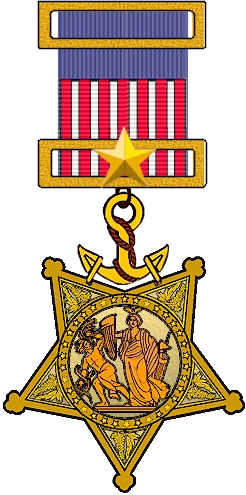
Quartermaster, U.S. Navy
Support & adopt this hero ↓
The Ironclad That Silenced Fort Fisher
Nicholas Lear was an American sailor whose distinguished service aboard the ironclad warship USS New Ironsides during the American Civil War earned him the Medal of Honor, the United States' highest military decoration for valor. Serving as a quartermaster in the Union Navy, Lear participated in the naval assaults against Fort Fisher, North Carolina, in December 1864 and January 1865. His courage and devotion to duty during these operations contributed to one of the Union Navy's most important victories of the war.
Born in Providence, Rhode Island, in the mid-1820s, Nicholas Lear grew up in a coastal New England community with strong maritime connections. Little reliable information survives about his childhood, education, or family background. Historical accounts of his naval career indicate that he entered the United States Navy during the 1850s, beginning a long association with military service at sea.
When the American Civil War began in April 1861, the United States Navy faced the enormous task of blockading Confederate ports, protecting Federal shipping, and supporting Union military operations along the Atlantic and Gulf coasts. The rapid expansion of naval warfare also brought important technological developments, particularly the introduction of ironclad warships.
Lear enlisted for a three-year term in the Navy in August 1862, during a period when the Federal government was expanding its fleet to confront Confederate naval forces and enforce the blockade of Southern ports.
His wartime service became associated with USS New Ironsides, one of the most powerful ironclad vessels constructed for the Union Navy. Launched in Philadelphia on May 10, 1862, and commissioned on August 21 of that year, the ship represented a significant advance in American naval technology.
New Ironsides was an armored steam-powered frigate equipped with a formidable broadside battery. Its heavy iron protection enabled it to operate against coastal fortifications while withstanding enemy artillery fire that could prove devastating to conventional wooden warships.
During the Civil War, New Ironsides performed important duties with the South Atlantic Blockading Squadron, particularly around Charleston, South Carolina. The vessel participated in operations against Confederate defenses and helped support the Union blockade of one of the Confederacy's most strategically important ports.
By the closing months of 1864, Lear held the rating of quartermaster aboard New Ironsides. In the nineteenth-century Navy, quartermasters were experienced enlisted sailors whose duties involved navigation-related work, steering, signals, and assisting with the handling of a vessel. The position required seamanship, discipline, and familiarity with shipboard operations.
Lear's greatest military distinction came during the Union campaign against Fort Fisher, a powerful Confederate coastal fortification guarding the approaches to Wilmington, North Carolina.
Wilmington remained one of the Confederacy's most important surviving ports. Blockade-running vessels used its waterways to deliver supplies, weapons, ammunition, and other essential materials to Confederate armies. Fort Fisher protected the entrance to the Cape Fear River and made it difficult for Union naval forces to close the port completely.
Union commanders recognized that capturing Fort Fisher would severely weaken the Confederacy's remaining supply network. Admiral David Dixon Porter assembled a powerful fleet to bombard the fort and support an assault by Federal ground forces.
In December 1864, New Ironsides joined the naval expedition against the Confederate defenses. On December 24 and 25, Union warships opened a massive bombardment intended to weaken the fortifications before an Army assault.
New Ironsides advanced close to the Confederate position, taking a leading place among the ironclad vessels. Its starboard battery opened fire against the fort, delivering a sustained bombardment that damaged Confederate artillery positions.
The ship's heavy guns were capable of striking fortified positions at relatively close range. During the two days of fighting, its fire helped cause explosions, start fires within the defensive works, and disable several Confederate guns.
Nicholas Lear served aboard the ironclad throughout these operations. As a quartermaster, he was part of the ship's complement during a dangerous engagement in which Confederate artillery threatened the attacking vessels.
Despite the intensity of the naval bombardment, the initial operation failed to capture Fort Fisher. The accompanying Union Army force did not complete the intended assault, and the expedition withdrew without achieving its principal objective.
Union commanders subsequently prepared another attack. Admiral Porter retained command of the naval fleet, while Major General Alfred H. Terry led the Army force assigned to capture the fort.
In January 1865, New Ironsides returned to the waters off Fort Fisher for the renewed offensive. The Union fleet again assembled to bombard the Confederate defenses and support the landing of Federal troops.
On January 13, 1865, New Ironsides led the ironclad division toward the fort and took position close to shore. Confederate artillery opened fire as the vessel approached, but the armored warship maintained its position and continued engaging the enemy.
The ship's battery delivered powerful and accurately directed fire throughout the day. Its guns concentrated on Confederate artillery positions, seeking to suppress the fort's defenses and reduce the danger to the Union troops preparing to attack.
Lear remained aboard New Ironsides during this sustained engagement. The crew faced the demands of prolonged combat while operating a heavily armed warship under enemy fire.
The bombardment continued through January 14. Severe weather complicated naval operations, and the ship had to replenish its ammunition at night to maintain its effectiveness.
Despite these difficulties, New Ironsides continued participating in the assault. Its crew maintained the ship's fighting capability while Union forces prepared for the decisive attack against the Confederate fortification.
On January 15, Union soldiers, sailors, and Marines launched the final assault on Fort Fisher. Confederate defenders emerged from protected positions to resist the attackers, leading to intense fighting along the fort's earthworks.
The naval bombardment played a crucial role in supporting the troops ashore. New Ironsides directed its guns against Confederate defensive positions, helping suppress enemy artillery and supporting the advancing Union soldiers.
The ship's battery proved especially effective against the fortifications facing the Union advance. According to the official Medal of Honor citation, its fire disabled nearly every Confederate gun facing the shore before the flagship ordered the bombardment to cease.
The fighting continued until Union troops overcame the Confederate defenses and captured Fort Fisher on the evening of January 15, 1865.
The victory represented a major achievement for the Union Navy and Army. With Fort Fisher captured, the Confederacy lost the principal fortification protecting Wilmington's maritime approaches. The subsequent closure of the port deprived Confederate forces of an important route for receiving supplies from overseas.
For Nicholas Lear, the operations at Fort Fisher became the defining events of his military career. His official Medal of Honor citation recognized his service aboard New Ironsides during the attacks of December 24–25, 1864, and January 13–15, 1865.
His decoration acknowledged the courage demonstrated during the sustained naval bombardments and the ship's important contribution to the successful capture of the Confederate fortress.
On June 22, 1865, Lear's Medal of Honor recognition was recorded under General Order No. 59, formally acknowledging his distinguished service during the Fort Fisher operations.
The Medal of Honor had been established during the Civil War to recognize exceptional military conduct. Congress authorized the Navy decoration in December 1861, initially providing recognition for enlisted sailors and Marines who distinguished themselves through gallantry and exceptional service.
Lear was one of eight members of the New Ironsides crew who received the Medal of Honor for their actions during the Fort Fisher campaign. Their recognition reflected the collective courage and effectiveness of the vessel's enlisted personnel under dangerous combat conditions.
Following the Confederate defeat, New Ironsides continued serving the Union Navy for a short period. The ironclad departed the Fort Fisher area in January 1865 and later returned to Philadelphia, where it was decommissioned on April 6, 1865.
Lear's association with the United States Navy extended well beyond the Civil War. Historical records compiled by the Friends of Mount Moriah Cemetery describe a naval career totaling approximately thirty-five years, with periods of service continuing through much of the nineteenth century.
His final discharge from the Navy occurred on December 24, 1896, more than three decades after the Fort Fisher campaign. His long career reflected an enduring commitment to naval service during a period of substantial transformation in American warship design and maritime technology.
During his later years, Lear resided at the United States Naval Home in Philadelphia, Pennsylvania, an institution established to provide accommodation and care for eligible former Navy personnel.
The surviving historical record provides limited information about his marriage, children, or other personal relationships. Nevertheless, his lengthy military career and Medal of Honor recognition remain well documented.
Nicholas Lear died on July 4, 1902, in Philadelphia, Pennsylvania. He was buried in Mount Moriah Cemetery, within the cemetery's Naval Plot, Section 3, Row 3, Grave 3.
His grave commemorates a sailor whose military service extended from the era of wooden sailing vessels into the age of modern steam-powered warships.
Lear's Medal of Honor is preserved in the historical collection associated with the Naval Historical Center at the Washington Navy Yard, providing a lasting connection to the naval operations that brought him national recognition.
Nicholas Lear's legacy rests upon his courage and dedicated service aboard USS New Ironsides during the final months of the American Civil War. His participation in the bombardments of Fort Fisher contributed to the defeat of one of the Confederacy's most important coastal defenses.
From his beginnings in Rhode Island to his distinguished career in the United States Navy and his final years in Philadelphia, Lear's life reflected decades of military service.
His actions during the Fort Fisher campaign earned him the Medal of Honor and secured his place among the sailors whose courage helped bring the American Civil War to its conclusion. His service aboard New Ironsides remains an enduring example of steadfastness, discipline, and devotion to duty under enemy fire.
Become the named supporter for this profile and edit the tribute biography and portrait (Owner account required). Proceeds help keep the archive online.
$25 USD / year — annual sponsorship renewal. Keeps the page online and, where enabled, the family anniversary remembrance emails active.