★
Loading archive…
Loading archive…

Captain, British Army
Support & adopt this hero ↓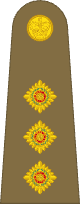
Captain Noel Godfrey Chavasse VC and Bar, MC
Captain Noel Godfrey Chavasse was not a fighting soldier in the conventional sense. His task was not to seize enemy positions, but to save the men wounded in taking them. His weapons were bandages, medical skill, discipline and an extraordinary refusal to leave wounded soldiers behind. In the mud of the Somme and Passchendaele, he repeatedly entered ground swept by artillery, machine-gun and sniper fire to rescue men who could no longer save themselves.
Born at Oxford on 9 November 1884, Chavasse was the younger by twenty minutes of identical twin brothers. Their father, Francis Chavasse, later became Bishop of Liverpool. Noel and his brother Christopher attended Trinity College, Oxford, where both distinguished themselves as athletes. In 1908 they represented Great Britain in the 400 metres at the London Olympic Games. Noel finished third in his preliminary heat, while Christopher finished second in his. Neither advanced beyond the heats.
Chavasse subsequently trained in medicine and surgery. He became a Fellow of the Royal College of Surgeons and qualified as a doctor before joining the Royal Army Medical Corps in 1913. He was commissioned as a lieutenant in the Territorial Force and attached as medical officer to the 10th (Scottish) Battalion, The King’s (Liverpool Regiment), universally known as the Liverpool Scottish. Team GB and the Liverpool Scottish Museum both confirm his medical training, RAMC commission and attachment to the battalion.
When war began, Chavasse accompanied the Liverpool Scottish to France, arriving with the battalion in November 1914. During the attack at Hooge on 16 June 1915, he spent many hours treating and rescuing casualties despite the danger around him. His conduct earned him the Military Cross, which was gazetted in January 1916. He was also Mentioned in Despatches during his First World War service.
His first Victoria Cross arose from the Liverpool Scottish attack near Guillemont on 9 August 1916. Chavasse treated casualties in the open throughout the day, frequently within sight of the enemy. That night he searched the ground in front of the German lines for four hours. The following day, accompanied by only one stretcher-bearer, he carried an urgent casualty approximately 500 yards to safety under heavy shellfire. A shell splinter wounded Chavasse in the side, but he continued working.
That same night he returned with a party of twenty volunteers. Under machine-gun fire and bombing, they recovered three wounded soldiers from a shell hole only twenty-five yards from the German trench. Chavasse also buried two dead officers and collected identity discs from the fallen. The official citation credited him with saving the lives of approximately twenty badly wounded men, in addition to the numerous other casualties who passed through his hands. His Victoria Cross was published in the London Gazette on 24 October 1916.
Less than a year later, during the opening of the Third Battle of Ypres, Chavasse displayed the same deliberate disregard for his own safety. Between 31 July and 2 August 1917, near Wieltje, he suffered a serious head wound while carrying out his duties among the wounded. British Army accounts state that his skull was fractured, yet after receiving treatment he refused evacuation and returned to his first-aid post.
For nearly two days, practically without food and faint from his wounds, he repeatedly crossed shell-swept ground to find men stranded in the mud. He helped carry badly wounded soldiers over terrain made almost impassable by rain, shell holes and the destruction of the battlefield. His official citation later emphasized both his physical exhaustion and the extraordinary example he gave to the men around him.
Early on 2 August, an enemy shell struck his first-aid post. Chavasse suffered several additional wounds, including a severe abdominal injury. Despite his condition, accounts record that he managed to crawl approximately half a mile seeking assistance. He was eventually taken to No. 32 Casualty Clearing Station at Brandhoek, where he died of his wounds on 4 August 1917. He was thirty-two years old.
His second Victoria Cross was awarded posthumously as a Bar to his existing Victoria Cross. Chavasse became the only person to receive a Victoria Cross and Bar during the First World War and remains one of only three people in the history of the decoration to receive it twice. The other double recipients were Major Arthur Martin-Leake and Captain Charles Upham. The National Army Museum confirms all three double recipients and identifies Chavasse's second award as a posthumous Bar for his actions between 31 July and 2 August 1917.
Chavasse lies in Brandhoek New Military Cemetery in Belgium. His headstone bears representations of two Victoria Crosses, reflecting his unique distinction as the only double VC recipient of the First World War. His verified wearable entitlement consists of the Victoria Cross and Bar, Military Cross, 1914 Star, British War Medal and Victory Medal with the bronze oak leaf denoting his Mention in Despatches. The surviving 1914 Star has a clasp attached, but examination of the 1914 Star Roll indicates that the clasp was not officially issued to Chavasse, so it should not form part of his reconstructed official entitlement. The bronze oak leaf belongs on the Victory Medal ribbon because a First World War Mention in Despatches was represented in this way.
He is remembered not because he was indifferent to death, but because he repeatedly placed the lives of wounded soldiers ahead of his own. One soldier who witnessed Chavasse continuing to work despite his wounds summed up the inadequacy of ordinary recognition in a few words:
“A V.C. is too small a reward for such a man.”
First Victoria Cross citation
Guillemont, France, 9 August 1916
For most conspicuous bravery and devotion to duty. During an attack he tended the wounded in the open all day, under heavy fire, frequently in view of the enemy. During the ensuing night he searched for wounded on the ground in front of the enemy’s lines for four hours.
Next day he took one stretcher-bearer to the advanced trenches, and under heavy shell fire carried an urgent case for 500 yards into safety, being wounded in the side by a shell splinter during the journey.
The same night he took up a party of twenty volunteers, rescued three wounded men from a shell hole twenty-five yards from the enemy’s trench, buried the bodies of two officers, and collected many identity discs, although fired on by bombs and machine guns.
Altogether he saved the lives of some twenty badly wounded men, besides the ordinary cases which passed through his hands. His courage and self-sacrifice were beyond praise.
Published in the London Gazette, 24 October 1916.
Bar to the Victoria Cross citation
Wieltje, Belgium, 31 July to 2 August 1917
For most conspicuous bravery and devotion to duty when in action.
Though severely wounded early in the action whilst carrying a wounded soldier to the Dressing Station, Capt. Chavasse refused to leave his post, and for two days not only continued to perform his duties, but in addition went out repeatedly under heavy fire to search for and attend to the wounded who were lying out.
During these searches, although practically without food during this period, worn with fatigue and faint with his wound, he assisted to carry in a number of badly wounded men over heavy and difficult ground.
By his extraordinary energy and inspiring example, he was instrumental in rescuing many wounded who would have otherwise undoubtedly succumbed under the bad weather conditions.
This devoted and gallant officer subsequently died of his wounds.
Published in the London Gazette, 14 September 1917. The Gazette specifically records the award as a Bar to the Victoria Cross for Captain Noel Godfrey Chavasse VC, MC.
Become the named supporter for this profile and edit the tribute biography and portrait (Owner account required). Proceeds help keep the archive online.
$25 USD / year — annual sponsorship renewal. Keeps the page online and, where enabled, the family anniversary remembrance emails active.