★
Loading archive…
Loading archive…
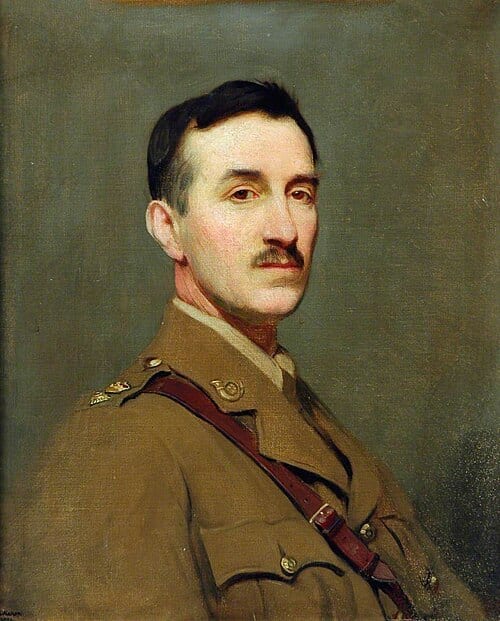
Lieutenant Colonel, British Army
Support & adopt this hero ↓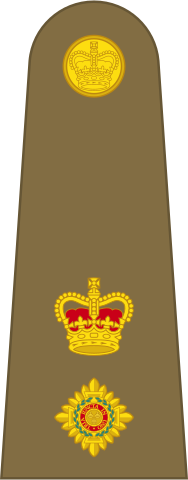
He ordered his men to retreat, but refused to abandon them. Remaining behind under relentless enemy fire, he sacrificed his own life to save others. This was the final act of Lieutenant Colonel Oliver Cyril Spencer Watson, a British Army officer whose extraordinary courage during the First World War earned him the Victoria Cross, Britain's highest award for gallantry in the face of the enemy.
Born on 7 September 1876 in Cavendish Square, London, Watson was educated at St Paul's School and the Royal Military College, Sandhurst. Commissioned into the Yorkshire Regiment on 20 February 1897, he joined its 2nd Battalion in India and began a distinguished military career marked by courage and leadership.
During the Tirah Campaign on India's North-West Frontier, Watson was severely wounded while serving against hostile tribal forces. He also demonstrated notable bravery in attempting to rescue a fellow officer during an ambush. His frontier service earned him the India Medal 1895–1902 with the Punjab Frontier 1897–98 and Tirah 1897–98 clasps. In 1900, he served as transport officer with the 4th Brigade during the China Expedition, earning the China War Medal.
Ill health forced him to leave regular service in 1904, but his commitment to the Army endured. In 1909, he joined the 1st County of London Yeomanry. During the First World War, he served in the Gallipoli Campaign before returning to Britain and joining the King's Own Yorkshire Light Infantry on the Western Front.
Watson's leadership was tested on 3 May 1917 at Bullecourt. When his commanding officer was killed, he took charge of disorganised troops, restored their confidence and personally led another attack under intense machine-gun fire. Even after the advance had stalled, he pressed forward in an attempt to reach isolated soldiers until he was seriously wounded. His extraordinary courage earned him the Distinguished Service Order. He was also Mentioned in Despatches.
Despite his injuries, Watson returned to France in January 1918 as an acting lieutenant colonel. On 28 March, during the German Spring Offensive, his battalion faced overwhelming enemy pressure at Rossignol Wood near Gommecourt.
Recognising the danger of a breakthrough, Watson gathered his remaining reserve, organised bombing parties and personally led counterattacks against German strongpoints. With rifle and machine-gun fire sweeping the battlefield, he continued directing his soldiers through a desperate struggle.
Then came the decision that defined his legacy.
Realising that his men were outnumbered, Watson ordered them to withdraw. Rather than seek safety himself, he remained behind in a communication trench to cover their retreat. He was killed while defending the position, but his actions helped prevent a breach in the British line.
His posthumous Victoria Cross was announced in The London Gazette on 8 May 1918, Issue 30675, page 5555. The citation recognised his extraordinary personal courage, devotion to duty and leadership during a critical moment of the fighting.
For his First World War service, Watson also received the British War Medal 1914–1920 and the Victory Medal 1914–1919, the latter bearing the bronze oak-leaf emblem representing his Mention in Despatches.
Oliver Cyril Spencer Watson was 41 years old when he died. His body was never recovered, and he is commemorated on the Arras Memorial in France. His Victoria Cross and other decorations are preserved at the Green Howards Museum in Richmond, North Yorkshire.
His courage was not simply demonstrated by leading an attack. It was demonstrated by what he did when the attack failed and his men needed protection. Watson remained in danger so that others could survive, leaving a lasting example of leadership, sacrifice and devotion to duty.
Become the named supporter for this profile and edit the tribute biography and portrait (Owner account required). Proceeds help keep the archive online.
$25 USD / year — annual sponsorship renewal. Keeps the page online and, where enabled, the family anniversary remembrance emails active.