★
Loading archive…
Loading archive…

Captain, U.S. Army
Support & adopt this hero ↓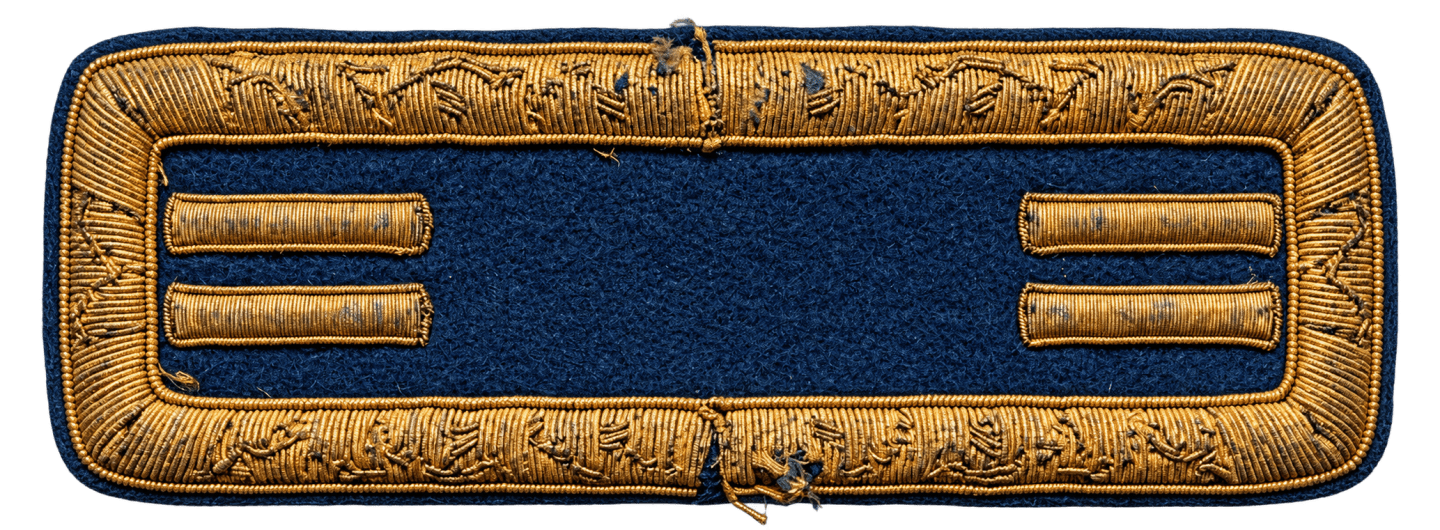
A Dangerous Mission for Ammunition at Chickamauga
Orville Tyron Chamberlain was a Union Army officer, attorney, and recipient of the United States Medal of Honor whose extraordinary courage during the American Civil War earned him recognition for a dangerous mission at the Battle of Chickamauga. Serving as a second lieutenant in Company G of the 74th Indiana Volunteer Infantry, he distinguished himself on September 20, 1863, when his regiment urgently needed ammunition while exposed to Confederate fire. Chamberlain voluntarily left his position, located another Union regiment, obtained the necessary cartridges, and successfully returned to his company. His actions earned him the Medal of Honor on March 11, 1896.
Chamberlain was born on September 1, 1841, in Leesburg, Kosciusko County, Indiana. He was the son of Dr. Joseph Wright Chamberlain and Caroline Tryon Chamberlain. His family moved to Elkhart, Indiana, when he was approximately two years old, and he spent much of his childhood in that community.
As a young man, Chamberlain attended local schools and worked in his father's drugstore. He also learned the printing trade and taught school for several winters near Elkhart.
In 1860, he entered the University of Notre Dame in northern Indiana. His studies continued until 1862, when the growing demands of the Civil War led him into military service. He completed a course in the university's Commercial Department, earning recognition as a Master of Accounts.
On August 6, 1862, Chamberlain enlisted as a private in Company G of the 74th Indiana Volunteer Infantry.
The regiment was organized in Indiana during August 1862 and entered federal service as part of the Union Army. It subsequently participated in military operations across Kentucky, Tennessee, Georgia, and the Carolinas.
Chamberlain's military career developed rapidly. After entering the regiment as a private, he became orderly sergeant and subsequently received a commission as an officer.
By the Battle of Chickamauga, he was serving as a second lieutenant.
The 74th Indiana participated in the Kentucky Campaign during the autumn of 1862, including the Battle of Perryville. It later served in the operations around Murfreesboro, Tennessee, and during the Tullahoma Campaign of 1863.
These campaigns formed part of the regiment's wartime service. Chamberlain's surviving correspondence and personal recollections provide particularly strong evidence of his experiences during the advance toward Chickamauga.
In August 1863, Union forces under Major General William S. Rosecrans began advancing toward Chattanooga, Tennessee, an important Confederate railroad and supply center.
The Union movement forced Confederate General Braxton Bragg's Army of Tennessee to abandon Chattanooga in early September. Bragg subsequently concentrated his forces and prepared to attack the advancing Union army.
The two armies approached one another in northern Georgia near Chickamauga Creek.
By September 18, 1863, the 74th Indiana was moving toward the developing battlefield. The regiment undertook an exhausting overnight march and arrived in the vicinity of Chickamauga the following morning.
On September 19, the regiment entered the fighting as Union and Confederate forces engaged in a series of fierce attacks across wooded terrain.
The battle involved repeated movements through forests and fields, where visibility was limited and commanders struggled to maintain control of their formations.
Chamberlain later recalled the difficult conditions experienced by his regiment.
During the fighting, the soldiers had discarded their knapsacks and blankets. When they halted that night, many were without food, water, or adequate protection from the cold.
The following day brought even greater danger.
On September 20, Confederate forces renewed their attacks against the Union Army of the Cumberland. Fighting intensified along the Federal defensive positions as Bragg's troops sought to break the Union line.
The 74th Indiana occupied a position behind hastily constructed breastworks.
Chamberlain later described the men lying close to the ground to avoid Confederate musket fire. The soldiers faced such intense opposition that even small movements above their defensive position exposed them to enemy bullets.
As the engagement continued, the regiment's ammunition supply became dangerously low.
Without additional cartridges, the soldiers would be unable to maintain their defensive fire against the attacking Confederate forces.
Chamberlain knew that the nearby 9th Indiana Infantry possessed a supply of ammunition.
He informed Lieutenant Colonel Myron Baker, who was commanding the 74th Indiana, of the possibility of obtaining additional cartridges from that regiment.
Baker knew that Chamberlain was acquainted with men in Company C of the 9th Indiana and asked whether he would undertake the dangerous journey to obtain ammunition.
Chamberlain agreed.
Leaving the relative protection of the breastworks, he set out to locate the 9th Indiana while Confederate bullets swept the surrounding ground.
The mission required him to cross exposed terrain at a time when the enemy was directing heavy fire toward the Union positions.
His later account of the action, preserved in correspondence with battlefield historians, confirms that he successfully reached the other regiment and obtained ammunition for his own men.
A subsequent family history described the journey in greater detail, recounting how Chamberlain moved between available pieces of cover while bullets struck around him.
According to that account, he used haversacks and his clothing to carry cartridges and arranged for an additional supply to follow.
The same family history reported that his clothing was struck by bullets and that he escaped serious injury despite the danger.
Although these details come from a later family narrative, the essential achievement is independently confirmed by Chamberlain's own recollection and his official Medal of Honor citation.
Having obtained ammunition from the 9th Indiana, Chamberlain returned across the dangerous ground to the 74th Indiana.
He successfully delivered the cartridges to the men who urgently needed them.
His courageous action allowed the regiment to replenish part of its ammunition supply while it remained exposed to Confederate fire.
The official Medal of Honor citation recognized Chamberlain for leaving his position under intense fire, locating another regiment, procuring ammunition from its soldiers, and returning with the supplies to his own company.
His achievement was significant because it involved neither capturing a position nor engaging an individual Confederate soldier in hand-to-hand combat. Instead, he undertook a dangerous logistical mission that directly supported his regiment's ability to continue fighting.
The Battle of Chickamauga ended in a Confederate victory.
On September 20, a major Confederate attack broke through part of the Union line, forcing much of Rosecrans's army to retreat toward Chattanooga.
Other Union forces, including troops under Major General George H. Thomas, continued resisting Confederate assaults before withdrawing.
The battle became one of the bloodiest engagements of the Civil War and left both armies with severe losses.
Chamberlain survived the fighting.
Nearly a month later, on October 16, 1863, he wrote to his parents about his survival and the difficult circumstances of the campaign.
His correspondence, preserved in the Indiana Historical Society's collection, provides an important personal record of his wartime experiences.
Chamberlain continued serving with the 74th Indiana Infantry after Chickamauga.
The regiment participated in further Union operations, including the Chattanooga Campaign, the Atlanta Campaign, the March to the Sea, and the Carolinas Campaign.
These engagements form part of the regiment's documented history, although Chamberlain's individual presence at every action cannot be established solely from the unit's service record.
During his military career, he advanced through the commissioned ranks, becoming first lieutenant and eventually captain.
Captain was the highest rank he attained during his Union Army service.
The 74th Indiana completed its military service in June 1865, following the collapse of Confederate resistance and the conclusion of the Civil War.
Chamberlain was honorably discharged as a captain on June 9, 1865.
After the war, he initially considered continuing his military career. Historical accounts record that he obtained a commission in the Regular Army but returned to Elkhart following his father's death.
He subsequently pursued a career in law.
Chamberlain was admitted to the Indiana bar in 1866 and established a legal practice in Elkhart. His professional work eventually earned him positions in local and regional government.
He became Elkhart's first town attorney and subsequently served as the city's first city attorney.
He also held the position of prosecuting attorney for Indiana's 34th Judicial District.
His legal career extended over several decades and continued until approximately 1901.
Chamberlain maintained connections with educational and veterans' organizations throughout his civilian life.
In 1868, the University of Notre Dame conferred an honorary Bachelor of Arts degree upon him, recognizing his association with the institution.
On September 1, 1869, Chamberlain married Helen Maria Mead of Elkhart. The couple had a daughter, Edith Chamberlain, born in 1872.
Helen died on May 31, 1911.
More than thirty-two years after the Battle of Chickamauga, Chamberlain received formal national recognition for the dangerous ammunition mission he had completed as a young lieutenant.
On March 11, 1896, Orville Tyron Chamberlain was awarded the United States Medal of Honor.
The award honored his bravery in voluntarily leaving the defensive position of the 74th Indiana, obtaining urgently needed ammunition from another regiment, and returning under heavy Confederate fire.
His recognition preserved the memory of an action that had helped sustain his company's defense during one of the most difficult battles faced by the Union Army of the Cumberland.
Following the award, Chamberlain remained active in organizations dedicated to Civil War veterans and Medal of Honor recipients.
He served in the Grand Army of the Republic, holding responsibilities in its Indiana organization and local veterans' posts.
He was also active in the Army and Navy Medal of Honor Legion of the United States.
In 1914, he participated in efforts supporting additional pension recognition for Medal of Honor recipients. He later held leadership positions in the Medal of Honor Legion, including service as its commander in 1916 and 1917.
These activities reflected his continuing involvement with the veteran community long after his military service had ended.
Chamberlain eventually spent time in Arizona during his later years.
He died on May 27, 1929, in Prescott, Arizona, at the age of eighty-seven.
His remains were returned to Indiana, where he was buried at Gracelawn Cemetery in Elkhart. The Congressional Medal of Honor Society records his burial location as Section PM, Block C, Lot 15.
Orville Tyron Chamberlain's legacy encompasses military service, legal work, and leadership among Civil War veterans.
His most enduring achievement occurred on September 20, 1863, when the men of the 74th Indiana urgently needed ammunition at Chickamauga. Despite heavy Confederate fire, he crossed exposed ground, located another Union regiment, secured the necessary cartridges, and returned to his company.
That courageous mission earned him the Medal of Honor and secured his place among the distinguished officers of the Union Army during the American Civil War.
Become the named supporter for this profile and edit the tribute biography and portrait (Owner account required). Proceeds help keep the archive online.
$25 USD / year — annual sponsorship renewal. Keeps the page online and, where enabled, the family anniversary remembrance emails active.