★
Loading archive…
Loading archive…
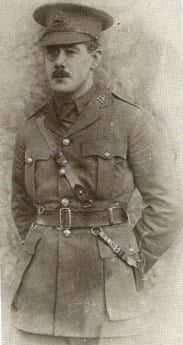
Major, British Army
Support & adopt this hero ↓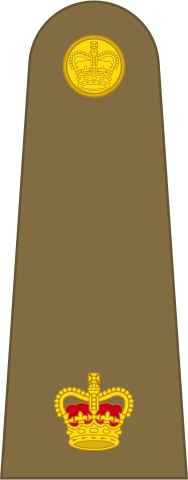
He held an isolated river post through thirty hours of fire.
Oswald Austin Reid was born in Johannesburg on 2 November 1893. Educated in South Africa and at Radley College in England, he was an accomplished school sportsman and served in the Officers' Training Corps. He was studying in the Netherlands before the First World War interrupted his plans.
Commissioned into the King's Regiment in August 1914, Reid fought in France from 1915 and suffered wounds at Ypres in 1915 and Arras in 1916. After recovering, he served with his regiment on the North West Frontier of India in 1916 before volunteering for the expedition to Mesopotamia. Attached to the 6th Loyal North Lancashire Regiment, he took part in the advance towards Baghdad.
Between 8 and 10 March 1917, his men held a small post across the Diyala River. Their communications with the main force were severed when the pontoons sank. Although repeated attempts to relieve them failed, Reid maintained the position for thirty hours under attacks with bombs, machine guns and rifles. Ammunition was nearly exhausted and he was wounded, but the isolated force continued to hold. Its resistance helped enable another river crossing the following night.
Reid received the Victoria Cross for this defence. He was also mentioned in despatches and awarded the Italian Silver Medal for Military Valour. His subsequent service included the British intervention in northern Russia in 1919. King George V presented his Victoria Cross at Buckingham Palace in February of that year.
Returning to Johannesburg, Reid became secretary of the Comrades of the Great War League and stood unsuccessfully for Parliament in the Troyeville constituency in March 1920. He also held a commission in the Transvaal Scottish. His health had suffered during the war. He died in Johannesburg on 27 October 1920, aged twenty-six, and was buried in Braamfontein Cemetery. His Victoria Cross is held by the national military history museum in Johannesburg.
Official Victoria Cross citation, London Gazette, 8 June 1917:
For most conspicuous bravery in the face of desperate circumstances.
By his dauntless courage and gallant leadership he was able to consolidate a small post with the advanced troops, on the opposite side of a river to the main body, after his line of communications had been cut by the sinking of the pontoons.
He maintained this position for thirty hours against constant attacks by bombs, machine gun and shell fire, with the full knowledge that repeated attempts at relief had failed, and that his ammunition was all but exhausted. It was greatly due to his tenacity that the passage of the river was effected on the following night.
During the operations he was wounded.
Become the named supporter for this profile and edit the tribute biography and portrait (Owner account required). Proceeds help keep the archive online.
$25 USD / year — annual sponsorship renewal. Keeps the page online and, where enabled, the family anniversary remembrance emails active.