★
Loading archive…
Loading archive…
Colonel, U.S. Marine Corps
Support & adopt this hero ↓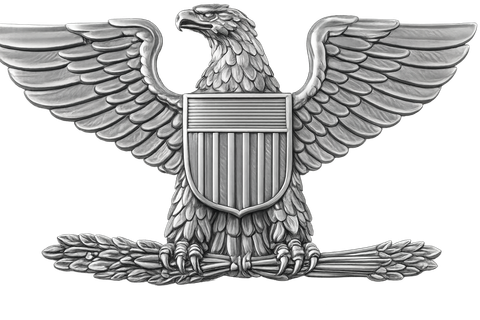
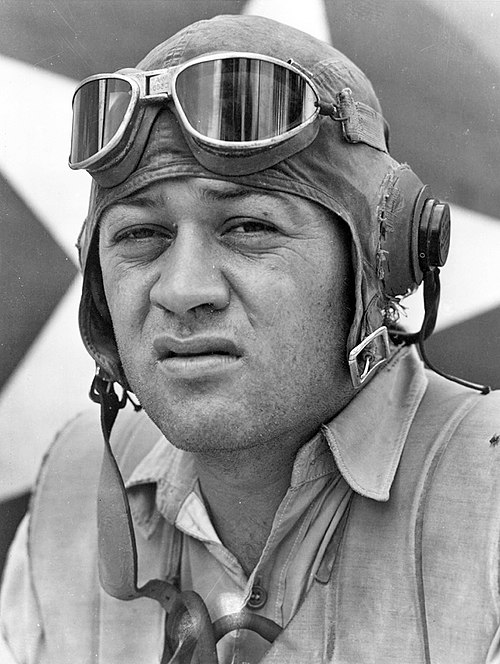
He challenged the Japanese to rise and fight. His squadron answered with one of the most remarkable aerial victories of World War II. Gregory “Pappy” Boyington, the legendary American fighter ace and commander of the United States Marine Corps' Black Sheep Squadron, became a symbol of fearless leadership, extraordinary flying skill, and unyielding determination. Awarded the Medal of Honor and Navy Cross, he was widely credited with 28 aerial victories during his wartime career.
Born on 4 December 1912 in Coeur d'Alene, Idaho, Boyington studied aeronautical engineering at the University of Washington before entering military aviation. He became a naval aviator in 1937 and later resigned his Marine Corps commission to join the American Volunteer Group, famously known as the Flying Tigers. Flying P-40 fighters over China and Burma, he developed the aggressive combat tactics that would help define his later service in the Pacific.
Returning to the Marine Corps in 1942, Boyington eventually assumed command of Marine Fighting Squadron 214, the famous Black Sheep Squadron. Flying F4U Corsairs in the Solomon Islands campaign, he led his pilots through repeated missions against formidable Japanese opposition. His Medal of Honor citation recognized sustained extraordinary heroism from 12 September 1943 through 3 January 1944. On 17 October 1943, he led 24 fighters over Kahili Airfield, daring the Japanese to challenge his formation. In the battle that followed, his pilots were credited with destroying 20 enemy aircraft without losing a single American fighter.
On 17 December 1943, Boyington led the first Allied fighter sweep over Rabaul, one of Japan's most heavily defended strongholds. His final mission came on 3 January 1944, when he again led Allied fighters against overwhelming opposition near Rabaul. His Navy Cross citation recognized his exceptional courage, his destruction of an enemy fighter, and the combat tactics he had developed and passed on to his pilots. Shot down during the battle, Boyington was captured by Japanese forces and endured approximately twenty months as a prisoner of war.
His extraordinary wartime service was also recognized through the Purple Heart, the Presidential Unit Citation awarded to VMF-214, and the American Defense, American Campaign, Asiatic-Pacific Campaign, and World War II Victory Medals. His Flying Tigers service received further retrospective recognition through the Distinguished Flying Cross and the American Volunteer Group's Presidential Unit Citation, although individual DFC documentation remains a research priority.
Liberated from Japanese custody on 29 August 1945, Boyington returned to the United States and received the Medal of Honor from President Harry S. Truman at the White House on 5 October 1945. He retired as a Colonel in August 1947 and later published his memoir, Baa Baa Black Sheep, which inspired a popular television series.
Gregory “Pappy” Boyington died on 11 January 1988 and is buried at Arlington National Cemetery. Remembered not simply for his aerial victories but for his ability to inspire others under extraordinary pressure, he remains one of the most celebrated fighter pilots in United States Marine Corps history.
Become the named supporter for this profile and edit the tribute biography and portrait (Owner account required). Proceeds help keep the archive online.
$25 USD / year — annual sponsorship renewal. Keeps the page online and, where enabled, the family anniversary remembrance emails active.