★
Loading archive…
Loading archive…
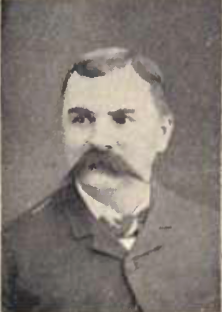
Brevet Captain, U.S. Army
Support & adopt this hero ↓The Soldier Who Saved a Cannon at Bentonville
Peter T. Anderson was an American Civil War soldier whose extraordinary courage during the Battle of Bentonville earned him the Medal of Honor, the United States' highest military decoration for valor. On March 19, 1865, while serving with Company B of the 31st Wisconsin Volunteer Infantry, Anderson returned alone to a battlefield threatened by advancing Confederate troops and rescued an abandoned Union artillery piece. Despite intense enemy fire and an injury to his right hand, he successfully brought the cannon back to Union lines, preventing its capture. His remarkable actions distinguished him during one of the final major battles of the Civil War.
Born on September 4, 1847, in Darlington, Lafayette County, Wisconsin, Peter T. Anderson was the son of Arne Anderson and Martha Guliksdatter Kindem Anderson. He was the second of six children in a family of Norwegian ancestry. His early years were spent in southwestern Wisconsin, where he grew up during a period of increasing national division over slavery and the future of the United States.
When the American Civil War began in April 1861, Anderson was only thirteen years old. As the conflict continued, he became increasingly interested in joining the Union Army. On September 8, 1863, just four days after his sixteenth birthday, Anderson enlisted at Prairie du Chien, Wisconsin, entering Company B of the 31st Wisconsin Volunteer Infantry.
The regiment had been organized in Wisconsin during 1862 and entered federal service in the autumn of that year. Its early assignments included guarding military facilities, protecting transportation routes, and supporting Union operations in Kentucky and Tennessee.
After joining the regiment, Anderson became part of the Union Army operating in the western theater. During 1864, the 31st Wisconsin was assigned to forces participating in Major General William T. Sherman's campaign through Georgia.
The regiment's service included the operations that culminated in the capture of Atlanta in September 1864. Following the city's fall, Sherman organized his famous March to the Sea, advancing from Atlanta toward Savannah while destroying Confederate military infrastructure and transportation facilities.
Anderson accompanied his regiment during this campaign. The soldiers marched across Georgia in November and December 1864 before Union forces captured Savannah shortly before Christmas.
In early 1865, Sherman's army continued northward through the Carolinas. The campaign was intended to disrupt Confederate supply networks, weaken remaining Confederate military forces, and advance toward Union armies operating in Virginia.
During the Carolina Campaign, the 31st Wisconsin participated in operations against Confederate forces attempting to slow Sherman's advance. On March 16, 1865, the regiment was involved in the Battle of Averasboro, North Carolina.
A historical account published in 1891 records that Anderson distinguished himself during the fighting at Averasboro and received promotion to corporal for gallantry. His official Medal of Honor record subsequently identified him as a private during the action at Bentonville, although the earlier account described him as a corporal. Both records establish his service with Company B of the 31st Wisconsin Infantry.
Three days after Averasboro, Anderson faced the engagement that would define his military career.
On March 19, 1865, Confederate General Joseph E. Johnston launched a major attack against elements of Sherman's army near Bentonville, North Carolina. Johnston had assembled Confederate forces in an attempt to strike the advancing Union columns before they could unite.
The 31st Wisconsin Infantry was ordered into position near the Cole Plantation to help defend a section of the Union line. The regiment was placed near Lieutenant Samuel Webb's 19th Indiana Light Artillery, which was supporting Union infantry with field guns.
Anderson was suffering from illness that day. According to his later recollections, Major Robert Stephenson noticed his weakened condition and suggested that he ride in an ambulance rather than continue marching. Anderson declined and remained with his company.
As Confederate troops advanced, the Wisconsin soldiers began constructing temporary defensive works. Their preparations were interrupted when a powerful Confederate attack threatened to overwhelm the position.
The Union line came under severe pressure. Confederate infantry advanced across open ground, threatening to surround several Federal regiments. As the danger increased, Union commanders ordered their troops to withdraw to avoid being cut off and captured.
The artillerymen of the 19th Indiana Light Artillery attempted to remove their guns before Confederate soldiers reached the position. Lieutenant Webb ordered the cannon to be attached to their horse teams and moved toward the rear.
However, the withdrawal became increasingly difficult as the Confederate assault intensified. Webb was mortally wounded, and the artillery crews were forced to abandon their positions. One cannon had already been attached to its team of horses, but the gun remained on the battlefield as the Union soldiers retreated.
During the withdrawal, Anderson heard a call for volunteers to save the artillery. Recognizing that the abandoned cannon was in danger of falling into Confederate hands, he decided to return for it.
He initially asked another soldier to accompany him, but the man refused to go back through the heavy enemy fire. Anderson then proceeded alone toward the abandoned artillery piece.
When he reached the gun, he discovered that the horses were still attached and that the cannon could be moved. He turned the team toward the Union lines and began driving the animals away from the advancing Confederate soldiers.
The situation remained extremely dangerous. Enemy troops were closing in, and Anderson was exposed to rifle fire as he attempted to guide the artillery team across the battlefield.
He tried to mount one of the horses but discovered that the equipment had been damaged by gunfire. Unable to ride, he continued alongside the team on foot, holding the horse's harness and using his rifle's ramrod to encourage the animals forward.
As Anderson struggled to move the cannon, Confederate soldiers pursued him and demanded his surrender.
According to his later account, a Confederate bullet struck the barrel of his rifle while he was attempting to reload. The impact damaged the weapon and injured a finger on his right hand.
Despite the injury, Anderson continued trying to escape with the artillery piece. At one point, a Confederate officer threatened him with a pistol, but Union fire struck the officer before he could prevent Anderson's escape.
Anderson continued moving the horses toward the retreating Federal troops. After covering a considerable distance, he finally reached the Union lines with the cannon still attached to its team.
He delivered the rescued artillery piece to Major Charles Houghtaling, the Union artillery officer responsible for the guns. His successful effort prevented the cannon from falling into Confederate hands and preserved an important piece of Union military equipment during a chaotic retreat.
The rescue was particularly remarkable because Anderson had undertaken the mission without assistance. He had returned alone toward the Confederate advance, recovered the abandoned gun, and brought it to safety while exposed to enemy fire.
Later that evening, Anderson received an unexpected summons to General William T. Sherman's headquarters.
In his subsequent recollections, Anderson described approaching Sherman's tent uncertain about why he had been called. Instead of facing criticism, he received personal praise from the Union commander for his courage.
Sherman acknowledged Anderson's extraordinary conduct and indicated that his services would receive appropriate recognition.
The Battle of Bentonville continued until March 21, 1865. Although Confederate forces initially achieved some success, Johnston was unable to defeat Sherman's army. The Confederates eventually withdrew, leaving the Union forces in control of the battlefield.
The engagement became the last major battle fought between Sherman's army and Johnston's Confederate forces. Only weeks later, Johnston surrendered to Sherman at Bennett Place near Durham, North Carolina, on April 26, 1865.
Anderson's courage at Bentonville received official recognition on June 16, 1865, when he was awarded the Medal of Honor.
His citation recognized that he had independently recovered an abandoned artillery piece from the battlefield and prevented its capture by Confederate troops.
The Medal of Honor had been established during the Civil War to recognize exceptional military conduct. Congress authorized the Army decoration in 1862, creating a national award for soldiers whose bravery distinguished them in battle.
Anderson's achievement was unusual because he was an infantry soldier whose defining act involved rescuing an artillery piece rather than capturing a flag or enemy position. His determination preserved valuable Union equipment at a moment when the surrounding troops were struggling to withdraw safely.
In addition to the Medal of Honor, Anderson received a brevet appointment to captain in recognition of his wartime gallantry. The honorary military rank acknowledged his distinguished conduct but was separate from a substantive captain's command.
Anderson completed his military service during the summer of 1865, after the conclusion of the Civil War. He returned to civilian life following nearly two years of service with the 31st Wisconsin Infantry.
In 1867, Anderson married Ella M. Kerns. The couple had a daughter, Martha Alice Anderson. Their marriage was cut short when Ella died in 1869 at the age of twenty-four, leaving Anderson to care for their young child.
In 1885, Anderson married Sophia Jensen. They subsequently had a daughter named Leone. His later family life became associated with Iowa, where he eventually settled in Buena Vista County.
Although the surviving historical accounts provide limited details about his civilian occupations, Anderson remained recognized for his exceptional service at Bentonville. His Medal of Honor and brevet rank preserved the memory of the courage he had demonstrated as a young Union soldier.
Peter T. Anderson died on July 26, 1907, in Storm Lake, Iowa, at the age of fifty-nine. He was buried in Newell Cemetery in Newell, Buena Vista County, Iowa, where his grave commemorates his military service and Medal of Honor recognition.
His death came more than forty-two years after the Battle of Bentonville, an engagement that had permanently distinguished his military career.
Anderson's legacy rests upon an extraordinary decision made during the confusion of battle. When Confederate troops threatened to capture an abandoned Union cannon, he returned alone to recover it. Despite enemy pursuit, damaged equipment, and a wound to his hand, he succeeded in bringing the artillery piece to safety.
From his youth in Wisconsin to his service with Sherman's army and his later life in Iowa, Peter T. Anderson's story represents a remarkable example of individual courage during the American Civil War.
His actions on March 19, 1865, earned him the Medal of Honor and secured his place among the soldiers whose bravery helped preserve the Union. The cannon he rescued at Bentonville remains the defining symbol of his extraordinary determination and devotion to duty.
Become the named supporter for this profile and edit the tribute biography and portrait (Owner account required). Proceeds help keep the archive online.
$25 USD / year — annual sponsorship renewal. Keeps the page online and, where enabled, the family anniversary remembrance emails active.