★
Loading archive…
Loading archive…

He Volunteered to Run the Guns at Vicksburg
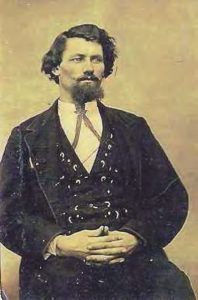
Peter Sype was born on October 11, 1841, in Monroe County, Michigan. He grew up during a period of mounting national division, as disputes over slavery and the future of the United States pushed the country toward civil war. When fighting began in 1861, Sype joined the Union Army, beginning a military career that would eventually bring him face to face with the powerful Confederate defenses at Vicksburg, Mississippi.
Sype entered service through Adrian, Michigan, and became a private in Company B of the 47th Ohio Infantry. Although his military unit was an Ohio regiment, his service remained closely connected with Michigan, where he had been born and where he would later spend his final years.
The 47th Ohio Infantry served in the western theater of the American Civil War, taking part in demanding campaigns across the South. Its soldiers faced long marches, difficult terrain, extreme weather, disease, and the constant dangers of combat.
By 1863, the regiment was involved in operations against Vicksburg, one of the Confederacy's most important strongholds.
Vicksburg stood high above the Mississippi River, its commanding position allowing Confederate artillery to threaten Union shipping along the waterway. For the Union, capturing the city was essential to restoring control of the Mississippi and dividing the Confederacy.
The campaign against Vicksburg was not fought entirely on land. River transportation was equally important. Union forces depended on steam vessels and barges to move food, ammunition, equipment, and other supplies through areas threatened by Confederate guns.
Moving those supplies past Vicksburg's batteries was an extraordinarily dangerous undertaking.
Confederate artillery overlooked the river approaches, and vessels attempting to pass the defenses risked being struck by concentrated cannon fire. A transport carrying food and essential stores could become a vulnerable target long before reaching its destination.
On May 3, 1863, Peter Sype volunteered for one of these hazardous missions.
He joined a small party attempting to move a steam tug and two barges loaded with subsistence stores past Confederate batteries at Vicksburg.
The mission demanded courage from every volunteer. Unlike infantry advancing across a battlefield, the men aboard the vessels faced danger on a restricted waterway where their ability to take cover or change direction was limited.
The tug and barges carried supplies intended to support Union military operations. Their cargo represented the food and essential provisions upon which soldiers in the field depended.
Sype and the other volunteers undertook the attempt despite the danger posed by the Confederate artillery positions.
The operation took place during the wider Vicksburg Campaign, before the formal siege of the city began later that month. Union commanders were still maneuvering forces and establishing the logistical arrangements needed for the final drive against the Confederate stronghold.
The attempt to pass the enemy's batteries became the defining moment of Sype's military service.
His official Medal of Honor citation recognized him as one of the volunteers who attempted to run the Confederate defenses using a steam tug and two supply-laden barges.
The citation did not claim that Sype single-handedly accomplished the mission. Instead, it honored his decision to join a small party willingly undertaking a dangerous operation in the face of powerful enemy defenses.
That distinction remains central to his story.
Sype's courage was demonstrated through his voluntary participation in a mission where the risk was evident before the vessels began their passage.
The broader campaign eventually brought a major Union victory. After weeks of military operations and siege warfare, Vicksburg surrendered on July 4, 1863. The capture of the city, combined with the Union victory at Port Hudson shortly afterward, gave Federal forces control of the Mississippi River.
The result transformed the strategic balance of the war, disrupting Confederate communications and dividing the territory still controlled by the Southern states.
For the men who had participated in earlier river operations, including Peter Sype, the victory was connected to the dangerous efforts required to sustain Union forces throughout the campaign.
Sype continued to be remembered for his service as a private in the 47th Ohio Infantry and for his participation in the hazardous supply expedition of May 3, 1863.
His military service formed part of the much larger struggle fought by Union soldiers who traveled far from their homes to preserve the United States.
Formal recognition of his bravery came decades after the Civil War.
Peter Sype received the Medal of Honor for his voluntary participation in the attempt to carry vital supplies past the Confederate defenses at Vicksburg.
The award recognized an act of courage that had taken place when Sype was a young infantryman, serving in a difficult campaign whose success depended upon both battlefield victories and the movement of essential supplies.
The Medal of Honor preserved his role in an operation that might otherwise have remained a little-known episode of the Mississippi River campaign.
Sype lived long enough to see the United States change dramatically during the decades following the Civil War. By the early twentieth century, the veterans of the conflict represented a generation whose wartime experiences had shaped the country's history.
He died on April 20, 1923, in Newport, Michigan, at the age of eighty-one.
Peter Sype was buried at Trinity Lutheran Cemetery in Monroe, Michigan, returning in death to the county where his life had begun.
His legacy is rooted in a moment of voluntary courage on the Mississippi River. While serving as a private in Company B of the 47th Ohio Infantry, he joined a small party that attempted to carry essential supplies past the formidable Confederate artillery batteries defending Vicksburg.
He accepted the danger of that mission when he could have remained behind.
For his service during the dangerous river operation of May 3, 1863, Peter Sype received the Medal of Honor and earned a lasting place among the decorated Union soldiers of the American Civil War.
Become the named supporter for this profile and edit the tribute biography and portrait (Owner account required). Proceeds help keep the archive online.
$25 USD / year — annual sponsorship renewal. Keeps the page online and, where enabled, the family anniversary remembrance emails active.