★
Loading archive…
Loading archive…
Captain, South African Army
Support & adopt this hero ↓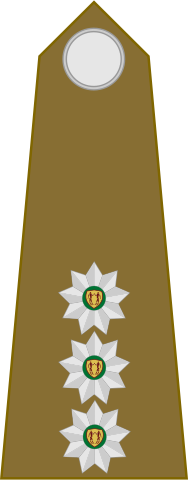
A wounded officer was down. Enemy machine guns were sweeping the battlefield. His platoon was under intense fire, and the situation was rapidly deteriorating. Yet one South African soldier, already bleeding from a shrapnel wound to his forehead, refused to abandon his men. Instead, he took command, attacked enemy positions, captured their crews and led his platoon through a dangerous withdrawal. His name was Quentin George Murray Smythe, and his extraordinary courage earned him the Victoria Cross, Britain's highest award for gallantry.
Quentin George Murray Smythe VC was born on 6 August 1916 in Natal, South Africa. Educated at Estcourt High School, he initially pursued farming before joining the Royal Natal Carbineers during the Second World War. His military career took him from the campaigns against Italian forces in East Africa to the bitter fighting of the Western Desert in North Africa, where South African troops played a vital role in the Allied campaign against Axis forces.
By June 1942, Smythe was serving as a sergeant with the 1st South African Infantry Division. On 5 June, near Alem Hamza during the Battle of Gazala, his platoon was ordered to attack an enemy strongpoint. When his officer was severely wounded, Smythe immediately assumed command, despite suffering a serious shrapnel wound to his own forehead.
What followed demonstrated extraordinary determination and leadership. After his platoon captured the strongpoint, an enemy machine gun opened fire against their flank, threatening the advance. Smythe moved forward alone, attacked the position with grenades and captured its crew. Despite worsening blood loss and his deteriorating physical condition, he continued to lead his men. He subsequently attacked an enemy anti-tank gun position and captured its crew as well.
His ordeal was not over. When orders arrived for the platoon to withdraw, Smythe organised the movement under dangerous conditions. As enemy forces attempted to surround his men, he maintained control, resisted the threat and successfully brought his platoon away from the threatened position. His actions transformed a potentially disastrous situation into a remarkable demonstration of battlefield leadership and personal courage.
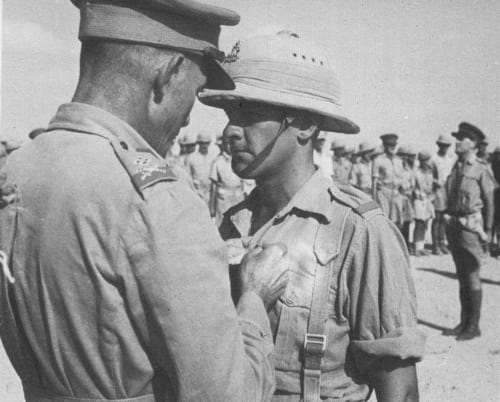
For his exceptional bravery, determination and leadership at Alem Hamza on 5 June 1942, Quentin George Murray Smythe was awarded the Victoria Cross. His award was announced in September 1942, making him the first South African recipient of the Victoria Cross during the Second World War. Major General Dan Pienaar presented him with the VC ribbon in the field, recognising an act of gallantry that became an enduring part of South Africa's military history.
Following his wartime service, Smythe was commissioned as an officer in 1943. He returned to South Africa and undertook military training appointments before eventually returning to civilian life and farming. He later worked as a provincial stock inspector, maintaining his connection with the land and rural communities of Natal.
In 1970, Smythe returned to military service with the South African Defence Force, serving as a captain and instructor at the Danie Theron Combat School. His experience as a decorated combat veteran made him a valuable figure in the training of future soldiers. He eventually retired to Amanzimtoti, where he continued to pursue his interests in marksmanship, wildlife and conservation.
Quentin George Murray Smythe died in October 1997, aged 81. Following his funeral, which included a regimental guard of honour, his ashes were buried on the family farm, Strathearn, near Nottingham Road in Natal.
His Victoria Cross commemorates far more than a single moment of bravery. It represents a soldier who continued to lead while wounded, placed the safety of his men above his own and demonstrated exceptional courage when the odds were against him. From the battlefields of North Africa to his later service as a South African military instructor, Quentin George Murray Smythe VC remains a distinguished figure among the Victoria Cross recipients of the Second World War and a lasting symbol of South African courage, leadership and sacrifice.
Become the named supporter for this profile and edit the tribute biography and portrait (Owner account required). Proceeds help keep the archive online.
$25 USD / year — annual sponsorship renewal. Keeps the page online and, where enabled, the family anniversary remembrance emails active.