★
Loading archive…
Loading archive…
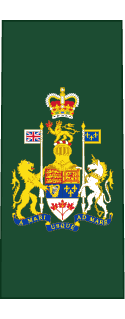
Chief Warrant Officer Richard George Buxton, DCM, CD
Some soldiers earn medals through a single moment of extraordinary courage. Others spend an entire lifetime leading from the front. Chief Warrant Officer Richard George Buxton was one of those rare men whose reputation was built on both. From the battlefields of Korea to the demanding ranks of Canada’s elite Airborne Regiment, Buxton became known as a fearless leader whose calm determination under fire inspired everyone who served beside him.
Born in Victoria, British Columbia, on 21 April 1926, Buxton enlisted in the Canadian Army in May 1944 during the closing stages of the Second World War. Remaining in uniform after the war, he joined the 1st Battalion, Princess Patricia’s Canadian Light Infantry and deployed to Korea as a platoon sergeant during one of the conflict’s most difficult periods.
On the night of 26 March 1952, Sergeant Buxton commanded No. 7 Platoon, “C” Company, occupying an isolated defensive position some 400 yards ahead of the main battalion line. Shortly before midnight, the Chinese launched an intense artillery bombardment, with more than 200 shells crashing onto the tiny position in just twenty minutes. Wounded almost immediately, Buxton refused evacuation and instead moved fearlessly from trench to trench, encouraging his men and reorganizing the platoon’s defences.
When the Chinese attacked in a coordinated pincer movement from both rear flanks, Buxton quickly recognized the danger and redeployed his soldiers to meet the assault. Throughout the night he directed artillery fire, supervised the evacuation of casualties, coordinated desperately needed ammunition resupply, and personally controlled the defence as enemy troops cut through the wire, hurled grenades, and fought at close quarters. Despite his wounds, he never relinquished command.
Only after dawn, when the attack had been completely repelled, would Buxton allow himself to be evacuated. Even then, he first reorganized his platoon, redistributed ammunition, supervised the cleaning of every weapon, and ensured that every wounded soldier had been cared for. When daylight revealed the battlefield, twenty-four Chinese soldiers lay dead around the perimeter of No. 7 Platoon’s position. His exceptional courage, tactical skill, and unwavering leadership had saved the position and undoubtedly many Canadian lives.
For these actions, Sergeant Richard George Buxton was awarded the Distinguished Conduct Medal (DCM), then the British Commonwealth’s second-highest decoration for gallantry in the face of the enemy, ranking immediately below the Victoria Cross.
Buxton continued his military career after Korea, earning a reputation as one of Canada’s finest senior non-commissioned officers. Rising through the ranks to Chief Warrant Officer, he became the Regimental Sergeant-Major of the Canadian Airborne Regiment, the regiment’s senior soldier and guardian of its discipline, standards, and traditions.
Tragically, his remarkable career ended far from the battlefield. On 30 July 1971, while conducting a freefall parachute training exercise at CFB Namao, Alberta, Chief Warrant Officer Buxton was killed in a parachuting accident at just 45 years of age. His death was deeply felt throughout the Canadian Army, particularly within the Airborne Regiment, where he was regarded as one of its most respected leaders.
Today, Chief Warrant Officer Richard George Buxton rests in the Field of Honour at Beechmount Cemetery in Edmonton, Alberta. His legacy is further preserved through Drop Zone Buxton, named in his honour, and by his medal group, which is proudly displayed in the Canadian War Museum in Ottawa.
Alongside the Distinguished Conduct Medal, Buxton's long and distinguished military service was recognised with the War Medal 1939–1945, Canadian Korea Medal, Canadian Volunteer Service Medal for Korea, United Nations Service Medal for Korea, Canadian Centennial Medal, and the Canadian Forces Decoration with Clasp.
Richard George Buxton embodied the very highest ideals of the Canadian soldier. His courage under fire in Korea, his devotion to his men, and his lifelong commitment to military excellence remain an enduring example of leadership, sacrifice, and duty to Canada.
Sources: Distinguished Conduct Medal citation, Canada Gazette (12 July 1952); Veterans Affairs Canada, Canadian Virtual War Memorial; Canadian War Museum Collections.
Become the named supporter for this profile and edit the tribute biography and portrait (Owner account required). Proceeds help keep the archive online.
$25 USD / year — annual sponsorship renewal. Keeps the page online and, where enabled, the family anniversary remembrance emails active.
