★
Loading archive…
Loading archive…
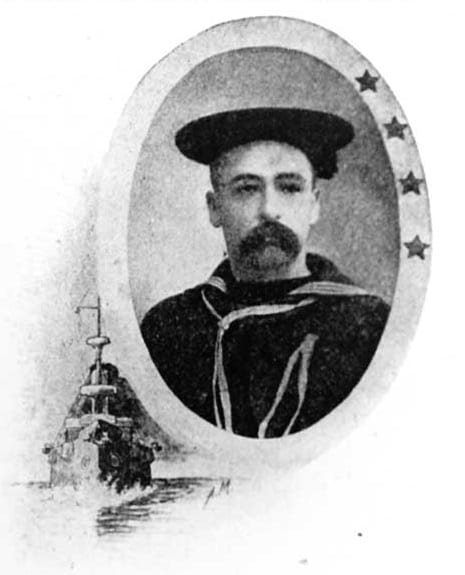
An unseen minefield threatened American ships approaching Caimanera. In July 1898, one young American sailor helped confront this deadly danger. Samuel S. Triplett, a United States Navy Medal of Honor recipient, distinguished himself during one of the most perilous naval operations of the Spanish-American War.
Born on 18 December 1869 at Cherokee, Kansas, Triplett entered the United States Navy from New York. During the Spanish-American War, he served as an Ordinary Seaman aboard the cruiser USS Marblehead. On 26 and 27 July 1898, at the approaches to Caimanera in Guantanamo Bay, Cuba, he participated in the dangerous operation to sweep for and disable enemy contact mines. Triplett helped clear a total of twenty-seven mines, contributing to the safety and freedom of movement of American naval forces.
His extraordinary courage was formally recognised through General Order No. 500, dated 14 December 1898, which awarded him the Medal of Honor. The official citation specifically identifies his service aboard USS Marblehead and commends his heroic participation in sweeping for and disabling the twenty-seven contact mines. His Spanish-American War service is also represented by the Spanish Campaign Medal.
Triplett's story reminds us that naval heroism was not confined to great fleet battles. Sometimes courage meant entering dangerous waters, confronting unseen explosives and performing a task that others might never have survived. He died in 1957, leaving behind a legacy of courage that remains part of the history of the United States Navy and the Medal of Honor.
Become the named supporter for this profile and edit the tribute biography and portrait (Owner account required). Proceeds help keep the archive online.
$25 USD / year — annual sponsorship renewal. Keeps the page online and, where enabled, the family anniversary remembrance emails active.