★
Loading archive…
Loading archive…

Lieutenant-General, British Army
Support & adopt this hero ↓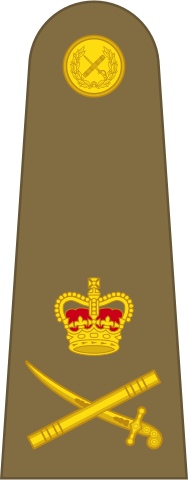
He breached a fortress gate and fought on despite his wounds
Sir Fenton John Aylmer, 13th Baronet, VC, KCB, combined extraordinary courage as a Royal Engineers officer with a career that took him from India's frontier campaigns to command in the First World War. Born at Hastings, Sussex, on 5 April 1862, he trained at the Royal Military Academy, Woolwich, and was commissioned into the Royal Engineers in 1880. His early service included Burma, Hazara and the Hunza-Nagar campaign.
On 2 December 1891, Captain Aylmer accompanied the storming party attacking Nilt Fort, in what is now Pakistan, with the Bengal Sappers and Miners. He placed and ignited gun-cotton to breach the inner gate. Wounded in the leg and right hand, he continued firing his revolver and fighting until loss of blood caused him to collapse. His Victoria Cross citation, published in The London Gazette on 12 July 1892, recognised his conspicuous bravery during the assault and capture of the fort. He received the medal at Rawalpindi on 28 October 1892.
Aylmer served with the Chitral Relief Force in 1895, including the storming of the Malakand Pass and the crossing of the Swat River. Senior engineering and staff appointments followed, culminating in service as Adjutant-General in India. He became a Companion of the Order of the Bath in 1907 and a Knight Commander in the 1916 New Year Honours.
Promoted to lieutenant-general in 1915, Aylmer commanded the Tigris Corps in Mesopotamia during the attempts to relieve the besieged garrison at Kut in early 1916. The relief operations ultimately failed, and he was replaced in command. His service in Mesopotamia was mentioned in despatches. He subsequently commanded the Mhow Divisional Area in India and retired on 8 January 1919.
Appointed Colonel Commandant of the Royal Engineers in 1922, he inherited the Donadea baronetcy in 1928. He died at Wimbledon on 3 September 1935, aged 73. His Victoria Cross is held by the Royal Engineers Museum at Chatham, preserving the story of an engineer who fought on after breaching Nilt Fort.
Official Victoria Cross citation
For his conspicuous bravery in the assault and capture of the Nilt Fort, on 2 December 1891. This officer accompanied the storming party, burst open the inner gate with gun-cotton, which he placed and ignited, and though severely wounded, once in the leg and twice in the right hand, fired nineteen shots with his revolver, killing several of the enemy, and remained fighting, until, fainting from loss of blood, he was carried out of the action.
Become the named supporter for this profile and edit the tribute biography and portrait (Owner account required). Proceeds help keep the archive online.
$25 USD / year — annual sponsorship renewal. Keeps the page online and, where enabled, the family anniversary remembrance emails active.