★
Loading archive…
Loading archive…
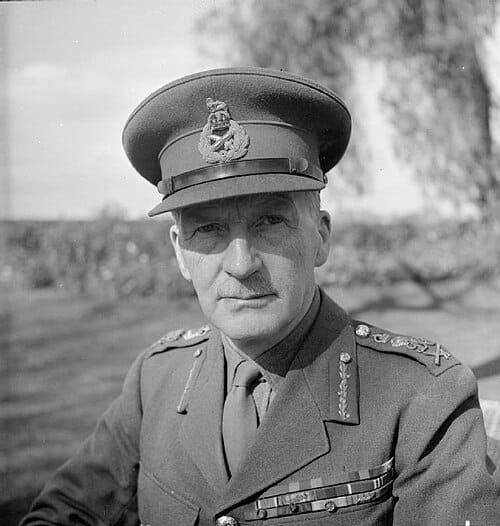
Field Marshal, British Army
Support & adopt this hero ↓
Across the Atlantic he held an uneasy wartime alliance firm.
John Greer Dill was born at Lurgan, County Armagh, on Christmas Day 1881. Educated at Cheltenham and Sandhurst, he entered the Leinster Regiment in May 1901 and served in the closing stages of the South African War. Regimental duties and Staff College followed before the First World War transformed his career.
Dill went to France in November 1914 as a brigade major. He served through the battles of 1915 and received the Distinguished Service Order. Subsequent appointments took him to divisional, corps and general headquarters, where his work increasingly concerned the planning and coordination on which armies depended. By the war's end he was a temporary brigadier-general, a Companion of St Michael and St George and the recipient of repeated mentions in despatches.
He helped train the next generation of officers after 1918, teaching at Staff College and the Imperial Defence College before becoming commandant at Camberley. His later posts included Director of Military Operations and Intelligence, command in Palestine and Transjordan, and the Aldershot command. When war returned in 1939, he led I Corps in France.
In May 1940 Dill became Chief of the Imperial General Staff during Britain's military crisis. His relationship with Winston Churchill was difficult, and he left that office late in 1941. The move that followed proved his most influential contribution to the Allied war effort. Sent to Washington, he headed the British Joint Staff Mission and represented Britain on the Combined Chiefs of Staff.
Dill developed a close working friendship with General George C. Marshall. By explaining British concerns to American commanders and American decisions to London, he helped keep competing national priorities from breaking a common strategy. His posthumous United States Distinguished Service Medal citation credits his work at Washington, Casablanca, Quebec, Cairo and Tehran with securing the military cooperation the alliance required. It praises his integrity, impartiality, selflessness and humanity, connecting those qualities to the Allies' combined achievements and future security (memorial inscription transcription: https://www.hmdb.org/m.asp?m=30690).
Promoted field marshal in 1941 and advanced to Knight Grand Cross of the Bath in 1942, Dill continued in Washington until his death at Walter Reed Hospital on 4 November 1944. His American colleagues' response demonstrated the regard in which they held him. Congress authorised his burial at Arlington, where Marshall later unveiled an equestrian memorial. The grave commemorates a soldier whose final battlefield was the conference table and whose success rested on the trust he built between allies.
Become the named supporter for this profile and edit the tribute biography and portrait (Owner account required). Proceeds help keep the archive online.
$25 USD / year — annual sponsorship renewal. Keeps the page online and, where enabled, the family anniversary remembrance emails active.