★
Loading archive…
Loading archive…
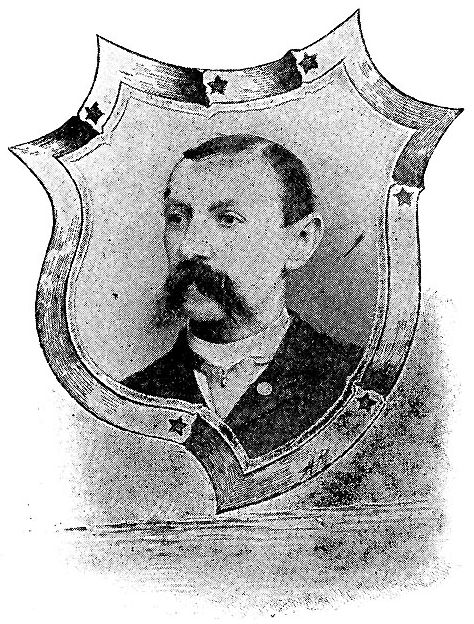
Landsman, U.S. Navy
Support & adopt this hero ↓
He Stayed Cool as His Gunboat Sank Under Fire
Thomas E. Corcoran was born in Dublin, Ireland, and later entered the United States Navy during the American Civil War. His service eventually placed him aboard USS Cincinnati, a Union ironclad gunboat operating on the Mississippi River during the campaign against Vicksburg. On May 27, 1863, under exceptionally accurate Confederate artillery fire, Corcoran displayed the calm courage that would earn him the Medal of Honor.
Vicksburg, Mississippi, was one of the Confederacy’s most important strongholds. Positioned high above the Mississippi River, its fortifications protected a vital stretch of the waterway and prevented the Union from gaining complete control of the river. By the spring of 1863, Major General Ulysses S. Grant’s army and Union naval forces were applying increasing pressure to the Confederate defenses.
USS Cincinnati was one of the ironclad gunboats supporting those operations. Built for combat on the western rivers, the vessel carried heavy guns and protective armor, but fighting against elevated shore batteries remained extremely dangerous. Confederate artillery crews overlooking the Mississippi could direct concentrated fire against ships moving below them.
Corcoran served aboard Cincinnati as a landsman. Although the rating was traditionally associated with sailors who had less sea experience than ordinary or able seamen, battle conditions placed every member of a gunboat’s crew at risk. During combat, the survival and effectiveness of the vessel depended on men remaining at their stations while shells struck the ship around them.
On May 27, 1863, USS Cincinnati was ordered against the Confederate batteries at Vicksburg.
The attack exposed the gunboat to devastating artillery fire.
As Cincinnati moved into action, Confederate gunners quickly found their range. Heavy projectiles struck the vessel with severe accuracy, damaging the ship while the Union crew continued fighting.
Corcoran remained at his duty.
The historical record of his Medal of Honor action is strikingly concise. He was recognized for being conspicuous for coolness and bravery under severely accurate fire.
Those words capture the essential character of his conduct.
He faced a situation in which enemy artillery was repeatedly striking his ship, yet he maintained the composure necessary to continue serving effectively. His distinction did not depend on an embellished account or a single theatrical moment. It rested on courage demonstrated while remaining steady under sustained and highly effective enemy fire.
The damage to Cincinnati eventually became overwhelming.
The gunboat was struck repeatedly and began taking on water. Her situation became so serious that the vessel could no longer remain afloat. Cincinnati ultimately sank during the engagement.
For the men aboard, the destruction of their ship transformed an already dangerous battle into a struggle for survival.
Corcoran’s calmness and bravery during those conditions stood out sufficiently to become part of the official record.
River warfare during the Civil War demanded a particular kind of courage. Ships could not always maneuver freely in narrow waterways, and when they attacked fortified positions, they sometimes had to remain within range of enemy guns for extended periods. Armor offered protection, but it could not eliminate the danger posed by heavy artillery.
The attack on Vicksburg demonstrated those realities with brutal clarity.
Corcoran served through that fire aboard a vessel being battered by Confederate batteries.
For his conduct on May 27, 1863, Thomas E. Corcoran was awarded the Medal of Honor.
His award was recorded under Navy General Order No. 17, dated July 10, 1863.
The Medal of Honor had been created during the Civil War only a short time before Corcoran’s action. It became the nation’s highest military decoration, recognizing extraordinary courage and distinguished conduct in the face of danger.
Corcoran’s award connected his name permanently with USS Cincinnati and the naval campaign against Vicksburg.
The broader campaign continued after the loss of the gunboat.
Union land and naval forces maintained pressure on Vicksburg until the Confederate garrison surrendered on July 4, 1863. The fall of the city was one of the most strategically significant victories of the war. Combined with Union control farther south, it effectively opened the Mississippi River and divided the Confederacy geographically.
Corcoran’s action aboard Cincinnati occurred during the difficult fighting that helped bring about that result.
His broader qualifying service during the Civil War is also represented by the Navy Civil War Campaign Medal.
The Navy Civil War Campaign Medal was authorized in 1908 to recognize qualifying service by members of the United States Navy and Marine Corps during the American Civil War. The 1908 date represents the authorization of the decoration rather than the date of Corcoran’s combat service.
The two decorations recognize different aspects of his military record.
The Medal of Honor commemorates his specific courage under Confederate fire aboard USS Cincinnati at Vicksburg on May 27, 1863.
The Navy Civil War Campaign Medal represents his broader qualifying service in the Union Navy during the conflict.
No verified devices are associated with either decoration.
Corcoran survived the Civil War and lived for decades after the engagement that defined his military legacy. He died on March 12, 1904, in New York City and was buried at Calvary Cemetery in New York.
His story remains closely tied to the waters below Vicksburg.
On May 27, 1863, USS Cincinnati advanced against powerful Confederate batteries and came under devastatingly accurate artillery fire.
The ship was struck repeatedly.
The damage became fatal.
Yet Thomas E. Corcoran remained composed and continued performing his duty.
His courage required no exaggerated description.
The official record captured it in two qualities: coolness and bravery.
For displaying both while his gunboat was being destroyed around him, Thomas E. Corcoran received the Medal of Honor.
Together with the Navy Civil War Campaign Medal recognizing his broader qualifying service, his decorations preserve the legacy of a Union sailor who remained steady under fire as USS Cincinnati fought beneath the guns of Vicksburg.
Become the named supporter for this profile and edit the tribute biography and portrait (Owner account required). Proceeds help keep the archive online.
$25 USD / year — annual sponsorship renewal. Keeps the page online and, where enabled, the family anniversary remembrance emails active.