★
Loading archive…
Loading archive…
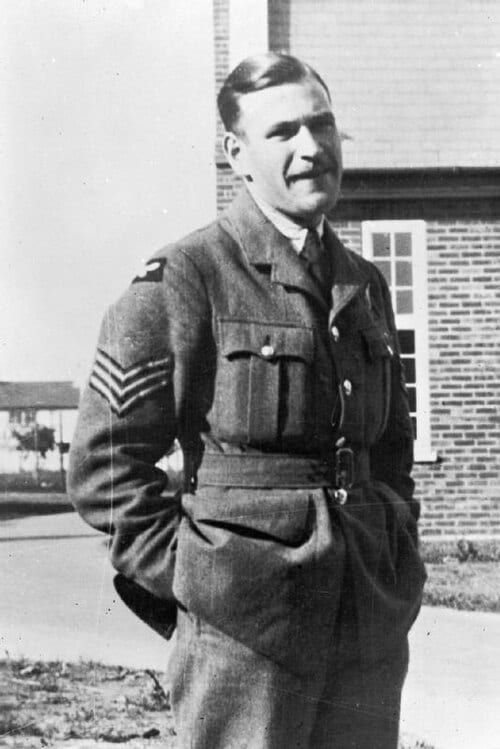
Sergeant, Royal Air Force
Support & adopt this hero ↓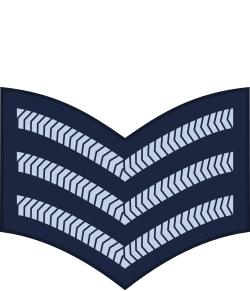
Sergeant Thomas Gray VC: The RAF Observer Who Navigated His Crew Into One of the Most Daring Attacks of the Battle of France
On 12 May 1940, five British aircraft flew towards a heavily defended bridge over Belgium's Albert Canal. Their mission was to stop the German advance at almost any cost. Only one aircraft returned. Among those who never came back was Sergeant Thomas Gray, a Royal Air Force observer whose extraordinary courage and navigation under devastating enemy fire would earn him Britain's highest award for gallantry, the Victoria Cross.
Born on 17 May 1914 at Urchfont, Wiltshire, Thomas Gray was the son of Ernest Arthur Gray, a police sergeant, and Susannah Mary Gray. He attended Warminster Secondary School and developed an early interest in aviation. On 27 August 1929, aged just 15, he enlisted in the Royal Air Force as a member of the 20th Entry at RAF Halton. He trained as an aero-engine fitter, developing the technical skills that would support his early RAF career.
Gray subsequently served with No. 40, No. 15 and No. 58 Squadrons. Alongside his engineering duties, he volunteered for aircrew service and gained experience as an air gunner. In February 1938, he joined No. 12 Squadron, where he trained as an air observer, undertaking navigation and bomb-aiming duties aboard Fairey Battle light bombers. Promoted to corporal and subsequently sergeant in January 1939, he became an important member of his squadron.
When the Second World War began, Gray deployed to France with No. 12 Squadron. The following May, as German forces swept through Belgium, the British Air Force was ordered to destroy a strategically important bridge over the Albert Canal. Its continued use was helping German troops advance into Belgium.
On 12 May 1940, Gray flew as observer in the leading aircraft piloted by Flying Officer Donald Edward Garland, with Leading Aircraftman Lawrence Reynolds serving as wireless operator and air gunner. The five selected crews attacked at extremely low altitude despite intense machine-gun and anti-aircraft fire and the threat of enemy fighters. Gray's exceptional navigation and composure enabled Garland's aircraft to lead the formation successfully onto its target. The attack was delivered, but the cost was devastating. Only one of the five aircraft returned.
Garland, Gray and Reynolds failed to return from the mission. Both Garland and Gray were subsequently awarded the Victoria Cross for their extraordinary bravery. Their joint award was officially announced in the London Gazette on 11 June 1940.
The official Victoria Cross citation specifically praised Gray's coolness and resource in navigating the aircraft under exceptionally difficult conditions, enabling the formation to attack its objective despite the overwhelming enemy opposition and subsequent losses.
His wartime service also qualified him for the 1939–45 Star and the War Medal 1939–1945, recognising his operational RAF service during the Second World War.
Sergeant Thomas Gray's story is one of courage, professional skill and extraordinary devotion to duty. He was only 25 years old when he gave his life during the Battle of France. His actions alongside Donald Garland remain a remarkable chapter in the history of the Royal Air Force and the Victoria Cross.
Official award citation: The London Gazette, 11 June 1940, Issue 34870, page 3516, Air Ministry announcement of the Victoria Cross awarded to Flying Officer Donald Edward Garland and Sergeant Thomas Gray.
Become the named supporter for this profile and edit the tribute biography and portrait (Owner account required). Proceeds help keep the archive online.
$25 USD / year — annual sponsorship renewal. Keeps the page online and, where enabled, the family anniversary remembrance emails active.