★
Loading archive…
Loading archive…
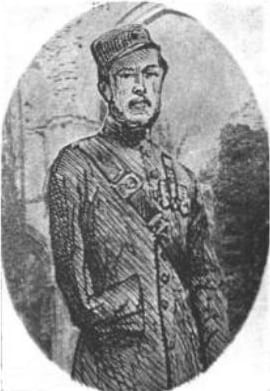
Corporal, British Army
Support & adopt this hero ↓
When Brigadier Hope Grant's horse was shot from beneath him during the Siege of Delhi, a British cavalryman refused to abandon his commander. Private Thomas Hancock would suffer a terrible wound during the rescue, eventually losing his right arm. His courage earned him the Victoria Cross, but the hardships that followed reveal a story of sacrifice far beyond the battlefield.
Born in Kensington, London, in July 1823, Thomas Hancock joined the British Army's 3rd Light Dragoons before transferring to the 9th (Queen's Royal) Lancers. His military career took him through some of the fiercest conflicts in nineteenth-century British India. During the Gwalior Campaign of 1843, he participated in the Battle of Punniar and earned the Gwalior Star. His service at Sobraon during the First Anglo-Sikh War was recognised by the Sutlej Medal, bearing Sobraon 1846 on its reverse. He subsequently fought at Chilianwala and Goojerat during the Second Anglo-Sikh War, earning the Punjab Medal with clasps for both battles.
The defining moment of Hancock's life came on 19 June 1857, during the Indian Rebellion and the Siege of Delhi. Amid fierce fighting, a wagon of Major Scott's artillery battery exploded and Brigadier J. H. Grant's horse was shot down. Hancock, fellow lancer Private John Purcell, and Roopur Khan of the 4th Irregular Cavalry remained with the stranded commander. Grant was dragged to safety using Roopur Khan's horse, but Hancock was severely wounded during the action.
Brigadier Grant formally praised the three men's conduct in his report of 22 June 1857. Hancock and Purcell were subsequently awarded the Victoria Cross, announced in The London Gazette on 15 January 1858. Hancock also received the Indian Mutiny Medal with the Delhi clasp. His wound ended his active military career and ultimately required the amputation of his right arm.
Returning to Britain, Hancock faced the difficult task of rebuilding his life as a disabled veteran. In March 1859, he joined the newly established Corps of Commissionaires, an organisation created to provide employment for former servicemen. He became one of its original members and found work with Hunt & Roskell, jewellers to Queen Victoria. On 8 June 1859, Queen Victoria personally presented Hancock with his Victoria Cross at Buckingham Palace.
Yet the recognition of his bravery did not ensure lifelong security. Despite his distinguished military service, Hancock later experienced severe financial hardship. He died at Westminster Workhouse on 12 March 1871, aged 47, and was buried in an unmarked grave in London's Brompton Cemetery. His resting place remained without a memorial until 15 October 2011, when a stone was finally dedicated in his honour.
Thomas Hancock VC stands among the remarkable cavalrymen of the 9th Lancers, whose service spanned the Gwalior Campaign, the Sikh Wars and the Indian Rebellion. His five military honours record years of active service, but his lasting legacy lies in the courage he displayed when another man's life depended on him. His story reminds us that extraordinary battlefield bravery can coexist with profound personal suffering, and that the sacrifices made by wounded veterans deserve recognition long after their wars have ended.
Become the named supporter for this profile and edit the tribute biography and portrait (Owner account required). Proceeds help keep the archive online.
$25 USD / year — annual sponsorship renewal. Keeps the page online and, where enabled, the family anniversary remembrance emails active.