★
Loading archive…
Loading archive…

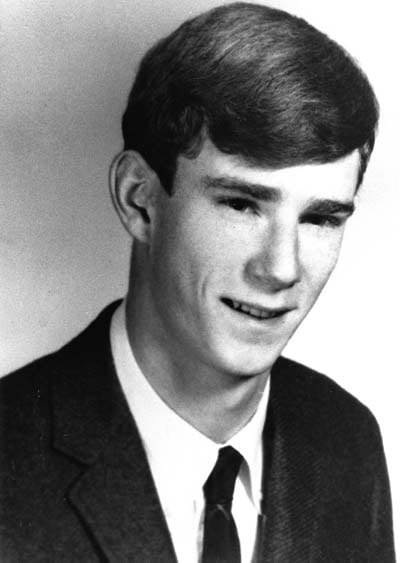
What drives a soldier to run into enemy fire, not once, but three times, knowing that every step could be his last? For Specialist Fourth Class Thomas Joseph McMahon, the answer was simple: wounded comrades needed him. On March 19, 1969, in the jungles of South Vietnam, this 20-year-old U.S. Army combat medic demonstrated extraordinary courage that would earn him the Medal of Honor, America's highest military decoration for valor. His final act of selflessness became an enduring example of battlefield heroism during the Vietnam War.
Born on June 24, 1948, in Washington, D.C., McMahon entered the United States Army through Portland, Maine, in 1967. He served as a medical aidman with Company A, 2nd Battalion, 1st Infantry Regiment, 196th Infantry Brigade, Americal Division. His mission was to save lives under the most dangerous conditions, often without the protection or firepower available to the infantrymen he accompanied.
On March 19, 1969, in Quang Tin Province, McMahon's company came under intense enemy fire from heavily fortified positions. Three American soldiers lay seriously wounded. While others sought protection, McMahon left his covered position and rushed through enemy fire to reach the first casualty. He administered emergency treatment and carried the wounded soldier to safety.
But another man remained exposed. Without hesitation, McMahon returned through the gunfire, reached the second casualty, and began evacuating him. During the rescue, an exploding mortar round wounded McMahon. Despite his injuries, he refused medical attention. One soldier still needed help, and McMahon would not abandon him.
For the third time, the young medic charged into the deadly barrage. Before he could reach his remaining wounded comrade, he was mortally wounded. He had placed the lives of his fellow soldiers above his own until his final moments.
His extraordinary sacrifice was recognized with the Medal of Honor, awarded posthumously under Department of the Army General Orders No. 46, dated August 28, 1970. The official citation honors his exceptional gallantry, determination, and devotion to his comrades. His combat wounds and death also support his Purple Heart recognition. His military service is further reflected in the National Defense Service Medal, Vietnam Service Medal, and Republic of Vietnam Campaign Medal with its 1960 campaign device.
On August 6, 1970, President Richard M. Nixon presented McMahon's Medal of Honor to his family at the White House. Although born in Washington, D.C., McMahon's military service was credited to Maine, where he is buried at Mount Hope Cemetery in Lewiston. His name is also engraved on the Vietnam Veterans Memorial in Washington, D.C., on Panel 29W, Line 81.
Thomas J. McMahon was only 20 years old when he gave his life. Yet his legacy reaches far beyond the battlefield. His story reminds future generations that true courage is not the absence of fear, but the willingness to risk everything for another human being. He entered the battlefield as a soldier and medic, but he is remembered as an American hero whose compassion proved stronger than the instinct for self-preservation.
Become the named supporter for this profile and edit the tribute biography and portrait (Owner account required). Proceeds help keep the archive online.
$25 USD / year — annual sponsorship renewal. Keeps the page online and, where enabled, the family anniversary remembrance emails active.