★
Loading archive…
Loading archive…
He crossed a burning outpost to bring wounded men to safety.
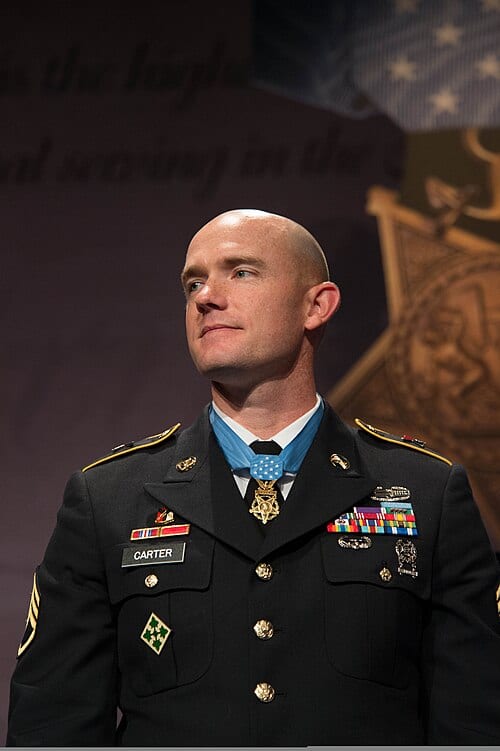
Ty Michael Carter was born in Spokane, Washington, in January 1980. His family spent much of his childhood in California before returning to Spokane, where he graduated from North Central High School in 1998. He enlisted in the Marine Corps that October, trained as a combat engineer and served in Okinawa. His duties included intelligence work and marksmanship instruction. He left the Marines honourably in 2002.
Carter studied biology at community college and became a father before deciding to return to military service. He enlisted in the Army in January 2008 and trained as a cavalry scout. Assigned to the 3rd Squadron, 61st Cavalry Regiment, 4th Infantry Division, he deployed to Afghanistan in May 2009.
On 3 October, approximately three hundred enemy fighters attacked Combat Outpost Keating from high ground surrounding the position. Carter’s Medal of Honor citation records his repeated runs across exposed ground to supply ammunition and his decision to remain at an isolated defensive position. Although wounded, he helped Sergeant Bradley Larson prevent attackers from overrunning their part of the perimeter.
He then left cover to reach Specialist Stephan Mace, who lay critically wounded outside the position. Carter provided first aid and carried him to temporary shelter. He subsequently recovered a radio from a fallen soldier, restoring contact with the rest of the outpost. With other soldiers providing covering fire, Carter and Larson moved Mace across open ground to the aid station. The citation credits Carter’s actions with helping prevent the position’s capture and saving fellow soldiers’ lives (Congressional Medal of Honor Society, https://www.cmohs.org/recipients/ty-m-carter). Mace later died of his wounds despite the treatment and evacuation efforts.
Carter continued serving and deployed to Afghanistan again in 2012 with a unit based at Joint Base Lewis-McChord. President Barack Obama presented the Medal of Honor at the White House on 26 August 2013. At the ceremony, the President also addressed Carter’s struggle with the psychological effects of combat and his willingness to seek help.
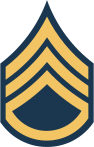
He left Army service as a staff sergeant in 2014. His subsequent public work has included speaking about post-traumatic stress and encouraging other veterans to obtain treatment. That advocacy extends the practical concern for fellow servicemen recorded in his citation into civilian life, while his career encompasses distinct periods in both the Marine Corps and the Army.
Become the named supporter for this profile and edit the tribute biography and portrait (Owner account required). Proceeds help keep the archive online.
$25 USD / year — annual sponsorship renewal. Keeps the page online and, where enabled, the family anniversary remembrance emails active.