★
Loading archive…
Loading archive…
He defended his gun with a rammer as its ammunition ran out.
Umrao Singh was born on 21 November 1920 in the Jhajjar district of present-day Haryana, India. He came from a rural family and joined the Royal Indian Artillery before the end of the Second World War. By December 1944 he was a havildar, commanding a gun detachment in 33 Mountain Battery, 30 Mountain Regiment, attached to the 81st West African Division in Burma.
His unit was supporting the advance through the Kaladan Valley. On the night of 15–16 December, its forward gun positions endured approximately ninety minutes of Japanese artillery and mortar fire before infantry attacked. The Victoria Cross citation records four successive assaults and emphasizes Singh’s encouragement of his men as they defended their gun.
He was wounded twice by grenades during the first attack but continued directing the detachment. When Japanese soldiers approached within a few yards, he fired a Bren gun over the shield of his artillery piece. The successive assaults killed or wounded almost all his crew. With ammunition exhausted and the neighbouring gun overrun, he seized a heavy gun implement and fought at close quarters until he was overwhelmed.
A counterattack recovered the position approximately six hours later. Singh was found unconscious beside the gun, suffering seven severe wounds. The citation records that the weapon remained serviceable and returned to action that day. It describes his conduct as a “supreme example of gallantry and devotion to duty” (The London Gazette, 31 May 1945; citation reproduced at https://www.victoriacross.org.uk/bbumraos.htm). The Indian Ministry of Defence’s obituary likewise identifies his defence of the gun as the central achievement.
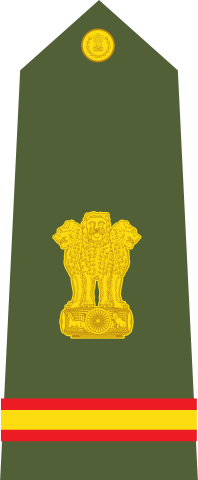
King George VI presented the Victoria Cross at Buckingham Palace in October 1945. Singh survived his wounds and continued his military career, later serving in the independent Indian Army. He reached the rank of subedar-major and retired with the honorary rank of captain. His later medal group reflected long service across both the wartime Indian Army and the post-independence force.
He remained associated with his home district and with the community of Victoria Cross recipients. In his final years he suffered prolonged ill health. He died at the Army Research and Referral Hospital in New Delhi on 21 November 2005, his eighty-fifth birthday, and was cremated with military honours in his home village the following day. His survival after the action allowed a further sixty years of military, family and village life beyond the night described in the citation.
Become the named supporter for this profile and edit the tribute biography and portrait (Owner account required). Proceeds help keep the archive online.
$25 USD / year — annual sponsorship renewal. Keeps the page online and, where enabled, the family anniversary remembrance emails active.