★
Loading archive…
Loading archive…
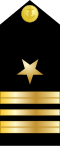
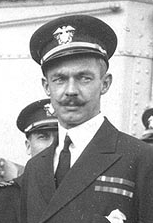
What does true heroism look like when hundreds of lives hang in the balance? On 16 December 1922, Lieutenant Commander Walter Atlee Edwards answered that question in the burning waters of the Sea of Marmara. As devastating explosions tore through a French military transport, this United States Navy officer risked his ship, his crew and his own life to save 482 people. His extraordinary courage earned him the Medal of Honor and secured his place among America's most remarkable naval heroes.
Born on 8 November 1886 in Philadelphia, Pennsylvania, Edwards entered the United States Naval Academy in 1906 and graduated in 1910. He began his naval career serving aboard battleships, cruisers and destroyers, developing the seamanship and discipline that would later prove decisive. During 1914, he commanded USS Walke, a vessel listed for Mexican Service Medal eligibility, before continuing his professional development through naval aviation instruction at Pensacola.
When the United States entered World War I, Edwards's career took him into the complex world of Allied naval aviation. From October 1917, he served as aviation aide to Vice Admiral William S. Sims, Commander of U.S. Naval Forces Operating in European Waters. He also served as chief liaison officer to the British Air Ministry, helping coordinate and understand the expanding role of aircraft in maritime warfare.
His distinguished wartime service earned him the Navy Cross, whose citation recognized his professional contribution to the American naval command in Europe. He was also a recipient of Britain's Distinguished Service Order. His European service qualified him for the World War I Victory Medal with the Overseas service clasp.
Yet the event that would define Edwards's legacy came several years after the war, when the lives of hundreds of civilians and military personnel depended upon his judgment.
On 16 December 1922, while commanding USS Bainbridge (DD-246) near Constantinople, Edwards encountered the French transport Vinh-Long engulfed in flames. The vessel carried 495 people, including men, women and children. Fire spread rapidly through the ship, threatening its ammunition stores and producing violent explosions.
Edwards maneuvered his destroyer alongside the burning transport despite the enormous danger. Even when explosions forced Bainbridge away, he persisted, ultimately positioning his ship against the French vessel to continue the evacuation. His crew also launched boats to rescue those who had jumped into the sea.
When the rescue ended, 482 people had survived.
For his extraordinary courage, Edwards received the Medal of Honor. His official citation praised the coolness, judgment and professional skill that made the rescue possible. President Calvin Coolidge presented the medal to him at the White House on 2 February 1924.
The French government also recognized his remarkable bravery by awarding him the Legion of Honour. The rescue became an enduring example of international cooperation and the humanitarian responsibilities of naval service.
Edwards continued his naval career after the rescue, serving with the Bureau of Navigation and aboard USS Pittsburgh before taking command of USS Billingsley in August 1927. His service aboard Pittsburgh during the China operations also supports entitlement to the Yangtze Service Medal, a decoration established retrospectively after his death.
Walter Atlee Edwards died in Washington, D.C., on 15 January 1928, aged just 41. He was buried at Arlington National Cemetery. His memory was later honoured through the naming of USS Edwards (DD-619), a destroyer that carried his name into the Second World War.
His legacy extends beyond rank, ribbons and national recognition. Edwards demonstrated that extraordinary military courage is not always measured by victories in battle. Sometimes it is measured by the willingness to face overwhelming danger so that strangers may live.
The rescue of 482 people from Vinh-Long remains a powerful reminder that true heroism is defined by courage, compassion and decisive leadership when every second matters.
Official Medal of Honor citation: For heroism in rescuing 482 men, women and children from the French military transport Vinh-Long, destroyed by fire in the Sea of Marmora, Turkey, on 16 December 1922. Lieutenant Commander Edwards, commanding the U.S.S. Bainbridge, placed his vessel alongside the bow of the transport and, in spite of several violent explosions which occurred on the burning vessel, maintained his ship in that position until all who were alive were taken on board. Of a total of 495 on board, 482 were rescued by his coolness, judgement and professional skill, which were combined with a degree of heroism that must reflect new glory on the United States Navy.
Become the named supporter for this profile and edit the tribute biography and portrait (Owner account required). Proceeds help keep the archive online.
$25 USD / year — annual sponsorship renewal. Keeps the page online and, where enabled, the family anniversary remembrance emails active.