★
Loading archive…
Loading archive…

Staff / colour sergeant, British Army
Support & adopt this hero ↓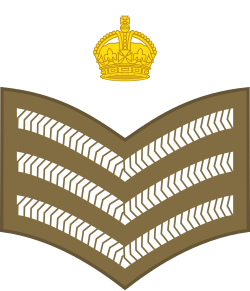
Shot in the shoulder, unable to fire his rifle, and surrounded by thousands of attacking Zulu warriors, Corporal William Wilson Allen refused to abandon his comrades. During the legendary Battle of Rorke's Drift in January 1879, his extraordinary courage helped save wounded soldiers and sustain one of the most celebrated defensive stands in British military history. His actions earned him the Victoria Cross, Britain's highest military decoration for gallantry in the face of the enemy.
William Wilson Allen joined the British Army in October 1859, serving with the 2nd Battalion, 24th Regiment of Foot. His early military career included service in Mauritius, educational duties, and promotion through the non-commissioned ranks. In 1878, his battalion deployed to southern Africa, where Allen participated in operations against the Galeka during the Ninth Frontier War. His campaign service was recognised by the South Africa Medal 1877–79 with the 1877-8-9 clasp.
On 22 January 1879, following the devastating British defeat at Isandhlwana, a small garrison at Rorke's Drift prepared to defend its mission station against a vastly larger Zulu force. As the attackers pressed against the barricades and threatened the hospital, Allen and Private Frederick Hitch held an exceptionally dangerous position exposed to enemy fire from the surrounding heights. Their determination kept communication with the hospital open and helped wounded and sick soldiers escape to safety.
Both men were severely wounded, but their contribution did not end there. After receiving treatment, they continued distributing desperately needed ammunition to the defenders throughout the night. At a moment when every cartridge mattered, Allen demonstrated that battlefield heroism was not only about firing a weapon, but also about ensuring that others could continue to fight.
Their extraordinary bravery was formally recognised in a joint Victoria Cross citation published in The London Gazette on 2 May 1879, Issue 24717, page 3178. The citation specifically credited Allen and Hitch with maintaining communication with the hospital despite severe wounds, enabling the evacuation of patients, and continuing to supply ammunition after becoming incapable of fighting themselves. Queen Victoria personally presented Allen with his Victoria Cross at Windsor Castle on 9 December 1879.
After the Anglo-Zulu War, Allen continued serving in the British Army, working as a military instructor in Brecon and later as an instructor of musketry at Monmouth. He eventually attained the rank of Colour Sergeant, dedicating his later career to training other soldiers.
William Wilson Allen died from influenza on 12 March 1890 in Monmouth, Wales, while still serving. He was buried with military honours in Monmouth Cemetery. His Victoria Cross is preserved at the Regimental Museum of The Royal Welsh in Brecon.
More than a century after Rorke's Drift, Allen's story remains a powerful example of courage under fire. When his wounds prevented him from fighting, he found another way to serve. His legacy is not simply that he helped defend Rorke's Drift, but that even after being wounded, he continued doing everything he could to keep his fellow soldiers alive.
Become the named supporter for this profile and edit the tribute biography and portrait (Owner account required). Proceeds help keep the archive online.
$25 USD / year — annual sponsorship renewal. Keeps the page online and, where enabled, the family anniversary remembrance emails active.