★
Loading archive…
Loading archive…
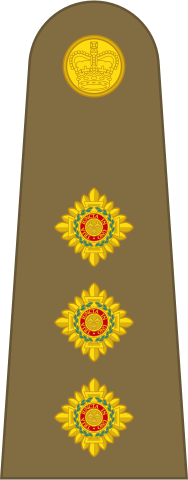
He rushed machine guns alone and turned them on his enemies.
William Allison White was born at Mitcham, Surrey, on 19 October 1894, the son of Samuel and Eliza White. He grew up in a working family and later lived with an uncle at Barrow-in-Furness while learning ship plating. His pre-war experience in an industrial town preceded a military career that eventually took him from the ranks to an officer's commission.
White initially served in the King's Own Royal Lancaster Regiment and became a sergeant. During 1918 he transferred to the Machine Gun Corps and served with the 38th Battalion, attached to the 38th Welsh Division. He was commissioned as a temporary second lieutenant. The unit operated Vickers machine guns, weapons requiring trained teams and an understanding of both offensive support and the defence of newly captured ground.
On 18 September 1918 near Gouzeaucourt, White repeatedly intervened when German guns stopped the infantry. His Victoria Cross citation, published in November 1918, describes three distinct attacks. First he rushed a machine-gun position alone, killed its three-man crew and captured the weapon. At a second gun he advanced with two companions, but both were shot down; he continued alone and overcame the five defenders.
When another position held up the advance, White gathered a small party and attacked it, inflicting further losses. He then used his own guns together with captured weapons to secure the ground. The citation recognized his initiative across the whole action, including the consolidation that made the advance sustainable rather than a temporary success (official notice transcribed by Merton Council: https://cis.photoarchive.merton.gov.uk/white-vc).
King George V presented White's Victoria Cross on 27 March 1919. He married Violet Price in 1921, and their marriage lasted until her death thirty-five years later. White continued his association with the Territorial Army and served in the Second World War as a Royal Artillery captain. His later long-service recognition included a Territorial Efficiency Medal and an Efficiency Decoration dated 1956, showing that his military involvement extended well beyond the 1918 action.
White died at Wellington, Shropshire, on 13 September 1974. After cremation at Shrewsbury, his ashes were interred in his wife's grave at Hildenborough, Kent. His preserved medal group links his wartime gallantry with service and commemorative awards earned over a much longer life.
Become the named supporter for this profile and edit the tribute biography and portrait (Owner account required). Proceeds help keep the archive online.
$25 USD / year — annual sponsorship renewal. Keeps the page online and, where enabled, the family anniversary remembrance emails active.