★
Loading archive…
Loading archive…
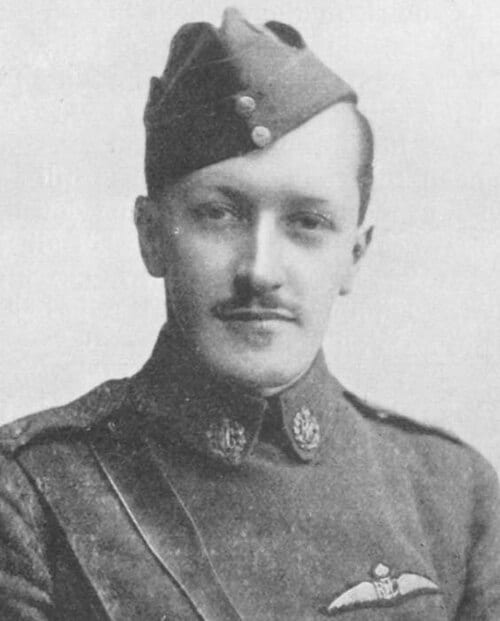
RFC Lieutenant, British Army
Support & adopt this hero ↓Flew home mortally wounded after bombing an enemy rail line.
William Barnard Rhodes-Moorhouse VC was born William Barnard Moorhouse in London on 26 September 1887. His parents were Edward Moorhouse and Mary Ann Rhodes, whose mother was Māori and belonged to Ngāti Ruanui. Through his maternal family he had close New Zealand connections, although he grew up and received his education in England.
He attended Harrow School and Trinity Hall, Cambridge, leaving university without a degree to pursue engineering, motor racing and the emerging world of aviation. With James Radley he helped develop the Radley-Moorhouse monoplane. He took part in flying competitions and, in 1912, became the first pilot to cross the English Channel carrying two passengers. His enthusiasm for speed also had serious consequences: before the war he faced manslaughter charges arising from two fatal road accidents.
He married Linda Beatrice Morritt in 1912. Their son, William Henry, was born in 1914. He adopted the additional surname Rhodes to comply with his grandfather's will.
In August 1914 he received a commission as a second lieutenant in the Special Reserve of the Royal Flying Corps, the British Army's aviation service. Initially stationed at Farnborough, he obtained an operational posting to No. 2 Squadron at Merville in France in March 1915. Flying B.E.2 aircraft, he carried out reconnaissance and bombing work as aircraft began to play a larger part in warfare.
On 26 April 1915, during the Second Battle of Ypres, he flew alone to attack the railway at Courtrai, now Kortrijk, in Belgium. The junction carried German reinforcements towards the front. He approached at low altitude and released his 100-pound bomb, exposing himself to intense ground fire. Badly wounded, he began the return journey and was hit again before reaching Allied lines.
He nevertheless brought his damaged aircraft back to Merville, flying thirty-five miles at very low altitude. After landing, he insisted on reporting the result of his mission before being transferred for further treatment. He died of his wounds the following day, 27 April 1915, aged twenty-seven.
Rhodes-Moorhouse was promoted posthumously to lieutenant, with seniority backdated to 24 April. His Victoria Cross was announced on 22 May 1915, making him the first airman and the first person of Māori descent to receive the award. His body was returned to England and buried at Parnham House near Beaminster, Dorset.
His son later became a Royal Air Force pilot, earned the Distinguished Flying Cross and was killed during the Battle of Britain in 1940. He was buried beside his father, linking two generations of the family's aviation service.
Official Victoria Cross citation The London Gazette, 22 May 1915, pages 4989-4990.
War Office, 22nd May, 1915.
His Majesty the KING has been graciously pleased to approve of the grant of the Victoria Cross to the undermentioned Officers, Non-commissioned Officer, and Men, for their conspicuous acts of bravery and devotion to duty whilst serving with the Expeditionary Force:
2nd Lieutenant William Barnard Rhodes-Moorhouse, Special Reserve, Royal Flying Corps.
For most conspicuous bravery on 26th April, 1915, in flying to Courtrai and dropping bombs on the railway line near that station. On starting the return journey he was mortally wounded, but succeeded in flying for 35 miles to his destination, at a very low altitude, and reported the successful accomplishment of his object. He has since died of his wounds.
Become the named supporter for this profile and edit the tribute biography and portrait (Owner account required). Proceeds help keep the archive online.
$25 USD / year — annual sponsorship renewal. Keeps the page online and, where enabled, the family anniversary remembrance emails active.