★
Loading archive…
Loading archive…
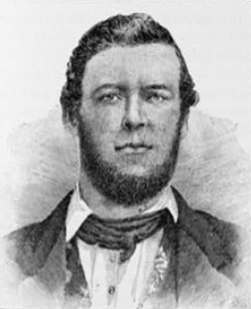
Boatswain's Mate, U.S. Navy
Support & adopt this hero ↓
He Stayed at His Gun After a Cannon Exploded
William Campbell was an Indiana-born sailor who served in the United States Navy during the American Civil War and earned the Medal of Honor for his conduct aboard USS Ticonderoga during the attacks on Fort Fisher, North Carolina. His surviving military record identifies him as a Boatswain’s Mate, an experienced enlisted rating whose responsibilities placed him among the sailors relied upon for the demanding practical work of operating a warship.
By late 1864, Campbell was serving aboard USS Ticonderoga, a steam-powered sloop of war assigned to the North Atlantic Blockading Squadron. The Union Navy was then concentrating enormous resources against Wilmington, North Carolina, one of the Confederacy’s last major ports open to blockade-running traffic. Guarding the approaches to Wilmington was Fort Fisher, a powerful coastal fortification controlling New Inlet and the Cape Fear River.
The first major Union attempt to capture Fort Fisher began on December 24, 1864. Ticonderoga joined the fleet assembled under Rear Admiral David D. Porter and took position with other wooden warships bombarding the Confederate defenses. Campbell served not only under his formal rating of Boatswain’s Mate but also as captain of a gun, placing him directly in the operation of one of the ship’s artillery pieces.
The bombardment quickly became deadly aboard Ticonderoga. During the fighting, a 100-pounder Parrott rifle exploded. The blast killed eight men and wounded twelve others in the immediate incident. Campbell remained at his station despite the destruction and casualties around the gun crews. His Medal of Honor citation later emphasized the skill, courage, coolness, and good conduct with which he continued performing his duties during the battle.
The December attack did not capture Fort Fisher. Although Porter’s fleet delivered a powerful bombardment, the accompanying Army operation was withdrawn. The fort remained in Confederate hands, and Wilmington’s maritime connection remained open.
The failure was temporary. Less than three weeks later, Union forces returned with a new Army expedition under Major General Alfred H. Terry while Porter once again directed the naval force. The second operation began on January 13, 1865. Ticonderoga resumed her place in the bombardment line as dozens of Union warships concentrated their guns against the Confederate defenses.
Campbell again served aboard the ship during the renewed attacks of January 13, 14, and 15. Ticonderoga maintained sustained fire against the fort’s batteries, including positions whose guns threatened the Union troops preparing to assault from the landward side. Campbell remained at his combat station as the ship continued its bombardment.
On January 15, the combined Union operation reached its decisive stage. Army troops attacked Fort Fisher from the land while the fleet continued suppressing Confederate artillery. After intense fighting, Union forces captured the fort. Its fall effectively closed the principal defensive gateway protecting Wilmington and dealt a major blow to the Confederacy’s remaining ability to receive supplies through the port.
Campbell’s Medal of Honor recognized his conduct across both Fort Fisher operations: December 24–25, 1864, and January 13–15, 1865. The award was tied specifically to his performance aboard Ticonderoga as a gun captain while holding the formal Navy rating of Boatswain’s Mate.
The distinction between those two descriptions is important. “Captain of a gun” described Campbell’s combat duty within the gun crew; it did not mean that he was a commissioned captain or commanded the ship. His verified Navy rating remained Boatswain’s Mate.
Campbell’s conduct was formally recognized in General Order No. 59, dated June 22, 1865. He received the Medal of Honor for his actions during the Fort Fisher campaign. No additional clasp, star, bar, or other device accompanied his award.
The Medal of Honor was still a relatively new decoration when Campbell received it. Congress had authorized the Navy Medal of Honor during the Civil War, and it became the principal federal decoration available for recognizing exceptional conduct by enlisted sailors and Marines. Campbell’s award therefore belongs to the earliest period in the history of the United States’ highest military decoration.
His story also reflects the nature of naval combat during the Civil War. Warships such as Ticonderoga depended on disciplined gun crews working in extremely dangerous conditions. Heavy artillery produced immense concussion, smoke, splinters, mechanical failures, and the constant possibility of catastrophic accidents. The explosion aboard Ticonderoga demonstrated that danger with devastating force.
Campbell’s recognized achievement was his refusal to abandon his responsibility when that danger became immediate. The official account does not depend on dramatic dialogue or an elaborate personal narrative. It records something simpler and more powerful: after a devastating gun explosion and under continuing enemy fire, he continued performing his duties with courage and steadiness.
The surviving authoritative record provides far more detail about Campbell’s wartime service than about his later civilian life. His exact death date and burial place are not securely established in the principal Medal of Honor records, and his postwar career remains much less documented than his service at Fort Fisher.
What remains clear is the military legacy created aboard USS Ticonderoga. During two major attempts to destroy one of the Confederacy’s strongest coastal defenses, Boatswain’s Mate William Campbell stayed at his gun and continued fighting after a catastrophic explosion struck his shipmates.
His Medal of Honor preserved that moment in the official history of the United States Navy. Campbell is remembered as one of the sailors whose discipline under fire helped sustain the naval bombardment that eventually contributed to the capture of Fort Fisher and the closing of Wilmington to Confederate blockade runners.
Become the named supporter for this profile and edit the tribute biography and portrait (Owner account required). Proceeds help keep the archive online.
$25 USD / year — annual sponsorship renewal. Keeps the page online and, where enabled, the family anniversary remembrance emails active.