★
Loading archive…
Loading archive…

He Joined the Forlorn Hope—and Survived Vicksburg
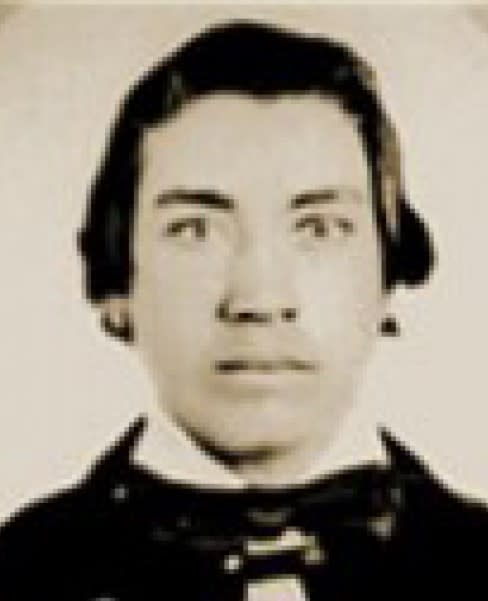
William Campbell was born in 1840 and came of age as the United States moved toward the crisis of the Civil War. When the conflict began, he entered Union service and became a soldier in Company I of the 30th Ohio Infantry. His wartime career would eventually carry him into one of the most important Union campaigns of the war and into an assault so dangerous that the volunteers chosen for its leading party became associated with one of the oldest terms for nearly hopeless military missions—the “forlorn hope.”
By the spring of 1863, the Union campaign against Vicksburg, Mississippi, had become central to the struggle for control of the Mississippi River. Vicksburg occupied commanding ground above the river and served as a critical Confederate stronghold connecting the eastern and western portions of the Confederacy. Major General Ulysses S. Grant’s forces maneuvered through Mississippi, fought a series of battles, and eventually drove Confederate troops back into the fortified city.
Campbell was serving as a Private with the 30th Ohio Infantry during these operations. His regiment belonged to the Union force pressing toward Vicksburg and took part in the difficult fighting surrounding the Confederate defenses.
On May 22, 1863, Grant ordered a major assault against the Vicksburg fortifications. The Union Army had already attacked the defenses on May 19 without breaking them, but Grant hoped a renewed and coordinated effort could carry the Confederate positions before a prolonged siege became necessary.
The defenses facing the Union troops were formidable. Confederate soldiers occupied strong earthworks positioned across broken terrain, ravines, steep slopes, and exposed approaches. Any soldier advancing toward the fortifications could expect concentrated rifle and artillery fire.
Before the main assault, volunteers were called upon for an especially dangerous mission. A storming party would move ahead of the attacking columns and help prepare the way for troops following behind. The assignment carried such obvious danger that participation required extraordinary courage.
William Campbell volunteered.
On May 22, he advanced as part of the volunteer storming party during the assault on Vicksburg. His later Medal of Honor citation summarized his conduct in direct language, recognizing his “gallantry in the charge of the volunteer storming party.”
The brief wording reflects the character of many Civil War Medal of Honor citations. Rather than constructing a lengthy narrative, it preserved the essential fact: Campbell voluntarily entered the leading element of an assault against heavily defended Confederate positions and distinguished himself during the charge.
The attack was fierce. Union troops moved toward the defenses while exposed to intense Confederate fire. The storming party faced the danger first, attempting to advance across the difficult ground before the larger attacking force. Despite the courage of the men involved, the Union assaults of May 22 failed to break the Confederate defenses.
Grant ultimately abandoned further immediate attempts to take Vicksburg by direct assault and began formal siege operations. Over the following weeks, Union forces tightened their lines around the city while naval forces maintained pressure from the Mississippi River. Supplies inside Vicksburg dwindled, and the Confederate position became increasingly desperate.
On July 4, 1863, Vicksburg surrendered.
The victory gave the Union control of one of the most important remaining Confederate positions on the Mississippi River. Combined with the later surrender of Port Hudson, it helped open the river to Union control and divided the Confederacy geographically. The Vicksburg Campaign became one of the decisive military achievements of the Civil War.
Campbell survived the campaign and continued his military service. He later attained the rank of Corporal, representing advancement beyond the Private rank he held when he performed his Medal of Honor action at Vicksburg.
For decades after the war, however, his extraordinary conduct during the volunteer assault remained without the nation’s highest military decoration.
That changed in 1894.
More than thirty years after the charge at Vicksburg, William Campbell received the Medal of Honor on August 14, 1894. The award formally recognized the courage he had demonstrated as a Private on May 22, 1863.
The Medal of Honor had originated during the Civil War and became the United States’ highest military decoration. Campbell’s award belonged to a group of Civil War decorations that were presented years, and sometimes decades, after the actions they recognized. The passage of time did not change the event for which he was honored: his voluntary participation and gallantry in the dangerous storming-party charge against the Vicksburg defenses.
Campbell’s story also illustrates the importance of ordinary enlisted soldiers within major military campaigns. He did not command the army or plan the strategy that ultimately captured Vicksburg. At the moment that defined his military legacy, he was a Private asked to face one of the most dangerous assignments available to an infantryman.
He volunteered to go first.
His service carried him through one of the Civil War’s decisive campaigns, and his bravery in the May 22 assault remained the central achievement of his military record. The Medal of Honor eventually ensured that his part in the attack would not disappear within the much larger history of Grant, Vicksburg, and the Union campaign along the Mississippi.
William Campbell lived for many years after receiving the decoration, surviving into the twentieth century before his death in 1919.
His legacy rests on a moment from May 1863 when the outcome of the Vicksburg Campaign was still uncertain. Before the Union Army settled into the siege that would ultimately force the city’s surrender, Campbell joined a volunteer storming party and advanced directly toward the Confederate defenses.
The assault did not capture Vicksburg that day, but the courage shown by the men who led it was not forgotten. More than three decades later, William Campbell’s gallantry in that charge was recognized with the Medal of Honor, permanently linking his name to one of the most dangerous and determined attacks of the Vicksburg Campaign.
Become the named supporter for this profile and edit the tribute biography and portrait (Owner account required). Proceeds help keep the archive online.
$25 USD / year — annual sponsorship renewal. Keeps the page online and, where enabled, the family anniversary remembrance emails active.