★
Loading archive…
Loading archive…

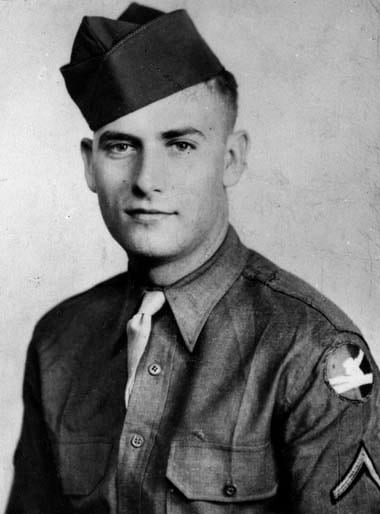
He entered a minefield twice to rescue his wounded comrades.
William D. McGee was born in Indianapolis, Indiana, on 19 January 1923. He attended Arsenal Technical High School and worked for Kroger before entering the United States Army. His family included his parents, William and Lillie, a sister and two brothers. The brothers also served during the war, one in India and another with the Navy in the Pacific. McGee married Ruth, who would later receive his country's highest military decoration on his behalf.
He entered the Army from Indianapolis during the Second World War. Assigned to the Medical Detachment of the 304th Infantry Regiment, 76th Infantry Division, he served as an aidman in the European campaign. His responsibilities took him wherever infantrymen needed immediate treatment, often before wounded soldiers could be moved to a collecting station. By March 1945 his division was advancing through Germany toward the Rhine.
On the night of 18 March, near Mülheim, McGee accompanied troops making an assault crossing of the Moselle. The defenders withdrew, but left antipersonnel mines along the riverbank. Two men in the first wave were injured. McGee went into the mined ground without waiting for orders, treated one casualty and carried him to safety. He then returned for the other man instead of remaining outside the danger area.
The Army Medical Department's official Medal of Honor citation describes how a mine exploded beneath him during that second rescue attempt. Although seriously wounded and losing blood, he understood that anyone approaching could set off another mine. He ordered his comrades to stay out of the field, placing their safety ahead of his own need for help. His decision brought the same concern for others that had taken him into the field in the first place.
McGee died in March 1945 and was buried in Luxembourg American Cemetery. The Medal of Honor was presented to his widow at Fort Benjamin Harrison on 23 February 1946 by Brigadier General John McMahon. His medal later entered the Indiana War Memorial collections. His grave overseas and the medal preserved in his home state connect the young Indianapolis worker with the soldiers he tried to bring back from the mined riverbank.
Medal of Honor citation:
A medical aidman, he made a night crossing of the Moselle River with troops endeavoring to capture the town of Mulheim. The enemy had retreated in the sector where the assault boats landed, but had left the shore heavily strewn with antipersonnel mines. Two men of the first wave attempting to work their way forward detonated mines which wounded them seriously, leaving them bleeding and in great pain beyond the reach of their comrades. Entirely on his own initiative, Pvt. McGee entered the minefield, brought out one of the injured to comparative safety, and had returned to rescue the second victim when he stepped on a mine and was severely wounded in the resulting explosion. Although suffering intensely and bleeding profusely, he shouted orders that none of his comrades was to risk his life by entering the death-sown field to render first aid that might have saved his life. In making the supreme sacrifice, Pvt. McGee demonstrated a concern for the well-being of his fellow soldiers that transcended all considerations for his own safety and a gallantry in keeping with the highest traditions of the military service.
Become the named supporter for this profile and edit the tribute biography and portrait (Owner account required). Proceeds help keep the archive online.
$25 USD / year — annual sponsorship renewal. Keeps the page online and, where enabled, the family anniversary remembrance emails active.