★
Loading archive…
Loading archive…
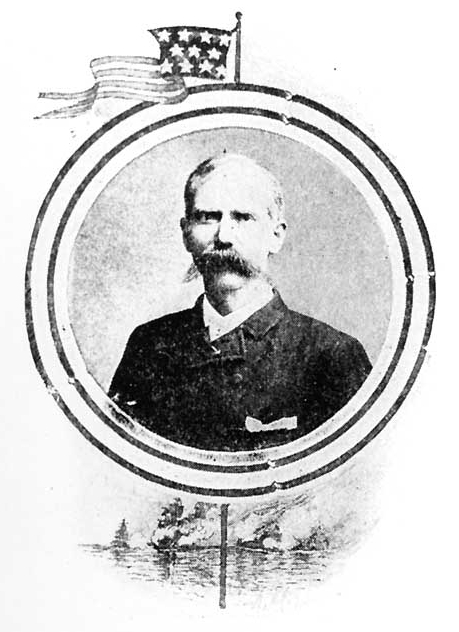
Ordinary Seaman, U.S. Navy
Support & adopt this hero ↓
Wounded at Mobile Bay, He Stayed at His Gun
William D. Newland was born on January 5, 1841, in Medway, Massachusetts. During the American Civil War, he entered the United States Navy and became an Ordinary Seaman, serving aboard USS Oneida. His place in American military history would be secured during one of the war’s most dramatic naval engagements—the Battle of Mobile Bay.
By the summer of 1864, Mobile Bay remained strategically important to the Confederacy. Its entrance was protected by Fort Morgan and Fort Gaines, naval mines then commonly called torpedoes, and a small Confederate squadron that included the powerful ironclad CSS Tennessee. Rear Admiral David G. Farragut assembled a Union fleet to force its way into the bay, defeat the Confederate naval force, and weaken the coastal defenses controlling access to Mobile.
USS Oneida formed part of Farragut’s attacking force. For the dangerous passage into Mobile Bay, the larger wooden warships were paired with smaller vessels so that one ship could assist another if it became disabled. Oneida was paired with USS Galena and occupied a position near the rear of the Union column as the fleet prepared to pass Fort Morgan.
Before dawn on August 5, 1864, the Union ships began moving toward the Confederate defenses. Newland was serving as loader of Oneida’s after 11-inch gun. His task required him to keep the heavy naval weapon supplied during combat while the gun crew maintained fire against enemy positions and vessels.
The battle quickly became chaotic. The Union ironclad USS Tecumseh struck a torpedo and sank, while the remaining ships continued toward Fort Morgan under intense fire. Oneida was repeatedly exposed to Confederate artillery as the fleet passed the fort and entered the bay.
Newland remained at his assigned gun. His Medal of Honor citation later emphasized his good conduct and faithful discharge of duty, noting that he behaved splendidly under enemy fire throughout the battle. His performance was not based on a single brief gesture but on maintaining his combat station while the ship endured a sustained and dangerous engagement.
Oneida suffered severely during the action. Confederate fire struck the ship, damaging her machinery and inflicting numerous casualties among the crew. Newland himself received a flesh wound during the fighting. Despite the injury and the damage around him, his recognized conduct centered on his continued performance as loader of the after 11-inch gun.
The situation aboard Oneida became especially difficult when damage affected her ability to maneuver. Farragut’s decision to pair the wooden ships proved valuable, as Galena was able to assist the damaged Oneida while the battle continued. Even under these conditions, Oneida remained part of the Union force that successfully penetrated the Confederate defenses.
Once inside the bay, the battle shifted toward the Confederate naval squadron. The ironclad CSS Tennessee became the principal remaining threat and was attacked by Union vessels from several directions. After intense fighting, Tennessee surrendered. The Union victory also placed enormous pressure on the Confederate coastal defenses, while Fort Morgan had been heavily damaged during the operation.
For Newland, the battle was the defining moment of his naval service. As an Ordinary Seaman rather than a commissioned officer, he had no responsibility for directing the fleet or determining the battle plan. His contribution was more immediate: remaining at a demanding combat station, loading a heavy naval gun, enduring enemy fire, and continuing his duty despite being wounded.
His conduct at Mobile Bay was formally recognized later that year. Under General Order No. 45, dated December 31, 1864, William D. Newland received the Medal of Honor for his actions aboard USS Oneida on August 5. The decoration recognized his faithful performance and courage under fire during the engagement that resulted in the capture of CSS Tennessee and the damaging of Fort Morgan.
The Medal of Honor was still a young decoration at the time. Congress had authorized the Navy Medal of Honor during the Civil War, and it became the principal national military decoration available to recognize exceptional conduct by enlisted sailors and Marines. Newland therefore belonged to the earliest generation of American service members whose wartime actions were honored with the nation’s highest military decoration.
His Medal of Honor carried no additional clasp, star, or other device. The award stood on the strength of his conduct during the Battle of Mobile Bay.
Newland’s experience also represents the demanding reality of nineteenth-century naval warfare. A gun crew aboard a wooden steam warship operated heavy artillery while exposed to shellfire, splinters, smoke, mechanical damage, and the possibility of catastrophic injury. Each man’s ability to continue performing his assigned role directly affected the ship’s ability to fight.
In that environment, Newland’s Medal of Honor citation praised something fundamental to naval combat: remaining dependable when the ship and its crew were under extreme pressure. He did not abandon his station when Oneida was struck, and his own wound did not erase the record of the duty he performed during the battle.
The Union victory at Mobile Bay became one of the most important naval successes of the Civil War. It demonstrated the determination of Farragut’s fleet to penetrate heavily defended waters and significantly reduced Confederate control of the Gulf Coast. The capture of Tennessee removed the strongest Confederate naval vessel in the bay, while the pressure on the surrounding forts continued after the fleet had broken through.
Newland survived the Civil War and lived for decades after the battle that earned him national recognition. He died in 1914 and was buried in Prospect Hill Cemetery in Millis, Massachusetts.
His historical legacy remains firmly connected to the deck of USS Oneida on August 5, 1864. In a battle marked by mines, heavy artillery, damaged ships, and close combat with a Confederate ironclad, an Ordinary Seaman from Massachusetts continued loading his ship’s gun while under enemy fire and after suffering a wound.
That steadfast performance earned William D. Newland the Medal of Honor and preserved his name among the sailors whose courage helped secure victory at Mobile Bay.
Become the named supporter for this profile and edit the tribute biography and portrait (Owner account required). Proceeds help keep the archive online.
$25 USD / year — annual sponsorship renewal. Keeps the page online and, where enabled, the family anniversary remembrance emails active.