★
Loading archive…
Loading archive…

Captain, U.S. Army
Support & adopt this hero ↓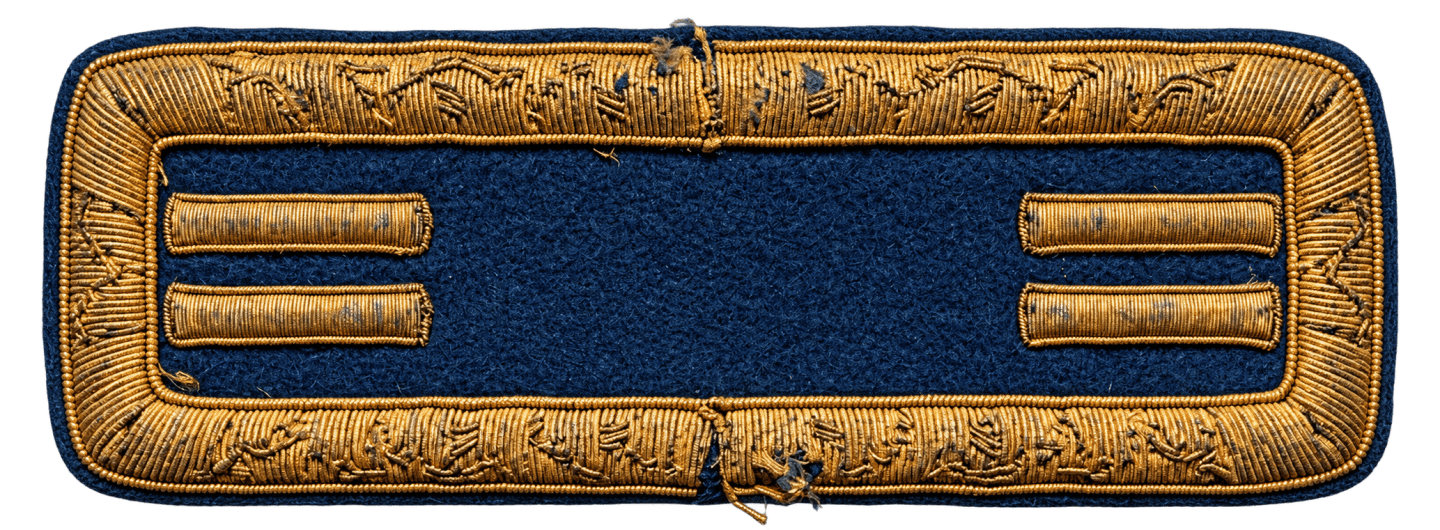
William Edward Miller
William Edward Miller was born on February 5, 1836, at West Hill in Cumberland County, Pennsylvania, the son of Andrew G. Miller and Eleanor Umberger Miller. He grew up in a farming family and, as the eldest child, assumed considerable responsibility at an early age. His formal education was limited, but he developed an early interest in military life. As a teenager he joined a local mounted militia organization known as the Big Spring Adamantine Guards, an experience that gave him familiarity with horses, cavalry drill, and military discipline years before the outbreak of the American Civil War.
Before the war, Miller married Elizabeth Anne Hocker in 1856 and began establishing a family life in Cumberland County. His first wife died of typhoid fever in 1859, leaving Miller a widower shortly before the national crisis of secession and civil war transformed his life.
When the Civil War began in 1861, the mounted militia unit with which Miller had been associated offered its services to Pennsylvania. After the federal government began accepting three-year cavalry organizations, the unit became Company H of the 3rd Pennsylvania Volunteer Cavalry, also designated the 60th Pennsylvania Volunteers.
Miller entered United States service in August 1861. Although he initially enlisted from the civilian ranks, his previous militia experience contributed to his appointment as Second Lieutenant of Company H when the company was organized. His military service was therefore closely associated from the beginning with mounted operations and cavalry leadership.
During the winter of 1861–1862, the 3rd Pennsylvania Cavalry underwent demanding training near Washington, D.C. Cavalry service required soldiers to master mounted drill, reconnaissance, outpost duty, scouting, rapid movement, and combat both on horseback and dismounted. Miller survived this period of intensive preparation and emerged as one of the officers who would lead the regiment into active campaigning.
The regiment participated in the Peninsula Campaign of 1862 as the Union Army of the Potomac advanced toward Richmond. Miller’s service during this period exposed him to operations around Yorktown, Williamsburg, the Chickahominy, Malvern Hill, and the approaches to Richmond. Cavalry units served as the army’s eyes and screen, reconnoitering roads, locating enemy forces, carrying information, guarding flanks, and protecting larger formations from surprise.
By September 1862, Miller had reached another important stage in his military career. During the Maryland Campaign, he participated in reconnaissance and cavalry operations associated with the Battle of Antietam. His conduct was recognized for distinguished bravery, and his promotion to Captain was dated from September 1, 1862.
Captain therefore became the highest verified military rank of William Edward Miller’s service.
During 1863, the 3rd Pennsylvania Cavalry took part in a succession of major mounted operations as Union and Confederate cavalry fought for control of roads, intelligence, and strategic movement in Virginia and Pennsylvania. Miller’s regiment was engaged in the fighting at Brandy Station and in actions associated with Aldie, Middleburg, Upperville, and Haymarket before the Gettysburg Campaign brought the war into Pennsylvania.
The defining moment of Miller’s military career occurred on July 3, 1863, during the Battle of Gettysburg.
While the better-known infantry struggle was reaching its climax west and south of Gettysburg, Union and Confederate cavalry forces were fighting several miles east of town. Confederate cavalry under Major General J. E. B. Stuart sought to operate against the Union rear while Union cavalry under Major General David McM. Gregg attempted to block the movement.
The resulting engagement became known as the battle of East Cavalry Field.
Captain Miller and Company H of the 3rd Pennsylvania Cavalry occupied a position within the Union cavalry line. The situation became increasingly dangerous as Confederate mounted formations pressed forward and Union commanders attempted to contain them.
Miller had been ordered to hold his assigned position.
During the battle, however, he saw an opportunity to strike the Confederate cavalry from the flank. Acting without specific orders for the maneuver, he led a squadron forward in a mounted charge.
The decision placed his career as well as his life at risk. An officer who abandoned an assigned position without authority could face serious consequences if his judgment proved wrong.
Miller nevertheless committed his mounted force to the attack.
His squadron struck the flank of the advancing Confederate formation. The attack checked the Confederate movement and disrupted the rear portion of the enemy column at a critical point in the engagement.
Miller himself was wounded during the fighting, suffering a gunshot wound through his right arm.
His official Medal of Honor citation later reduced the action to a short but powerful description: without orders, he led a charge of his squadron against the enemy flank, checked the attack, and cut off and dispersed the rear of the enemy column.
The citation is significant because it explicitly preserves the independent nature of Miller’s decision. His heroism was not based simply on executing an assigned cavalry charge. He recognized an immediate battlefield opportunity, accepted personal responsibility for acting upon it, and led his men directly into combat.
The Union cavalry ultimately prevented Stuart’s forces from achieving a decisive breakthrough east of Gettysburg. Miller’s charge became one of the important individual actions remembered from the engagement.
Despite his wound and the intensity of his Gettysburg service, Miller’s military career continued.
The 3rd Pennsylvania Cavalry remained active with the Army of the Potomac, and Miller served until the completion of his three-year term. Records of his career associate him with numerous cavalry engagements during his wartime service.
On August 24, 1864, Captain William Edward Miller was mustered out of federal service.
He had entered the war in 1861 and left after three years of demanding cavalry duty, having risen to Captain and participated in campaigns extending from the Virginia Peninsula and Maryland to the cavalry battles of 1863 and beyond.
Recognition for his action at Gettysburg did not immediately include the Medal of Honor.
The Medal of Honor had been established during the Civil War, with the Army version authorized by Congress in 1862. During and after the war it became the highest military decoration of the United States, recognizing extraordinary acts of courage and distinguished battlefield conduct.
Many Civil War soldiers received the Medal of Honor years or even decades after the action for which they were recognized. The process often depended on surviving military reports, eyewitness testimony, veterans’ statements, and later review of wartime conduct.
Miller belonged to this group of delayed recipients.
More than thirty-four years after the cavalry battle east of Gettysburg, William Edward Miller was formally presented with the Medal of Honor on July 21, 1897.
The action itself occurred on July 3, 1863, but the decoration was issued in 1897. For that reason, the historically correct database entry is Medal of Honor 1896–1903 Army — 1897.
The 1896–1903 designation refers to the historical Army Medal of Honor issue period applicable when Miller received his decoration. It does not change the date of the heroic action, which remains July 3, 1863.
No additional clasp, star, bar, oak leaf cluster, or other device has been verified for Miller’s Medal of Honor. His verified decoration is therefore one Medal of Honor without an additional device.
A separate Civil War Campaign Medal has not been included in his final verified ribbon rack. Miller’s Civil War service is unquestionably documented, but qualifying service by itself does not establish recipient-specific receipt or entitlement to the later-created campaign medal. Without individual issuance or equivalent authoritative evidence for Miller, it remains excluded.
His final verified medal history therefore consists of one decoration: Medal of Honor 1896–1903 Army — 1897.
After leaving the Army, Miller returned to Cumberland County and settled in Carlisle, Pennsylvania. He entered the hardware and mercantile business and gradually became an important figure in the civic life of the community.
In 1868, he married Annie Dupuis Bush, beginning a new chapter in his postwar family life.
Like many former Union officers, Miller remained closely connected with the veterans of the Civil War. He became active in the Grand Army of the Republic and was also associated with the Military Order of the Loyal Legion of the United States. These organizations preserved wartime friendships and memories while supporting the interests of former Union officers and soldiers.
Gettysburg remained particularly important to Miller.
He wrote about the cavalry fighting there, returned for veterans’ events, and participated in the preservation of the historical memory of East Cavalry Field. His wartime comrades and senior cavalry officers continued to recognize the importance of his July 3 charge long before the federal government finally presented him with the Medal of Honor.
His civilian public service expanded considerably in the decades after the war.
Miller chaired the Cumberland County Democratic Committee in 1877 and again in 1888. He served as Chief Burgess of Carlisle in 1882 and 1883 and spent approximately a decade serving on the Carlisle Board of Health.
From 1894 until 1901, he served as president of the Board of Health, demonstrating that his public life extended beyond veterans’ organizations and politics into municipal administration.
At the end of the nineteenth century, Miller entered state politics.
He was elected as a Democrat to the Pennsylvania State Senate from the 32nd District, representing Adams and Cumberland Counties. He served during the 1899–1900 and 1901–1902 legislative sessions.
During his Senate career, Miller served on committees dealing with agriculture, appropriations, forestry, military affairs, pensions and gratuities, and public roads and highways. In 1901 he was also the Democratic caucus candidate for President pro tempore of the Senate.
His political career gave his life an unusual historical arc. The young cavalry officer who had charged Confederate troops at Gettysburg in 1863 later returned to public life as a state legislator representing the region that included Gettysburg itself.
Miller lived for more than half a century after the Civil War.
By the time of his later years, the battlefield where he had fought had become one of the nation’s most important historical and memorial landscapes. Veterans who had once confronted one another in mounted combat returned to Gettysburg for reunions and commemorative events, while monuments and historical accounts preserved the actions of their regiments.
William Edward Miller died on December 10, 1919, in Carlisle, Pennsylvania. He was eighty-three years old.
He was buried at Gettysburg National Cemetery, permanently connecting his final resting place with the battlefield where he had performed the action for which the United States awarded him its highest military decoration.
Miller’s military legacy centers on a decision made in minutes on July 3, 1863.
He had orders to hold his position. Instead, seeing an immediate threat and an opportunity to strike, he accepted responsibility for a different course of action.
Captain William Edward Miller led his cavalrymen against the flank of the Confederate advance, helped check the attack, disrupted the rear of the enemy column, and was wounded in the fighting.
More than three decades later, that act was formally recognized with the Medal of Honor.
William Edward Miller is therefore remembered not only as a Captain of Company H, 3rd Pennsylvania Cavalry, and a Medal of Honor recipient, but also as a Civil War cavalry veteran, businessman, veterans’ leader, municipal official, public-health administrator, and Pennsylvania State Senator.
His single verified decoration, Medal of Honor 1896–1903 Army — 1897, remains the official recognition of the courage and independent battlefield leadership he demonstrated at East Cavalry Field during the Battle of Gettysburg on July 3, 1863.
Become the named supporter for this profile and edit the tribute biography and portrait (Owner account required). Proceeds help keep the archive online.
$25 USD / year — annual sponsorship renewal. Keeps the page online and, where enabled, the family anniversary remembrance emails active.