★
Loading archive…
Loading archive…

Sergeant, U.S. Army
Support & adopt this hero ↓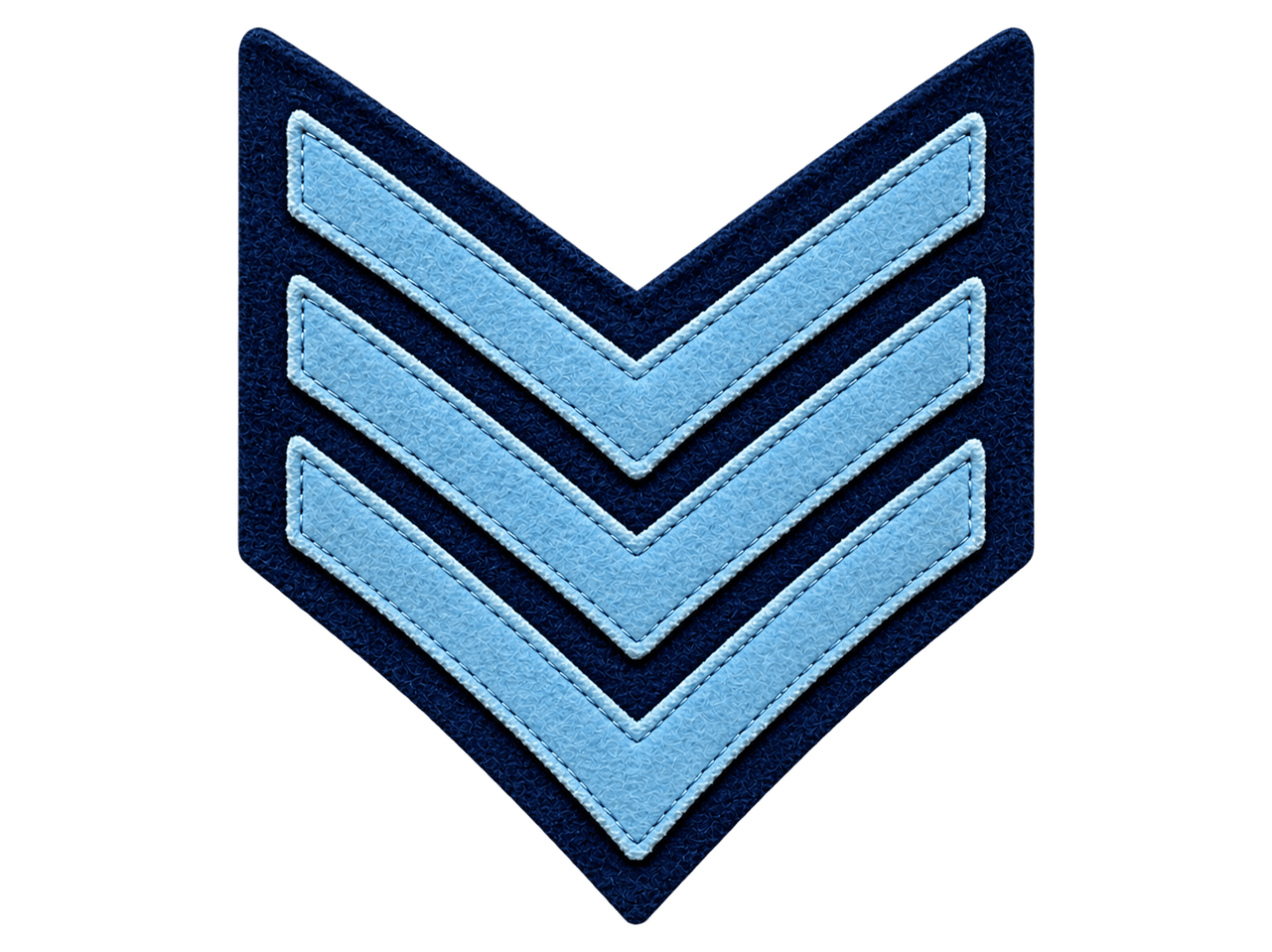
William E. Richey was born on June 1, 1841, in Athens County, Ohio. He came of age during a period of growing national division that ultimately led to the American Civil War. When the conflict began, Richey entered Union military service and became a member of Company A, 15th Ohio Infantry, United States Army. His surviving military record shows that he entered service as a Private and later advanced through the enlisted ranks, eventually attaining the rank of Sergeant.
The 15th Ohio Infantry became an experienced Union regiment that served extensively in the Western Theater of the Civil War. Its campaigns carried its soldiers through Kentucky, Tennessee, Georgia, and other parts of the South, where Union and Confederate armies fought for control of strategically important territory. The regiment participated in a demanding sequence of marches, battles, and campaigns, including operations associated with Shiloh, Corinth, Stones River, Chickamauga, Missionary Ridge, and later Union advances deeper into the Confederacy.
By September 1863, William E. Richey had been promoted to Corporal. At that time the 15th Ohio Infantry was serving in the Union Army of the Cumberland during the Chickamauga Campaign in northern Georgia. The campaign developed as Union forces attempted to strengthen their position in Tennessee and Georgia while Confederate forces sought to halt the Federal advance and recover the strategic initiative.
On September 19, 1863, the first major day of the Battle of Chickamauga, Richey performed the extraordinary action that would eventually earn him the Medal of Honor. The fighting around Chickamauga was intense and often confused, with Union and Confederate units operating through heavily wooded terrain where battle lines could shift rapidly and opposing troops could suddenly find themselves in very close proximity.
While positioned on the extreme front between the opposing battle lines, Corporal Richey encountered a Confederate major who was both armed and mounted. Acting alone and under circumstances that placed him directly between the combatants, Richey succeeded in capturing the Confederate officer single-handedly. The Confederate major possessed the advantages of rank, a weapon, and a horse, making Richey’s accomplishment particularly dangerous. Nevertheless, Richey was able to overcome the officer and take him prisoner.
His action represented the kind of individual initiative and personal courage that could have consequences beyond the capture of a single enemy soldier. A field-grade officer such as a major could carry important information and exercise significant command responsibilities. Capturing such an officer while operating at the extreme front also exposed Richey to the possibility of fire from enemy troops and to the danger of being captured himself. His willingness to act decisively under these conditions distinguished his conduct during one of the bloodiest battles of the Civil War.
The Battle of Chickamauga continued through September 20 and became a major Confederate battlefield victory. Union forces were ultimately compelled to withdraw toward Chattanooga, although determined resistance by portions of the Union army prevented the retreat from becoming a complete disaster. The battle produced enormous casualties on both sides and became one of the most costly engagements of the entire conflict. Against this violent background, Richey’s capture of an armed and mounted Confederate major stood out as a remarkable individual act.
Richey continued his military service after Chickamauga. His service record ultimately shows advancement to Sergeant, establishing Sergeant as his highest verified rank. His progression from Private through Corporal to Sergeant reflected increasing responsibility within his infantry company. Although his Medal of Honor recognition was based specifically on the action he performed as a Corporal at Chickamauga, his later promotion demonstrates that his military career continued beyond the moment for which he became best known.
For many years after the Civil War, Richey’s act of courage remained without the nation’s highest formal decoration. This was not unusual among Civil War Medal of Honor recipients. Numerous veterans received the Medal of Honor years or even decades after the actions for which they were recognized as wartime records, eyewitness accounts, and recommendations were reviewed.
On November 9, 1893, approximately thirty years after the Battle of Chickamauga, William E. Richey was formally awarded the Medal of Honor for his conduct on September 19, 1863. The official recognition honored the fact that, while on the extreme front between the lines of the opposing armies, he single-handedly captured an armed and mounted Confederate major. The award permanently associated Richey’s name with one of the most remarkable individual actions performed by an enlisted Union soldier at Chickamauga.
Richey’s Medal of Honor belonged to the original Civil War-era Army tradition of the decoration. The Army Medal of Honor had been authorized during the Civil War in 1862 to recognize soldiers who distinguished themselves through exceptional conduct. During this early period of the award’s history, the Medal of Honor served as the principal national military decoration available to Union soldiers for extraordinary battlefield service. Richey’s decoration, presented in 1893 for an 1863 action, therefore represented retrospective recognition of courage demonstrated during the nation’s defining nineteenth-century conflict.
The Medal of Honor is the only decoration that can be conclusively verified for inclusion in Richey’s medal record under the evidence standard applied to his biography. Although he was a Union Army veteran of the Civil War and lived into the twentieth century, his service alone does not establish recipient-specific entitlement to the later Army Civil War Campaign Medal. For that reason, no additional campaign decoration is included without documentary proof of individual entitlement.
After the war, Richey eventually made his home in Kansas. Like many veterans who moved westward during the decades following the Civil War, he carried with him the experience of military service into a rapidly changing postwar United States. His later residence became associated with Harveyville, Kansas, where he spent the final part of his life.
Richey lived long enough to see the Civil War become part of national memory rather than living experience. By the time he received the Medal of Honor in 1893, three decades had passed since Chickamauga, and the former soldiers of the Union and Confederacy were increasingly being remembered through veterans’ organizations, battlefield commemorations, published military histories, monuments, and government recognition of individual acts of bravery.
William E. Richey died on June 21, 1909, in Harveyville, Kansas, shortly after his sixty-eighth birthday. He was buried in Harveyville Cemetery. His grave preserves the memory of a Union infantryman whose wartime career had taken him from the rank of Private to Sergeant and whose most famous action occurred while serving as a Corporal.
Richey’s legacy centers on the courage and initiative he displayed at Chickamauga. Amid a vast battle involving tens of thousands of soldiers, his Medal of Honor recognized an intensely personal confrontation: one enlisted Union soldier, positioned between the opposing lines, acting alone to capture an armed and mounted Confederate major. His eventual promotion to Sergeant reflected his continued military service, while the Medal of Honor presented to him in 1893 ensured that the extraordinary action of September 19, 1863, would remain permanently recorded in the history of the United States Army and the American Civil War.
Become the named supporter for this profile and edit the tribute biography and portrait (Owner account required). Proceeds help keep the archive online.
$25 USD / year — annual sponsorship renewal. Keeps the page online and, where enabled, the family anniversary remembrance emails active.