★
Loading archive…
Loading archive…

First Sergeant, U.S. Army
Support & adopt this hero ↓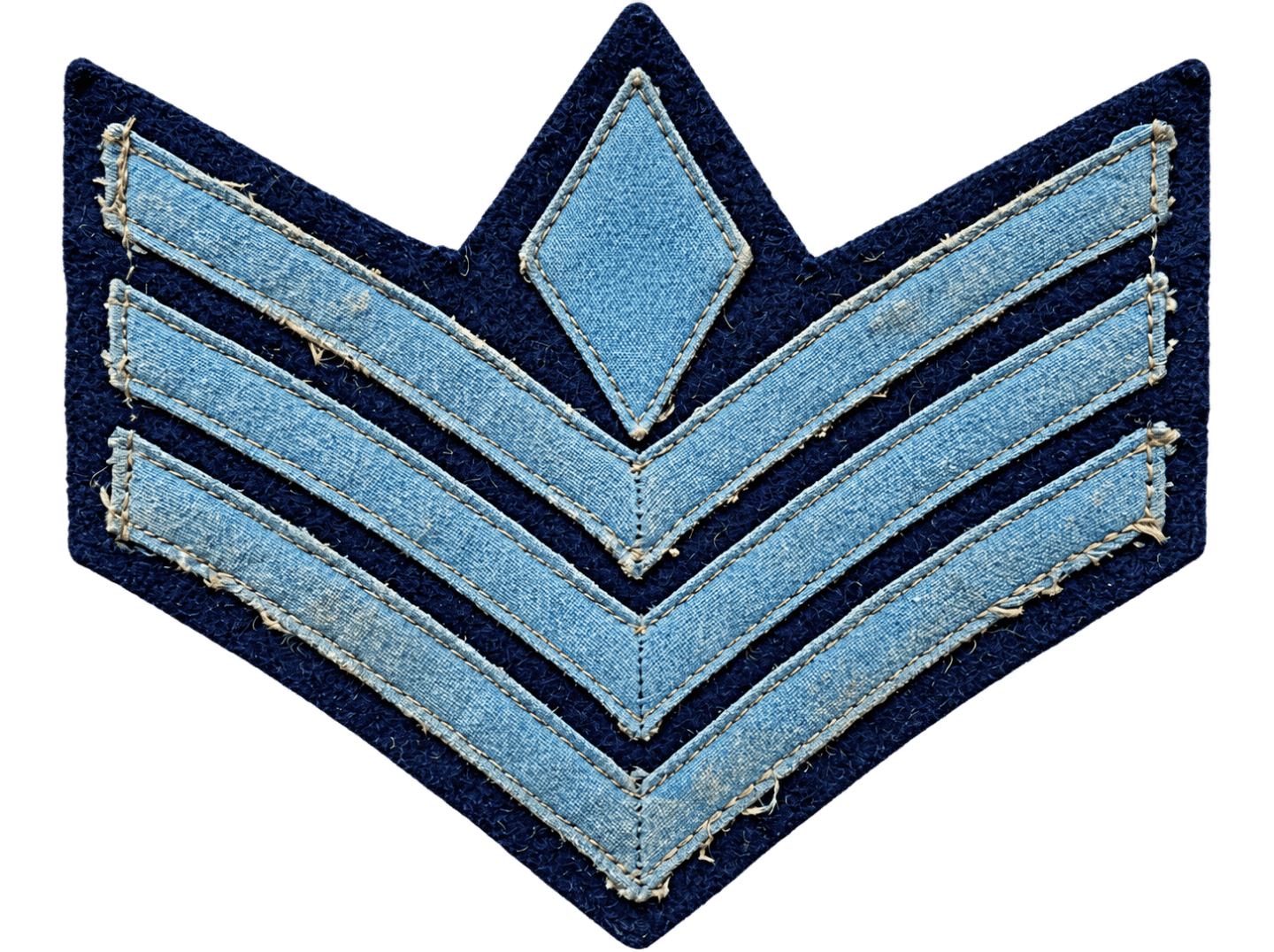
William Henry Mathews was born on March 3, 1844, in Devizes, Wiltshire, England. As a child he immigrated with his family to the United States, arriving in 1852 and eventually settling in Baltimore, Maryland. When the American Civil War began, Mathews was still a teenager, but he entered Union military service and began a career that would carry him from the enlisted ranks to a commission as an officer and ultimately earn him the Medal of Honor.
Mathews enlisted in Baltimore on July 23, 1861, but he did not serve under his real name. He entered the United States Army using the name Henry Sivel. The exact personal reason for his use of the alias is not securely documented, so it should not be guessed. His official wartime military records were consequently created under the name Henry Sivel, an important detail that later affected the engraving and issuance of his Medal of Honor.
He initially entered Company E of the 2nd Maryland Infantry as a Private. Over the course of the war he demonstrated sufficient ability and leadership to advance through the enlisted ranks. He was promoted to Sergeant in May 1863 and to First Sergeant in June 1863. By the time of the action for which he earned the Medal of Honor, First Sergeant was his confirmed rank.
The 2nd Maryland Infantry served with Union forces in several of the hardest campaigns of the eastern theater. Mathews experienced combat well before the event that made him famous. He was wounded during the Second Battle of Bull Run on August 29, 1862, as Union forces fought Confederate armies in northern Virginia. He recovered and returned to service.
By 1864 Mathews had reenlisted as a veteran volunteer and continued with the Maryland regiment as it became involved in the Overland and Petersburg campaigns. These operations formed part of Lieutenant General Ulysses S. Grant’s sustained effort to destroy General Robert E. Lee’s Army of Northern Virginia and cut the transportation network supporting Richmond and Petersburg.
Petersburg became the center of an extended struggle because of its strategic importance as a rail and supply hub. Union troops repeatedly attempted to break the Confederate defensive system protecting the city. The fighting developed into a combination of assaults, trenches, artillery bombardment, raids, and prolonged siege operations.
Mathews was wounded again during the fighting around Petersburg in June 1864 but remained part of the Union war effort. Only weeks later he would take part in one of the most famous and disastrous Union assaults of the entire Petersburg Campaign.
The Battle of the Crater took place on July 30, 1864. Union soldiers from the 48th Pennsylvania Infantry had secretly excavated a long tunnel beneath a Confederate position and packed the end of the mine with explosives. Before dawn, the charge was detonated, destroying part of the Confederate defensive line and leaving an enormous crater.
The explosion created a temporary opportunity for Union forces to break through the Confederate defenses. However, the assault that followed quickly became confused. Large numbers of Union soldiers entered the crater itself, where the steep sides and congestion made movement extremely difficult. Confederate troops recovered from the initial shock and began directing devastating fire into and around the position.
First Sergeant William Henry Mathews, still serving under the wartime name Henry Sivel, advanced with Company E of the 2nd Maryland Veteran Infantry during this chaotic battle.
Rather than entering directly into the crater, Mathews moved around its northern side and crossed the Confederate breastworks. In doing so, he found himself among a group of Confederate soldiers.
Mathews immediately engaged them. He fired into the group and was himself wounded during the encounter. Despite his wound and the dangerous position in which he had placed himself, he succeeded in bringing back three Confederate soldiers as prisoners: a sergeant and two enlisted men of the 17th South Carolina Infantry.
This extraordinary action became the basis for his Medal of Honor.
The official citation records that Mathews found himself among a squad of Confederates, fired upon them, was wounded, and nevertheless succeeded in bringing a sergeant and two soldiers of the 17th South Carolina Regiment into Union lines as prisoners.
The action was especially significant because it occurred during a battle in which the Union attack ultimately failed. The Battle of the Crater descended into confusion and heavy casualties, and Confederate forces restored their defensive position. Against that background, Mathews’s successful penetration of the Confederate works and capture of prisoners stood out as a clear example of individual courage and initiative.
His leadership and service continued after the Battle of the Crater. Mathews eventually received a commission and advanced through officer rank, ultimately reaching Captain, the highest verified rank of his military career.
This distinction is important for his final record. His Medal of Honor action-time rank was First Sergeant. His highest verified military rank was Captain.
Mathews remained in service through the closing period of the Civil War and was mustered out in July 1865. By then he had served for almost four years, progressing from a teenage Private to a commissioned officer while surviving repeated combat and wounds.
Recognition for his Medal of Honor action did not come immediately.
The Medal of Honor had been authorized by Congress for the Army in 1862 and became the principal federal decoration for exceptional military conduct during the Civil War. Many soldiers, however, did not receive their medals at the time of their heroic actions. In numerous cases recommendations and official recognition came years or even decades afterward.
According to the official U.S. Army Medal of Honor roll, William H. Mathews’s Medal of Honor was issued on July 10, 1892, almost twenty-eight years after the Battle of the Crater.
Because Mathews had served under the name Henry Sivel, the original Medal of Honor was issued and engraved under that wartime name.
This created an unusual situation. The soldier officially recognized for the 1864 action was Henry Sivel in the wartime records, but the recipient’s true legal identity was William Henry Mathews.
Mathews later sought to have the decoration reflect his real name. In 1900, a new Medal of Honor was issued to him bearing the name William H. Mathews. This was not a second Medal of Honor award. It was a reissued or replacement medal correcting the recipient’s identity.
For the database, his single verified decoration is therefore Medal of Honor 1862–1895 Army — 1892. The 1900 medal should not be counted as an additional award.
No additional clasp, star, bar, oak leaf cluster, or other device has been verified for his Medal of Honor.
A Civil War Campaign Medal has also not been included in his verified ribbon rack. Mathews unquestionably served throughout significant portions of the Civil War, but qualifying wartime service by itself does not establish recipient-specific issuance or entitlement to a later-created campaign medal. Without sufficient individual documentation proving that Mathews personally received or was officially entitled to that decoration, it remains excluded.
His final verified medal history therefore consists of one decoration: Medal of Honor 1862–1895 Army — 1892, with no device or clasp.
After leaving military service, Mathews chose a very different path. He studied for the ministry and became a Methodist minister. His postwar religious career took him to congregations in upstate New York and later to Kansas.
The transition from combat soldier to minister became an important part of his later life. Mathews had entered the Army as a teenager and experienced some of the Civil War’s most violent campaigns. In civilian life, his work increasingly centered on religious service and assistance to others.
He later returned to New York and became associated with the Children’s Aid Society. Mathews took charge of a boys’ lodging house in Manhattan, working within an organization devoted to assisting disadvantaged and homeless children.
This position gave his postwar career a strong social-service dimension. Rather than relying solely on his status as a veteran and Medal of Honor recipient, Mathews spent part of his later life working directly with young people who needed housing, supervision, and assistance.
He eventually retired from that work and moved to Brooklyn.
Mathews also remained closely connected with Civil War veterans and Medal of Honor recipients. He became a member of the Army and Navy Medal of Honor Legion, an organization composed of Medal of Honor recipients, and served for many years as its chaplain.
His position as chaplain brought together the two most important themes of his adult life: his wartime military service and his later religious vocation.
He also maintained a public voice in Brooklyn for many years, contributing writings to the forum pages of the Brooklyn Daily Eagle. His participation continued for decades and reflected his continuing engagement with civic and public affairs long after the Civil War had ended.
Mathews lived into the twentieth century, surviving many of the men with whom he had served. He witnessed enormous changes in American society and warfare during the more than sixty years that followed the Battle of the Crater.
William Henry Mathews died on February 7, 1928, in Brooklyn, New York, at the age of eighty-three.
He was buried in Green-Wood Cemetery in Brooklyn, one of New York City’s most historically significant cemeteries and the final resting place of many Civil War veterans.
His military legacy rests primarily on the events of July 30, 1864. During the chaos of the Battle of the Crater, First Sergeant Mathews moved beyond the shattered Union assault area, crossed the Confederate defenses, engaged enemy soldiers at close range, was wounded, and nevertheless returned with three members of the 17th South Carolina Infantry as prisoners.
The action earned him the nation’s highest military decoration.
His story is also unusual because of the identity under which he served. The Medal of Honor was originally issued to “Henry Sivel,” the name he had used when he enlisted in Baltimore in 1861. Only decades later was the decoration reissued under his true name, William H. Mathews.
That 1900 reissue did not represent a second act of valor or a second Medal of Honor. It corrected the name attached to the same award earned at Petersburg in 1864.
William Henry Mathews is therefore remembered as a Union soldier who rose from Private to Captain, a First Sergeant who demonstrated extraordinary courage during the Battle of the Crater, a Medal of Honor recipient, a Methodist minister, a worker for the Children’s Aid Society, and a longtime chaplain within the Medal of Honor veteran community. His verified decoration, Medal of Honor 1862–1895 Army — 1892, remains the official recognition of the courage he displayed at Petersburg on July 30, 1864.
Become the named supporter for this profile and edit the tribute biography and portrait (Owner account required). Proceeds help keep the archive online.
$25 USD / year — annual sponsorship renewal. Keeps the page online and, where enabled, the family anniversary remembrance emails active.