★
Loading archive…
Loading archive…

First Sergeant, U.S. Army
Support & adopt this hero ↓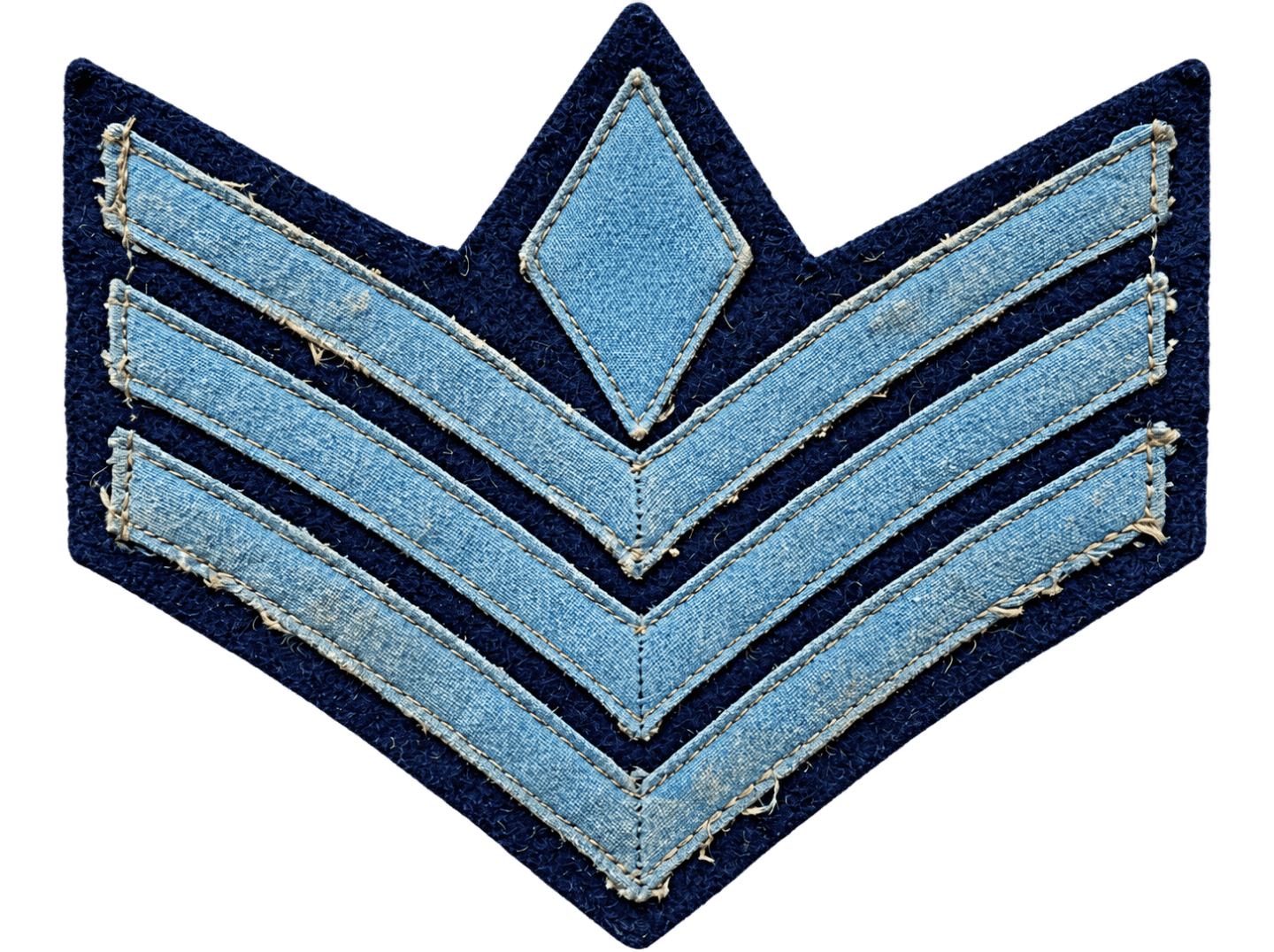
William H. Paul was born on October 3, 1844, in Philadelphia, Pennsylvania. He grew up during the years immediately preceding the American Civil War and entered Union military service while still a young man. His wartime career eventually carried him through some of the most important campaigns fought by the Army of the Potomac, but his enduring place in American military history was secured at the Battle of Antietam, where he voluntarily took up his regiment’s fallen colors under intense fire and carried them through the remainder of the battle.
Paul enlisted in Philadelphia on January 22, 1862, and entered Company E of the 90th Pennsylvania Infantry as a Private. The regiment became part of the Union forces operating in northern Virginia and later joined the Army of the Potomac during the campaigns of 1862.
The 90th Pennsylvania Infantry experienced active field service during a period when Union forces were attempting to defeat Confederate armies in Virginia and protect Washington, D.C. The regiment participated in operations connected with the Northern Virginia Campaign before moving north during the Confederate invasion of Maryland.
By September 1862, Robert E. Lee’s Army of Northern Virginia had crossed the Potomac River into Maryland. Union forces under Major General George B. McClellan moved to intercept the invasion. After fighting at South Mountain on September 14, the opposing armies concentrated near Sharpsburg, Maryland.
Three days later, on September 17, 1862, the Battle of Antietam began.
Antietam became one of the most intense single days of combat in American military history. The fighting extended across fields, woods, farm lanes, bridges, and rolling ground surrounding Sharpsburg. The 90th Pennsylvania entered combat as part of the Union I Corps in the northern portion of the battlefield, where some of the day’s fiercest fighting occurred.
William H. Paul was serving as a Private in Company E.
During the fighting, the color bearer of the 90th Pennsylvania was killed. Two other members of the color guard were also killed as concentrated Confederate fire struck the regiment.
Regimental colors were far more than ceremonial objects during Civil War combat. Smoke, noise, uneven terrain, and battlefield confusion frequently made verbal commands difficult to hear. Soldiers often depended on their flags to identify the location and movement of their regiment. The colors therefore served as both a symbol of the organization and a practical rallying point during battle.
Because of that importance, enemy soldiers frequently attempted to capture opposing colors, while members of the color guard were expected to defend them even under extremely dangerous conditions.
When the 90th Pennsylvania’s colors fell at Antietam, Paul voluntarily moved to recover them.
Under concentrated enemy fire, he picked up the flag and raised it again above the regiment. Rather than carrying the colors only long enough to move them to safety, Paul continued bearing them through the remainder of the battle.
His action preserved the regiment’s colors at a moment when the color guard had suffered devastating losses and the unit was engaged in extremely heavy combat.
Later accounts of the event provide additional detail about the struggle surrounding the flag. Paul recalled that Confederate soldiers moved toward the fallen colors and that a close fight developed as he and other Union soldiers attempted to prevent their capture. The surviving official Medal of Honor record, however, focuses on the essential verified achievement: after the color bearer and two members of the guard were killed, Paul voluntarily recovered the colors under intense fire and carried them throughout the battle.
That act became the defining moment of his military career.
Paul survived Antietam and continued serving with the 90th Pennsylvania. His performance and experience eventually brought promotion through the enlisted ranks. Although his Medal of Honor action-time rank was Private, his highest verified military rank was First Sergeant.
The distinction is important for his final historical profile. He should be identified as Private William H. Paul when describing his Medal of Honor action at Antietam, while First Sergeant represents the highest rank he later reached during his military service.
After the Maryland Campaign, Paul remained with his regiment as the Army of the Potomac continued operations against Confederate forces. The 90th Pennsylvania fought during the Fredericksburg Campaign in December 1862 and later participated in the operations surrounding Chancellorsville in the spring of 1863.
During the summer of 1863, the regiment marched north as Lee’s army again invaded Union territory. This campaign culminated at Gettysburg, Pennsylvania, from July 1 through July 3.
Paul’s association with the regimental colors continued beyond Antietam. Surviving accounts indicate that he continued carrying the flag during subsequent operations and was wounded during the Battle of Gettysburg. His wartime experience therefore extended far beyond the single action for which he ultimately received the Medal of Honor.
The regiment later participated in the Mine Run Campaign and remained in the field into 1864.
In May 1864, Lieutenant General Ulysses S. Grant began the Overland Campaign against Lee’s army. The opening major battle took place in the dense woods of the Wilderness in Virginia.
Paul was again wounded during the Battle of the Wilderness. The injury was serious enough to have lasting effects on his health. Decades after the war, he continued undergoing medical treatment connected with wounds received during his military service.
As the Union Army reorganized veteran units, the remaining personnel of the 90th Pennsylvania were eventually transferred into the 11th Pennsylvania Infantry. Paul consequently became associated with Company E of the 11th Pennsylvania during the later period of his service.
Because he was still recovering from wartime wounds, his final months in uniform differed from the earlier period of constant campaigning. He was ultimately honorably discharged from the United States Army at a military hospital in Philadelphia on February 11, 1865.
His military career had lasted slightly more than three years. He had entered as a Private, served through multiple major campaigns of the Army of the Potomac, carried his regiment’s colors in battle, suffered combat wounds, and eventually advanced to First Sergeant.
Yet national recognition for his conduct at Antietam would not come for more than three decades.
The Medal of Honor had been authorized for the United States Army by Congress in 1862, the same year that Paul performed his heroic action. During the Civil War and the decades afterward, the decoration became the principal federal award for extraordinary military courage.
Many Civil War soldiers received their Medals of Honor long after the events for which they were recognized. Paul was among them.
On November 3, 1896, William H. Paul was presented with the Medal of Honor for his conduct at Antietam on September 17, 1862.
The timing of the award is important when reconstructing his ribbon rack. His heroic action occurred in 1862, but his Medal of Honor was not issued until 1896.
By 1896 the Army Medal of Honor had entered a different historical ribbon and design period from the original Civil War-era form. For the project database, his decoration is therefore correctly represented as Medal of Honor 1896–1903 Army — 1896.
This designation does not mean that his heroic action took place between 1896 and 1903. It identifies the historical Medal of Honor issue period applicable when his decoration was actually presented. His qualifying action always remains the Battle of Antietam in 1862.
No clasp, bar, star, oak leaf cluster, or other additional device has been verified for Paul’s Medal of Honor. He was a single Medal of Honor recipient, so the decoration should be represented without an additional device.
A separate Civil War Campaign Medal has not been included in his verified award history. Paul unquestionably performed substantial Civil War service and survived long after the conflict, but the Civil War Campaign Medal was created decades after his wartime service.
Under the evidence standard applied to his profile, qualifying Civil War service alone does not prove that he personally received or was specifically entitled to that later medal. Without recipient-specific issuance or entitlement documentation, the Civil War Campaign Medal remains excluded.
His final verified medal history therefore consists of one decoration: Medal of Honor 1896–1903 Army — 1896, with no device or clasp.
After leaving the Army, Paul returned to civilian life and eventually settled in Maryland. By 1870 he was living in Havre de Grace with members of his family.
During his postwar years, he became involved in farming and agricultural work. Like many former Union soldiers, his transition back to civilian life took place against the background of physical injuries that continued to remind him of his wartime service.
On June 5, 1880, Paul married Annie Mitchell in Harford County, Maryland. They established a family and had daughters, including Mary and Barbara.
Paul continued living in Harford County and was associated at different times with Havre de Grace, Bel Air, and the surrounding area. He also maintained connections with fellow Union veterans.
He became active in the Grand Army of the Republic, the influential organization composed of veterans of the Union Army and Navy. The organization provided fellowship, supported veterans and their families, advocated for former servicemen, and helped preserve the memory of Union military service.
By the time Paul received the Medal of Honor in 1896, thirty-four years had passed since Antietam. He was no longer the young Private who had stepped forward to recover the fallen colors. The award formally transformed an act preserved through military records and veteran memory into nationally recognized military history.
The wounds of the Civil War remained a physical reality for Paul even in later life.
In 1902, nearly four decades after the Battle of the Wilderness, he underwent further medical treatment related to old battle injuries. Contemporary accounts reported operations to remove damaged pieces of bone resulting from his wartime wounds.
These later medical problems illustrate how military service continued affecting Civil War veterans long after they returned home. Paul’s combat injuries were not simply historical entries in a service record; their consequences remained with him into the twentieth century.
During his later years, Paul continued living in Maryland with his wife. He survived until 1911, nearly half a century after the Battle of Antietam.
William H. Paul died on February 23, 1911.
He was buried in Wesleyan Chapel Cemetery in Havre de Grace, Maryland.
Paul’s military legacy ultimately centers on the responsibility and symbolic importance of the regimental colors.
On September 17, 1862, the 90th Pennsylvania Infantry was fighting under devastating fire at Antietam. Its color bearer and other members of the color guard had fallen, leaving the regiment’s flag exposed at one of the most dangerous moments of the battle.
Private William H. Paul voluntarily stepped forward, recovered the colors, raised them again, and continued carrying them through the fighting.
The act provided his fellow soldiers with a visible rallying point and prevented the regiment’s colors from being lost in combat.
More than thirty years later, the United States formally recognized that courage with the Medal of Honor.
William H. Paul is therefore remembered as a soldier of Company E, 90th Pennsylvania Infantry, a Union veteran of the American Civil War, a participant in major campaigns of the Army of the Potomac, a wounded combat veteran, a Private at the time of his Medal of Honor action, and later a First Sergeant. His single verified decoration, Medal of Honor 1896–1903 Army — 1896, preserves official recognition of the courage he demonstrated when he raised and carried his regiment’s fallen colors under intense fire at Antietam on September 17, 1862.
Become the named supporter for this profile and edit the tribute biography and portrait (Owner account required). Proceeds help keep the archive online.
$25 USD / year — annual sponsorship renewal. Keeps the page online and, where enabled, the family anniversary remembrance emails active.