★
Loading archive…
Loading archive…
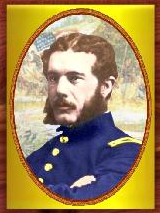
Lieutenant Colonel, U.S. Army
Support & adopt this hero ↓
William Henry Harrison Benyaurd
William Henry Harrison Benyaurd was born on May 17, 1841, in Philadelphia, Pennsylvania. He entered the United States Military Academy at West Point in 1859 and graduated on June 11, 1863, sixth in his class. Upon graduation he was commissioned a First Lieutenant in the U.S. Army Corps of Engineers, beginning a professional military career that would span the final years of the American Civil War and continue through decades of major engineering assignments for the United States Army.
Benyaurd entered active service at a time when trained military engineers were urgently needed. His first assignments included work on the defenses of Pittsburgh, Pennsylvania, and the fortifications of Portland Harbor, Maine. By August 1863 he had joined the Engineer Battalion of the Army of the Potomac, where his responsibilities quickly shifted from fixed fortifications to the demanding field engineering work required by an army on campaign.
During the autumn of 1863, Benyaurd helped construct a bridge across the Rappahannock River at Kelly’s Ford and participated in the Mine Run operations. These assignments reflected the wide responsibilities of Civil War engineers. They were required to build and remove bridges, construct roads and defensive works, conduct reconnaissance, prepare approaches to enemy positions, and maintain the mobility of large armies under combat conditions.
In February 1864, Benyaurd took command of a company of the Engineer Battalion in the Army of the Potomac. During the following year, his company performed engineering duties throughout some of the most important operations of the war. His work included reconnaissance, road building, construction of blockhouses and field defenses, bridge operations, sapping and mining, and service with senior commanders during major campaigns.
He participated in operations connected with the Army of the Potomac’s advance from the Rapidan River toward the James River. His Civil War service included General Judson Kilpatrick’s raid toward Richmond in March 1864 and the great Overland Campaign that followed in the spring and summer.
One of the most important engineering achievements associated with this period was the Army of the Potomac’s crossing of the James River in June 1864. Benyaurd and other engineer officers were involved in the extensive bridging and movement operations that allowed Union forces to cross the river and shift their campaign toward Petersburg.
The fighting around Richmond and Petersburg placed engineers in unusually dangerous conditions. They frequently worked close to active battle lines, reconnoitering positions, constructing defenses, repairing communications, and preparing siege works while exposed to enemy artillery and rifle fire.
For his gallant and meritorious service during the campaign before Richmond, Benyaurd received a brevet promotion to Captain dated August 1, 1864. This was an honorary recognition of distinguished wartime service. His substantive Army rank at that point remained First Lieutenant.
His service continued through the Siege of Petersburg. He participated in operations at Deep Bottom in August 1864, the destruction of the Weldon Railroad toward the Meherrin River in December, and the fighting near Dabney’s Mill in February 1865.
By the spring of 1865, Confederate forces defending Petersburg and Richmond were approaching a crisis. Union forces increased pressure on General Robert E. Lee’s defensive lines, while cavalry and infantry operations west of Petersburg threatened the remaining Confederate supply routes.
The Battle of Five Forks on April 1, 1865, became one of the decisive actions of the final campaign in Virginia.
At Five Forks, First Lieutenant William H. H. Benyaurd was serving with the Corps of Engineers. During the battle, he performed two separate acts that later formed the basis of his Medal of Honor.
In the first, Benyaurd and one companion voluntarily advanced beyond the Union skirmishers on a reconnaissance. Moving beyond the forward line meant entering an area where they could easily be cut off, captured, or killed by Confederate troops. The purpose of such reconnaissance was to obtain information about enemy positions and movements for commanders directing the battle.
Benyaurd continued forward despite the danger. During this reconnaissance, the party captured several Confederate prisoners.
His second recognized act occurred when portions of the Union force began to waver during the fighting. Major General Gouverneur K. Warren, commanding the Fifth Army Corps, rode toward the front to rally the troops.
Benyaurd accompanied him.
The two officers moved into an exposed position near the front of the advance as Warren called on the soldiers to continue forward. The troops resumed their movement, and the Union attack ultimately succeeded.
Benyaurd’s official Medal of Honor citation later summarized both aspects of his conduct: voluntarily advancing beyond the skirmishers during a dangerous reconnaissance and riding forward with the commanding general to encourage troops who had temporarily lost momentum.
His actions at Five Forks were also recognized immediately within the Army’s wartime promotion system. He received a brevet promotion to Major dated April 1, 1865, for gallant and meritorious service during the battle.
Five Forks was followed by the collapse of the Confederate position around Petersburg. Union forces broke through Lee’s defenses, Richmond and Petersburg were evacuated, and the Army of Northern Virginia began its retreat westward.
Benyaurd participated in the pursuit that culminated in General Lee’s surrender at Appomattox Court House on April 9, 1865.
His military service did not end with the Confederacy’s surrender.
Following the campaign, Benyaurd assisted in surveys of the former military operational area around Petersburg. He then served at the Engineer Depot in Washington before receiving an assignment at West Point.
From 1865 into 1866, he commanded an Engineer Company at the United States Military Academy. He later served as an assistant professor of engineering at West Point from 1866 to 1869, helping train a new generation of Army officers in the technical disciplines that had shaped his own wartime career.
Benyaurd received his substantive promotion to Captain in the Corps of Engineers on May 1, 1866.
After leaving his teaching assignment, he entered an extensive period of civil engineering service for the Army. The Corps of Engineers was responsible not only for military fortifications but also for many of the federal government’s most important river, harbor, navigation, and flood-control projects.
Benyaurd worked on the Rock Island Bridge across the Mississippi River and later on engineering projects connected with the Falls of St. Anthony and the Minnesota River.
In 1873, he opened an Army Engineer office in Monroe, Louisiana. This work eventually became an important part of the institutional history of the U.S. Army Corps of Engineers’ Vicksburg District.
His responsibilities included surveys and improvements on the Ouachita and Yazoo Rivers and the removal of wrecks and other hazards that interfered with navigation. He also worked on water gauges for the Mississippi River and its major tributaries and became involved in projects connected with the Red River and other waterways in the lower Mississippi Valley.
Benyaurd’s engineering career increasingly focused on large-scale river and harbor management.
He served on commissions examining the Mississippi River system and participated in boards dealing with the protection of the Vicksburg waterfront and the wharves of New Orleans. His assignments placed him at the center of nineteenth-century federal efforts to improve commercial navigation, control river channels, and protect important ports.
He was promoted to Major in the Corps of Engineers on March 4, 1879.
During the following decade, Benyaurd continued to supervise major engineering projects in different parts of the country. His work eventually took him to the Pacific Coast, where he became involved in harbor improvements, river projects, and military defensive works in California.
In 1889 he reached the substantive rank of Lieutenant Colonel, the highest verified rank of his Army career.
As a senior engineer officer, Benyaurd supervised improvements at important California harbors, including San Diego and Wilmington, and worked on projects involving the Colorado River, Napa River, Redwood Creek, and other waterways.
He also held responsibility for defensive works at strategically important coastal locations in California, including installations associated with San Francisco Bay and San Diego.
In the early 1890s, Benyaurd served on a board of engineers studying possible locations for a major deep-water harbor in Southern California. This work formed part of the long process that eventually shaped the development of the modern port facilities in the Los Angeles region.
While his engineering career continued, formal recognition of his Civil War heroism finally arrived more than three decades after Five Forks.
On September 7, 1897, William Henry Harrison Benyaurd was awarded the Medal of Honor for his actions at Five Forks on April 1, 1865.
The distinction between the action date and award date is important. His heroic conduct occurred during the Civil War in 1865, but the Medal of Honor was not presented until 1897.
Because the decoration was issued in 1897, the correct historical database representation is Medal of Honor 1896–1903 Army — 1897.
No separate clasp, star, bar, oak leaf cluster, or other device has been verified for his Medal of Honor. His verified Medal of Honor entry therefore remains a single award without additional devices.
A Civil War Campaign Medal has not been included in his verified ribbon rack. Although Benyaurd unquestionably performed qualifying Civil War service, that later-created campaign medal requires recipient-specific proof of entitlement or issuance under the research standard applied to his profile. Such evidence has not been established.
His final verified medal history therefore consists of the Medal of Honor 1896–1903 Army — 1897.
Benyaurd remained an active senior Army engineer during the Spanish-American War era.
From 1896 through 1899, he supervised fortifications and river and harbor work in Florida. When war with Spain made coastal defense an urgent national concern in 1898, Benyaurd directed important defensive engineering projects.
He supervised work connected with the defenses of Jacksonville and the St. Johns River. These preparations included coastal batteries and underwater defensive mine systems designed to prevent hostile ships from entering strategically important waterways.
He also directed or supervised military defensive work at St. Augustine, Key West, and Tampa Bay. At Tampa Bay, his engineering responsibilities were connected with the development of fortifications intended to protect a major military embarkation area during the war.
This period showed how dramatically Benyaurd’s career had evolved. At Five Forks he had been a young First Lieutenant moving beyond skirmish lines on battlefield reconnaissance. More than thirty years later, as a Lieutenant Colonel, he was responsible for planning and supervising large defensive systems protecting American ports.
After his Florida service, Benyaurd was transferred to New York.
William Henry Harrison Benyaurd died on February 7, 1900, at the age of fifty-eight, while still a serving Lieutenant Colonel in the United States Army Corps of Engineers.
His death created a vacancy in the Corps of Engineers that was formally reflected in subsequent Army promotions.
He was buried at the United States Military Academy Cemetery at West Point, New York, returning in death to the institution where his professional military career had begun more than forty years earlier.
Benyaurd’s legacy extends beyond his Medal of Honor.
He represented the nineteenth-century Army engineer as both soldier and technical professional. During wartime he built bridges, conducted dangerous reconnaissance, constructed defenses, supported major campaigns, and personally entered combat at Five Forks. During peace he helped shape waterways, harbors, navigation systems, river improvements, and coastal defenses across the United States.
The U.S. Army Corps of Engineers later preserved his name within its own institutional history, particularly in the Mississippi Valley, where his early postwar work contributed to the development of federal river engineering operations.
His most enduring military distinction, however, remains the action of April 1, 1865.
At Five Forks, First Lieutenant William Henry Harrison Benyaurd voluntarily advanced beyond the Union skirmish line during reconnaissance and later accompanied the commanding general to the front as wavering troops were encouraged to resume their advance.
More than thirty years later, the United States formally recognized that courage with the Medal of Honor.
William Henry Harrison Benyaurd is therefore remembered as a West Point graduate, United States Army engineer, Civil War combat officer, brevet Major, senior river and harbor engineer, Lieutenant Colonel, and Medal of Honor recipient whose military career connected battlefield engineering with the development of America’s rivers, ports, and coastal defenses.
Become the named supporter for this profile and edit the tribute biography and portrait (Owner account required). Proceeds help keep the archive online.
$25 USD / year — annual sponsorship renewal. Keeps the page online and, where enabled, the family anniversary remembrance emails active.