★
Loading archive…
Loading archive…
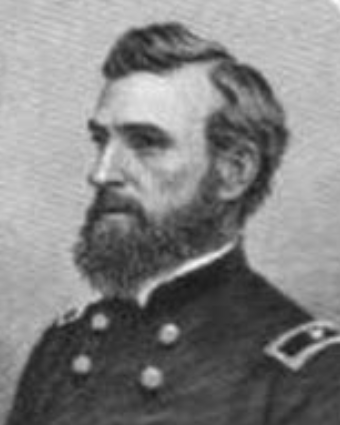
Brevet Major General, U.S. Army
Support & adopt this hero ↓William Henry Powell was born in 1825 in Pontypool, Wales, and immigrated to the United States with his family while still a child. Before the American Civil War, he built a career in the iron and manufacturing industries, developing the administrative ability and leadership qualities that would later serve him well in military command. When the Civil War began, Powell was living and working in Ohio, and he entered Union service in 1861. He joined the cavalry organization that eventually became the 2nd West Virginia Cavalry, beginning his military career as a captain.
Powell advanced rapidly because of his effectiveness as a cavalry officer. By November 1862, he had reached the rank of Major and was serving with the 2nd West Virginia Cavalry when he took part in the operation that would ultimately earn him the Medal of Honor. The regiment was operating in western Virginia, where Union and Confederate forces were competing for control of important mountain routes, communities, and lines of communication.
On November 26, 1862, Powell led a small advance force during what became known as the Sinking Creek Raid. Confederate cavalry numbering roughly 500 men had established a camp in the Sinking Creek Valley. Powell, commanding only about twenty men at the critical moment of the attack, decided to act aggressively rather than wait for the remainder of the Union force to arrive. Taking advantage of surprise and the confusion within the Confederate camp, he led his men directly into the enemy position.
The attack was extraordinarily successful. Powell and his small force charged into the much larger Confederate encampment and compelled a substantial portion of the enemy force to surrender. More than one hundred Confederate soldiers were taken prisoner, together with weapons, horses, and military equipment. Most remarkably, Powell accomplished the assault without losing a single man or gun. His superior officer specifically praised Powell for leading the charge, and the operation became remembered as one of the most daring cavalry raids conducted in that region during the war.
Powell’s courage and leadership at Sinking Creek did not immediately result in the Medal of Honor. He continued his military career and received further promotion, eventually becoming colonel and commander of the 2nd West Virginia Cavalry. His subsequent service placed him in increasingly dangerous operations, and in July 1863 he led his cavalry during an attack on Wytheville, Virginia. During the fighting there, Powell was struck by a bullet and seriously wounded. His injury was considered so severe that there was considerable doubt that he would survive.
After being wounded, Powell fell into Confederate hands and became a prisoner of war. He spent approximately six months in captivity, including time in Richmond’s Libby Prison. Despite the seriousness of his wound and the hardships of imprisonment, he survived. After being exchanged, he returned to Union service and resumed command responsibilities rather than leaving the Army because of his injuries.
Powell returned to active operations in 1864 and became an important cavalry commander during campaigning in Virginia and the Shenandoah Valley. His regiment and later his brigade operated in demanding mounted and dismounted actions against Confederate forces. He participated in a succession of engagements during a year in which Union cavalry became increasingly important for reconnaissance, rapid movement, pursuit, disruption of enemy communications, and direct battlefield attacks.
During the 1864 Shenandoah Valley Campaign, Powell served under senior Union commanders including George Crook, William W. Averell, and Philip Sheridan. His leadership brought him responsibility beyond the command of a single regiment. He commanded a cavalry brigade and eventually took command at division level. His troops participated in important operations connected with battles such as Opequon, Fisher’s Hill, and other actions in the Valley. His superiors repeatedly recognized his effectiveness as a cavalry commander, particularly his ability to handle troops under fire.
Powell received promotion to Brigadier General in October 1864. His military reputation by this stage rested not simply on the Sinking Creek exploit but on several years of sustained combat leadership. He had progressed from captain to senior cavalry command, survived a serious battlefield wound and imprisonment, returned to active duty, and commanded troops during some of the most active Union cavalry operations of 1864. He resigned from active military service in January 1865, shortly before the final collapse of the Confederacy.
Following the war, Powell received the brevet rank of Major General of Volunteers in recognition of gallant and meritorious wartime service. The brevet appointment represented the highest rank associated with his military career. His progression from captain at the beginning of his service to Brigadier General and ultimately Brevet Major General reflected the high regard in which his wartime leadership was held.
More than two decades after the war, the extraordinary action at Sinking Creek received its highest formal recognition. On July 22, 1890, William Henry Powell was presented with the Medal of Honor for his conduct on November 26, 1862. His official recognition specifically honored his distinguished service during the raid in which, with approximately twenty men, he charged and captured an enemy camp containing hundreds of Confederate soldiers without losing a man or gun.
Powell’s Medal of Honor belongs to the original Civil War-era Army tradition of the decoration. The Medal of Honor had been established during the Civil War as the United States’ principal national award for exceptional military bravery and distinguished conduct. Powell’s award was issued many years after the action itself, a practice that was not unusual among Civil War recipients whose acts of heroism were formally reviewed and recognized long after the conflict had ended. His decoration therefore commemorated not a later achievement but the remarkable cavalry action he had led as a Major in 1862.
After leaving military service, Powell returned to civilian business and manufacturing. His professional life remained strongly connected with the iron and nail industries in which he had worked before the war. Over the following decades he held management and leadership positions in manufacturing enterprises and eventually settled in Belleville, Illinois. His wartime leadership skills were followed by a substantial civilian career in industrial management.
Powell also remained involved with fellow Union veterans. He became active in the Grand Army of the Republic, the major veterans’ organization for men who had served in the Union armed forces during the Civil War. His participation reflected the importance that his wartime service continued to hold throughout his later life. He also remained connected with public affairs and maintained relationships with prominent veterans and political figures from the Civil War generation.
The severe wound Powell had received at Wytheville remained a lasting reminder of his wartime experience. The bullet was never successfully removed and contributed to health difficulties later in his life. Nevertheless, he lived for approximately four decades after the war and continued to participate in business and veterans’ affairs.
William Henry Powell died on December 26, 1904, in Belleville, Illinois, at the age of seventy-nine. He was buried at Graceland Cemetery in Chicago. Because he died before the establishment of the Army Civil War Campaign Medal, that later campaign decoration is not included among the verified medals used for his record.
Powell’s military career was remarkable for both its rapid advancement and the breadth of responsibility he assumed. He entered Union service as a cavalry captain, became a Major, commanded the 2nd West Virginia Cavalry as Colonel, led larger cavalry formations, rose to Brigadier General, and was ultimately recognized with the rank of Brevet Major General. He experienced successful raids, major battles, a near-fatal wound, captivity, recovery, and return to command.
His most enduring distinction, however, remains the Medal of Honor awarded for Sinking Creek. There, while still a Major, Powell demonstrated the combination of initiative, personal courage, surprise, and decisive leadership that defined effective Civil War cavalry operations. Leading only a handful of men against a vastly larger enemy camp, he transformed an exceptionally dangerous situation into a remarkable Union success without the loss of one of his men. That action, together with the distinguished command service that followed, secured William Henry Powell’s place among the notable cavalry officers and Medal of Honor recipients of the American Civil War.
Become the named supporter for this profile and edit the tribute biography and portrait (Owner account required). Proceeds help keep the archive online.
$25 USD / year — annual sponsorship renewal. Keeps the page online and, where enabled, the family anniversary remembrance emails active.