★
Loading archive…
Loading archive…
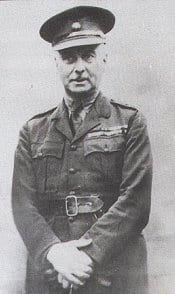
Lieutenant Colonel, British Army
Support & adopt this hero ↓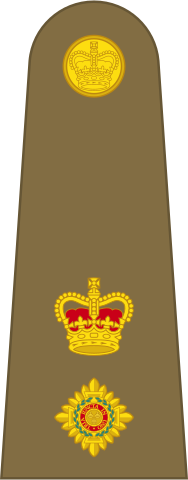
He braved close-range fire to bring back vital rifle rounds.
William John English was born in Cork on 6 October 1882, the son of an Army officer. He attended Harvey Grammar School at Folkestone and Campbell College in Belfast. After leaving school in 1899 he went to sea in the Merchant Navy. In South Africa he joined the newly raised Scottish Horse and obtained a commission in March 1901, aged eighteen.
On 3 July 1901, during operations at Vlakfontein, also identified as Elandskloof, Lieutenant English and five men held the right flank of a British position against a Boer attack. Two of his soldiers were killed and two wounded. The small party nevertheless continued to hold its ground, preventing the flank from being turned.
When their ammunition began to run out, English crossed to another party to obtain more. He had to traverse roughly fifteen yards of open ground while enemy riflemen fired from only twenty to thirty yards away. His return with ammunition enabled the defence to continue. The official citation attributes the survival of the position largely to his personal courage (London Gazette, 4 October 1901). The Prince of Wales presented the Victoria Cross during the coronation gathering of colonial troops in London in July 1902.
English made soldiering his profession. After further South African service he enlisted in the 2nd Dragoon Guards (Queen's Bays), rose to lance corporal and was commissioned in the Army Service Corps in October 1906. He served in France and Belgium from August to December 1914 and again from September 1915 through the Armistice, remaining overseas until September 1919. He became a captain in August 1914 and temporary major that November. His transport and supply work supported several formations, including the 36th (Ulster) Division. Subsequent postings took him to Sierra Leone, Germany, Northern Ireland and India. He retired as a major in December 1930.
In Belfast he devoted time to former servicemen, helping with employment and chairing Poppy Day appeals. He was also an enthusiastic model shipbuilder. When war returned in 1939 he helped raise the National Defence Companies in Northern Ireland and became a lieutenant-colonel commanding what became the 6th Battalion, Royal Ulster Rifles.
He handed over the battalion in April 1941 but accepted responsibility for troops aboard a ship bound east. The vessel suffered an air attack off Africa, and his health deteriorated. Although doctors at Durban advised him to stop travelling, he continued. He died of a cerebral haemorrhage at sea on 4 July 1941 and was buried in Maala Cemetery. His medals were preserved through his association with Campbell College and later acquired by the Michael Ashcroft Trust.
Become the named supporter for this profile and edit the tribute biography and portrait (Owner account required). Proceeds help keep the archive online.
$25 USD / year — annual sponsorship renewal. Keeps the page online and, where enabled, the family anniversary remembrance emails active.